The Unheard Third Vote 2013
Loading…
Candidate Responses:
-
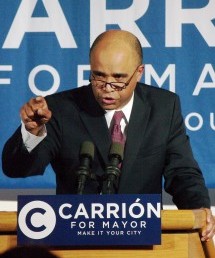
Adolfo Carrión Jr. (I)
Our emphasis must be on training all New Yorkers—particularly low income New Yorkers—with skills for the 21st Century economy. We should ensure that job training programs are targeted to growth industries in which the city has a comparative advantage.
Local hiring is critical to ensuring that development projects are welcomed by host communities and that host communities share in the benefits of such projects. Our focus must be on ensuring that all New Yorkers have the skills for the 21st Century economy.
Even the most well-intentioned regulations can often have negative unintended consequences. Government should work to help businesses thrive and expand so that they can hire more workers, and ultimately, provide more revenue to the city.
We should raise the minimum wage to $8.50 an hour and index it to inflation. If working men and women cannot afford the basic things in life, they will ultimately seek more costly government assistance, which in the end, costs everyone.
The financial services, insurance, and real estate sectors provide thousands of high-quality jobs. We should also be broadening our economic base to include the industries of tomorrow—specifically information technology.
It doesn’t make sense, whether measured economically or socially, to keep people who are trying to get into the workforce and be responsible citizens out of the workforce.
While we must remain committed to a strong social safety net, my emphasis is on improving the public education system with a focus on strong civic education, job readiness, and college readiness. The best way to alleviate poverty is through work and the best social program is a job.
The NYPD prevents crimes by remaining committed to a community policing model. I would continue to implement and expand the policing strategies of the Bratton and Kelly years, including a heavy reliance on data-driven and public order policing.
The policy needs to be improved to include stop-question-frisk if necessary-respect. Respect of the civil liberties of all New Yorkers must always be maintained.
I am focused on attracting, retaining, and rewarding the best teachers; implementing a curriculum that meets the needs of the 21st Century economy; and ensuring that our public education system is constantly improving itself through managed competition.
Improving the quality of the classroom experience must remain our top priority in public education, and school choice plays a role in this process. We must focus on moving the best innovations that we discover into traditional classrooms.
We must offer a better public education product if we are to expect our children to excel at school, and part of that means ensuring that we have the best teachers in the classroom and that we empower those teachers to be creative and responsive to ever-changing needs.
I would develop a low interest loan/scholarship style program, pegged to income, where it ranges from free to modest.
I am a supporter of policies that prepare incarcerated men and women for the workforce upon release, and whenever possible, filling this critical need through social entrepreneurs and non-profit organizations who specialize in serving these communities.
We must build a system that is responsive to the changing needs of today’s economy and citizenry.
As Mayor, I will use the same template that led to the Bronx turnaround, a template that focused equally on community benefits for local residents and realistic profits for those developers who ultimately build the housing units this city needs.
We must remain committed to reducing homelessness, while ensuring that we get these men and women the immediate care that they need, from enrolling them in substance abuse programs to training them for basic jobs.
Government must stop misappropriating funds. It is not sustainable and it is not ethical. As Mayor, I would work diligently to ensure that funds are directed where they were intended to go, plain and simple.
While we must remain committed to ensuring that anyone who comes into our hospitals without insurance can get quality care, we have to find ways to ensure that New Yorkers are taking full advantage of the benefits already available to them.
As Mayor, I will expand an already aggressive effort to address obesity, heart disease, smoking cessation, domestic violence, and every other public health and wellness issue.
We are currently waiting on a response from this candidate.
Learn More -
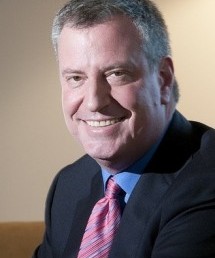
Bill de Blasio (D)
We must: Expand living wages, maximize opportunities for development, lessen the burdens on small businesses, invest more smartly, build a workforce of tomorrow through CTE programs, and improve public schools.
Moving forward we must look to best practices in states like Louisiana and Florida to rethink where and how we build our city's infrastructure.
I was a leader in the fight to pass legislation to give New Yorkers paid sick days and a living wage. While both bills were watered down in the City Council as a result of special interest pressure, I’m continuing to press for strong laws to protect more New Yorkers.
I am strongly supportive of recent legislation that increased the state's minimum wage. As Mayor, I plan to raise wages as a bottom-up driver of economic development—and I will fight in Albany to give NYC the ability to set the minimum wage rate at a level appropriate to our city’s high cost of living.
As Mayor I would ensure that EDC utilizes local business and resource centers that expand employment opportunities to New York City's residents.
I am unequivocally opposed to discriminatory hiring practices and believe that reducing these practices will require a concerted effort with government, employers and employees/interviewers.
I would undoubtedly keep the Center for Economic Opportunity in my administration and encourage expanding the number of projects that the center assesses, placing emphasis on education projects.
I believe that community policing is the pathway to public safety. It is time for all of us to understand that police effectiveness and community engagement are mutually reinforcing.
While stop and frisk is a valid policing tool, its current over-use undermines its effectiveness and creates rifts between communities and police.
Our children need to start earlier and learn longer. Last fall, I announced a plan that would provide truly Universal Pre-K to all 4 year olds and provide quality after school programs for all middle school children.
Ultimately, the creation of high quality schools in every neighborhood provides the best chance of building and sustaining school-family-community partnerships necessary for all children to graduate high school prepared for success in college and careers.
As previously mentioned, we need to invest in early education and have our students learning longer, especially in the crucial middle school years.
The recent shift at CUNY colleges with fewer Black and Latino students enrolled is unacceptable and as Mayor, my administration would take on issues of preparation, access and equity in New York City's high schools and higher learning institutions.
We must ensure that all formally incarcerated individuals are leaving our prison system with an education and skills that will allow them to transition successfully into society.
As Public Advocate, I have worked tirelessly to address education attainment issues for disconnected youth. Our campaign to help young New Yorkers finish the GED exam before changes take effect next year has helped hundreds of youth who were previously disconnected.
We need a more aggressive strategy that recognizes the market is not going to deliver the units middle class and working New Yorkers need.
Our first step: we must develop an exit strategy for those who have entered the shelter system. That effort will require our city to develop a rental subsidy program.
As Mayor, I would take responsibility for the housing authority and prioritize the health and safety repairs that are plaguing NYCHA tenants.
It is the responsibility of the Mayor and all New York elected officials to ensure that there is coverage for the thousands of families and individuals that are undocumented in New York and elsewhere.
I will continue fighting to keep community hospitals open and create at least 16 new health clinics in communities of highest need. These steps will prioritize preventative care and address the health disparities between low-income and wealthy New Yorkers.
We are currently waiting on a response from this candidate.
Learn More -
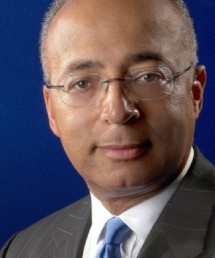
Bill Thompson (D)
The lack of affordable housing in the city is a crisis of epic proportions. I will make the city affordable to all people by creating and preserving 120,000 units of housing over 8 years. I'll also change our rent laws and rehabilitate NYCHA.
I support prioritizing Section 8 vouchers and public housing admissions for homeless families. I will initiate policies that will help people avoid homelessness, create more affordable housing, and create better paying jobs for all New Yorkers.
We will end the more than $100 million charge paid by NYCHA for police and sanitation: No other neighborhood in the city pays for police protection. Neither should NYCHA residents.
Education is the key to ending poverty, reducing crime, and creating a city that is fair to all. I want to move away from the current system of teaching children to prepare for tests, instead focusing on more important critical-thinking skills.
I am in favor of increasing the resources for schools and expanded school choice. Providing our students with more classroom time, reducing classroom size, and teaching critical thinking skills will be instrumental in decreasing the achievement gap.
To prepare students for college and employment, I will change the current curriculum to focus on critical thinking instead of test scores, ensuring that our students have skills that will prepare them to succeed in college and at the workplace.
I will implement universal pre-K and provide our black and Latino students with more classroom instruction and smaller classrooms. I will also implement an outreach program to provide communities with ample information on the city's resources.
Investment in education programs for men and women who are incarcerated is critical to reducing recidivism in our communities.
It is disgraceful that we have 180,000 disconnected youth in our city. I will implement programs for youth who want to finish high school or obtain their G.E.D. and focus aggressively on job-training programs to help these young people find jobs.
Access to quality healthcare is a basic human right for all, regardless of legal status. My administration will increase access to healthcare for all New Yorkers, setting up low-cost community health clinics that will service all New Yorkers.
I will reduce obesity and smoking patterns by making sure that all New Yorkers receive education on their health, are provided more access to quality healthcare, and have the chance to live an altogether healthier lifestyle.
I am running for mayor because I care about the future of all New Yorkers. I will ensure that economic growth reaches all corners of our city by supporting small businesses, and increasing education and training opportunities for vulnerable New Yorkers.
We will be committed to using the city's talented and dedicated workforce to build new infrastructure--public works play an important role in stimulating the economy--because people who live in NYC have a vested interest in fixing our infrastructure.
I supported the Paid Sick Leave Act and as Mayor I will work vigorously toward enforcing it. Providing our residents an opportunity to take a paid sick day reflects our collective values of compassion and fairness as a city.
As Comptroller, I worked hard to enforce the minimum wage, and as Mayor, I will continue to make its enforcement a top priority. Additionally, minimum wage should be indexed with inflation--we should not be having this debate every few years.
Cornell's new campus presents a great chance for NYC to become a leader in technology. But Cornell's campus is not the only gateway to job creation in New York City. We should also be capitalizing on creating more"Made in NY" products.
Hiring discrimination hurts the entire city. I will implement policies that will make sure all New Yorkers, including those who were left unemployed by the recession and those with criminal convictions, once again have the chance to be employed.
The CEO has produced substantial studies. That said, the Bloomberg administration has not moved quickly enough to address poverty as a citywide issue. I have outlined an aggressive and holistic platform focused on hunger elimination and education/training.
Public safety will continue to be a priority in my administration. One way I will make the city safer by returning NYC to its days of community policing, hiring 2,000 local police officers to our force. NYC will be the safest big city in America.
The Bloomberg administration has misused stop-and-frisk and unfairly targeted innocent black and Latino youth. We will end the quota system the moment I am sworn in as mayor.I want a city that is safe for all New Yorkers, but I will not tolerate injustice.
We are currently waiting on a response from this candidate.
Learn More -
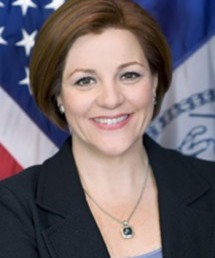
Christine Quinn (D)
As Mayor, I will pursue a three point strategy for job creation: invest in sectors with high growth potential, support small businesses and entrepreneurs, and remove obstacles to job creation for all businesses.
My first goal is to rebuild stronger and as quickly and effectively as possible. In the coming months, as we determine what and where to build, I'll work to provide job and training opportunities for young and unemployed New Yorkers.
As mayor I will monitor the effects of this bill with an eye toward finding ways to help more New Yorkers find job security and enjoy the benefits of the middle class while helping small businesses flourish.
I have vocally supported proposals to increase the state minimum wage, and I sponsored a resolution in the City Council in support of the recent State legislation.
In niche and high-tech manufacturing, where I'll continue to help make space and equipment more easily available. Also, in healthcare, by providing training opportunities for jobs, from nursing to home health aides.
This January, I passed a bill making it illegal for employers to discriminate against job applicants based solely on length of unemployment. The Council is also exploring ways to protect against discrimination based on credit or criminal background.
The best weapon against poverty is education. I recently unveiled a four-part plan to improve our public schools and lower the achievement gap for students. I'll also continue my focus on job training and helping New Yorkers seeking a GED.
I would preserve funding for new police officers in the city's budget, as I've done as Speaker. I would build on my work to combat gun violence, like the $4.2 million we provided for crisis response and other community-based strategies.
The present stop and frisk practice needs reform and the current level of stops is unacceptable. At my request, the NYPD has taken steps to improve training, monitoring, and protocols. Although we've seen some results, more needs to be done.
Our system must work for all students, focusing on all a child needs. I will work to create strong literacy programs; bring community schools to each neighborhood; lengthen school hours; and improve teacher quality with mentor teachers.
I support giving families choice, but not forcing them to compete for scarce resources. By identifying and replicating best practices we can lift all schools up and make sure every child has a good option in their own neighborhood.
To improve graduation rates and college and career readiness we must remove barriers to learning, increase the number of hours spent learning, and focus on literacy.
Most specialized high schools don't base admission on a single test, but they maintain rigorous standards and allow for diversity; New York needs to follow suit. We need to increase access to G&T programs so all students may access top schools.
I would support these programs. Helping incarcerated New Yorkers get an education is one of the best ways to combat recidivism, ultimately saving future costs of incarceration, addiction counseling and other services.
We need to re-engage as many students as possible in a full time high school experience, taking advantage of our city's excellent transfer high schools. In addition, increasing access to the GED will continue to be a major priority for me.
Build on my record of creating and preserving more than 14,000 affordable apartments with zoning and subsidy; pursue innovative programs like my HARP initiative; target bad landlords to keep housing livable; protect homeowners facing foreclosure.
I've supported it and have gone even further, proposing that the city fund a new rent subsidy program for homeless families to give them a path out of shelter.
I would look to end this arrangement and expand a $10 million rapid repair program the Council created last year; hire a NYCHA chair with experience in public housing and finance; make major, specific changes to NYCHA's accountability structure.
Build on successful passage of Manny's law to make sure uninsured patients have access to affordable care. Continue commitment to expand primary care access. Ensure public hospitals have clear policies on not reporting immigration status.
My top health priority is to give New Yorkers the options they need to remain in good health and to address the root causes of poor health and disease before they become significant. New Yorkers should have increased access to nutritious food and primary care, and be encouraged to make use of both.
We are currently waiting on a response from this candidate.
Learn More -
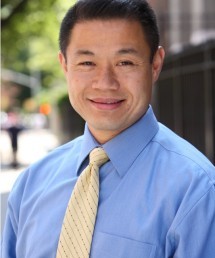
John Liu (D)
We must improve educational opportunities and improve the environment for small businesses.
I have used money from the pension funds to invest in upgrading infrastructure that stimulates local hiring.
Paid sick leave should be expanded to employees in manufacturing and for smaller businesses. Manufacturing workers, like all other workers, should not have to go to work when they are sick.
A minimum wage of $9.00 is not sufficient for breadwinners living in New York City. The city should adopt a minimum wage of $11.50 an hour, phased in over five years and then pegged to the Consumer Price Index.
I would work to make New York City a leader in health care.
I believe in removing hiring barriers for the unemployed and those with credit or criminal conviction histories.
I would encourage small business growth and a fairer taxes to help reduce poverty.
We need a top police commissioner and job opportunities to help lower crime.
We must eliminate "Stop and Frisk" to help the NYPD do a better job with communities.
We need to do a better job of preparing our children to graduate from college.
We need to get enough resources to schools in poor neighborhoods to help them succeed.
To help low-income children succeed in school, we must help their families early, even before schooling begins.
Top students from all City public schools should be allowed to go to the top selective high schools.
We need to invest in education in prisons to prevent recidivism.
We must ensure young people have the resources to succeed in school and find a job.
We can use rezoning to help increase affordable housing.
I would be in favor of setting aside a share of these housing programs to make sure that those without homes can get shelter.
NYCHA needs a detailed plan on how to spend millions in federal public housing repair dollars.
We need to work with CBOs and the ethnic media to help undocumented immigrants access affordable health care coverage.
A top priority will be to close the health care disparity among minorities and women in New York.
We are currently waiting on a response from this candidate.
Learn More -
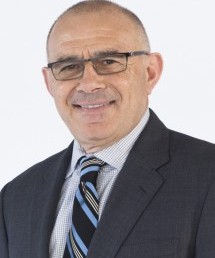
Sal Albanese (D)
To keep New York the center of opportunity in America, we have to create jobs in both the short and long term. I'll take a three-pronged approach: investing in education in a big way, diversifying the economy, and promoting good wages for all workers.
As mayor, infrastructure will be one of my top priorities. I will make every effort to provide incentives for contractors and city agencies to hire local residents at good wages to rebuild our neighborhoods.
Paid sick leave is essential. I support the bill passed by the City Council to guarantee paid sick leaves at businesses with 20 or more employees and support expanding it.
I am 100% supportive of raising the state minimum wage and indexing it to inflation. It is the right thing to do, plain and simple. No one can survive in this city on $9.00 an hour.
Tech and engineering will be essential to the city's future. We can diversify our economy by bringing manufacturing back to the city, giving small businesses room to grow, and bolstering the renewable energy sector.
In an Albanese administration, we are going to be very aggressive in making sure people do not discriminate when they hire. This goes straight to my core values. I believe in a just and fair society. Discriminating against the unemployed is outrageous.
The most effective way to address the systemic poverty affecting New Yorkers is to focus on the roots of the problem: inequality in income and education. I will fight to increase wages and revolutionize our approach to public education.
I was the first candidate in this race to roll out a public safety plan. It calls for an increase in the number of officers with a focus on community patrol and quality-of-life issues.
We live in the United States of America, and our constitution clearly states that nobody should be subjected to a search without probable cause. We need to reform stop and frisk to focus on quality stops, not meeting quotas. I have a plan to do just that.
The foundation of my educational policy will be early intervention. We now know that there is a strong correlation between poverty and learning difficulty. I plan to address this in part by establishing pediatric wellness centers throughout the city.
Competition provides an opportunity for experimentation, but it is no replacement for strong public schools in each of our neighborhoods.
Early intervention, better teacher training, a 21st century curriculum, and sports & arts programs are all critical to changing our city's poor performance when it comes to high school graduation rates and college preparedness.
Early intervention, a commitment to diversity in all schools, and an affordable post-secondary education will all be essential in expanding opportunities for black and Latino students.
Public and privately-funded programs for educating the prison population, including some supported by nonprofits, have had positive impacts and reduced recidivism. I will encourage private and nonprofit support where public funds are unavailable.
Early intervention, re-establishing arts and sports programs, and training better teachers will help lower the dropout rate. Increased access to GED programs & job training will be key to helping those already disconnected.
We need to work with developers to ensure new projects include more than 20/80 affordable housing. We need to hold developers accountable to building housing promptly. And we need to take a creative approach to building new housing on city land.
The best approach in the long-term is to build a fairer society. By expanding access to better schools, health care, housing, and jobs, we can prevent thousands of New Yorkers from entering the vicious cycle that leads to homelessness.
I am opposed to continuing an arrangement that starves NYCHA of the funding it needs. NYCHA was underfunded before funds began being diverted. The result has been a huge backlog of more than 400,000 repairs.
I will make every effort to ensure that our healthcare institutions are adequately staffed with people who speak the language of and are sensitive to cultural milieu of the communities they serve.
I pioneered anti-smoking legislation as a City Council member, eliminating tobacco vending machines, banning looseys, and banning smoking in the City Council chamber. I fully support the city's efforts to reduce obesity and smoking and would expand on them as Mayor.
We are currently waiting on a response from this candidate.
Learn More

Latest News from CSS
Press Release: Report Details Decline in Affordable Housing for Low-income New Yorkers
New Yorkers Weigh in on Top Priorities for the New Mayor