Related News
CSS Statement on the Rent Guidelines Board Vote
Public Housing and Section 8 Households Under Attack by Trump’s HUD
Small Buildings and Climate Change
Public Housing and Climate Change
More News


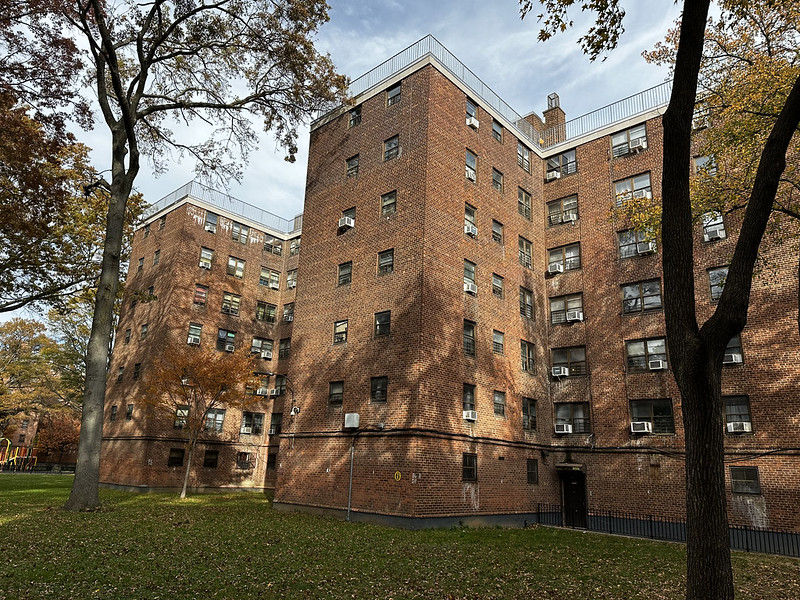

New York’s massive capital plans secure billions yet prioritize spending in almost every other area except public housing. A Public Housing Infrastructure and Investment Plan--what we are calling the PHIX New York Plan for short-- calls for viable and consistent capital funding for NY's public housing agencies, use of purchasing power to cut construction and costs and carbon emissions, add to the state’s housing supply, truly democratize public housing, and modernize our agencies so that they can actually spend the money they receive.
NY State could begin a process of addressing public housing capital needs right now with $900M this fiscal year. The State’s last housing plan was $25 billion dollars. Just 20% of that--a $4.5B investment--between FY25-FY30, preserve 15,000 NYCHA units, 25,000 public housing units outside of NYC, build 3,000 new NYCHA units, 5,000 new public housing units outside of NYC, grow our economy by $9.5 billion dollars with only $4.5 billion in capital spending.
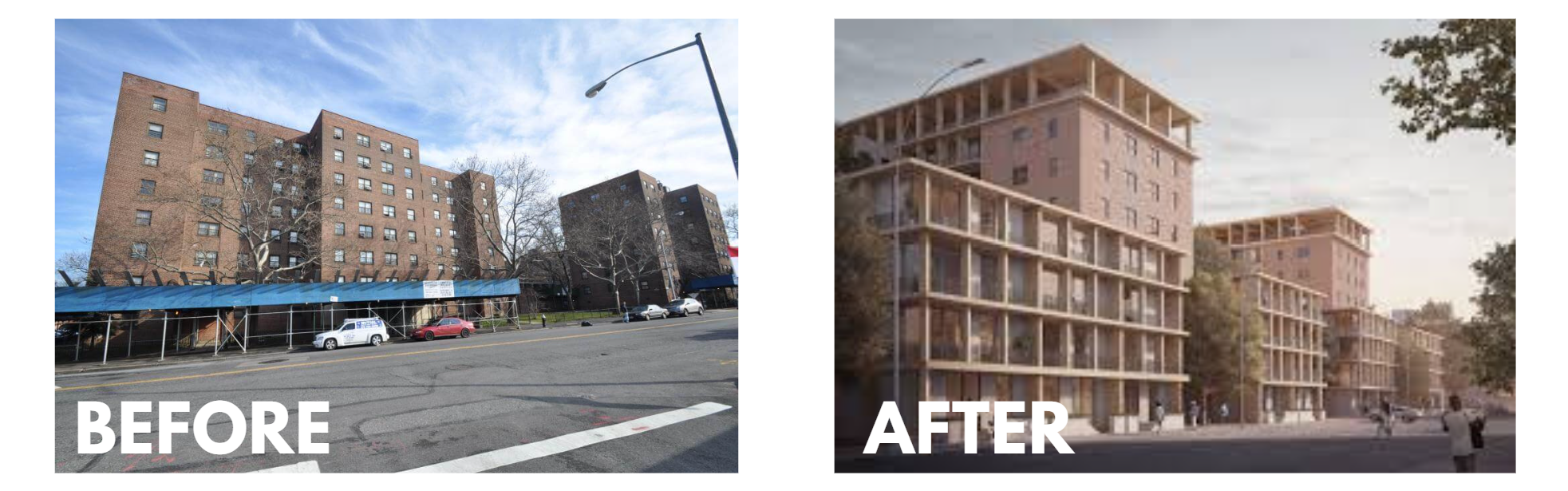
Federal and state governments (including NY) have long taken advantage of scale to cut prices and make markets. NY should bulk purchase standardized green appliances and components for public housing renovations. Where possible, the State should issue RFPs for the production of the equipment in-state ensuring that Passive Haus, mass timber, and modular construction are not just the luxuries of the wealthy.
Currently, NY State Law ties PHAs’ hands with archaic procurement rules. The state must reform public housing authority procurement and contracting rules, including the expansion of the design-build authority.
Strong resident governance is important to the social housing movement but has been neglected in public housing. The State’s capital funding should be tied to these requirements: Promotion of Resident Management Corporations (RMCs), CLTS or similar structures and resident votes for RADs; Site selection standards, the HOTMA over-income rule, 40% of construction hours performed by public housing residents & use of “Section 3 Business Concerns."
The state currently directs authorities to only serve the lowest income residents and promote private sector development. The state should broaden this mandate and work with PHAs and localities to take advantage of Faircloth, LIHTC, and revenues from the sale of air rights to make developments fully integrated in the existing community, add to the housing supply, and ensure the sustainability of public housing.
There is no accountability and oversight regarding evictions in public housing and voucher-converted properties., & grievance and tenancy hearings subject public housing tenants to policies unheard of in the housing court that private tenants face. S1904 will improve hearings and transparency, & the legislature must pass additional legislation to require PHAs adopt a Code of Conduct for hearing officers, modeled after NYC’s Office of Administrative Trials and Hearings (OATH) Officer Code of Conduct.
An analysis by CSSNY estimates that public housing developments in Western, Upstate, and Downstate New York, excluding NYC, require $691.6 million in capital repairs immediately. These dollars would eliminate asbestos, fix elevators, and end the repeated leaks and occurrence of mold--and they are needed yesterday. This chart displays the capital needs funding needed outside of NYC in NY. However, capital planning requires authorities to be able to predict funding levels years in advance. Ultimately, a consistent capital funding plan would put New York on the path of saving public housing.
Including funding for New York City, at $900 million in capital funding in the FY-2025 adopted budget, NY State would address decades of neglect. This would be the beginning of a 5-year plan that totals only 20% of the 2023 state housing plan.
This investment would not only impact the health of public housing residents and save NYer's homes, it will have widespread effects on the regional economy and in communities throughout the state.
Preserve 40,000 units
Build 8,000 units
Support 65,000 direct and indirect jobs
Create $9.5 billion in economic activity
Even with funding, public housing authorities have difficulties spending the money they receive. There are two major restrictions:
The reality is that public housing agencies were not built to create and manage the housing of the future. With federal code from the great depression and state charters only just younger, it’s no wonder that they have difficulty spending capital funds when it is allocated. While some of the restrictions placed on them are based federal law and regulation, the state can have a hand in modernizing PHAs. Steps that can be taken immediately include:
(Bills accomplishing these goals are tbd. We are looking for legislative sponsors and cosponsors to progress these changes.)
The units in this plan need the basics— drywall replacement, installation of new ceramic tiling and vinyl flooring, brand new bathtubs, showerheads, sinks etc.— as well as systematic replacements like the replacement of fossil fuel-powered furnaces and boilers (some of which are from the pre-Titanic era) to air source heat pumps (ASHPs) powered by zero-carbon electricity or at least more efficient systems. Many buildings are one accident away from falling bricks gravely injuring a resident because of old facades; and leaks and mold due to poor roofing already are harming inhabitants. Public housing directors across the state and developers in PACT and RAD projects have complained that there are consistent shortages of necessary materials and appurtenances. The PHIX NY ACT capital plan creates a market for supplies that improves both the public and private construction industry and lowers the estimated project costs for public housing, while simultaneously providing an opportunity for NY State to lower costs even more by carrying out bulk purchases. This is a common government practice:
Social housing comes in all shapes and sizes, and it fits everything from Community Land Trusts to limited equity coops. NY public housing residents have lived in the greatest source of public housing in the United States for decades, had their funding cumulatively cut by >$1.5bn and now are largely being given one option private management and voucherization via RAD.
In NYC, there is hope given the creation of the Public Housing Preservation Trust. However, we cannot let new strong social housing governance models be expanded in New York to some tenants, but have simular advancements not be applied to public housing developments. We have a plan... Call it TOPA for Public Housing.
(Bills accomplishing these goals are tbd. We are looking for legislative sponsors and cosponsors to progress these changes.)
11% more satisfied with their housing overall
17% more satisfied with their building's maintenance
Residents also had an enhanced sense of personal responsibility and were provided more supportive services and employment opportunities.
The path towards financial stability for public housing doesn’t have to be through private management. New, contextual development and the allowance of income mobility can put public housing on a path to a stable foundation once again. The biggest help in this would be for the Federal government to allow residents whose incomes increase to remain in their homes. However, state and local lawmakers can do their part as well.
(This plan dictates that the details involving any new units would require a resident vote as described earlier.)
And at the local level there is an opportunity to easily provide a fudning source for public housing immdiately.
Expand Transferable Development Rights (TDRs) and other zoning changes: The concept of air rights, which refers to the legal ownership of vertical air space above a developed real estate area, has emerged as a pivotal solution. Currently, air rights can be transferred through mechanisms like zoning lot mergers, special purpose district transfers, and landmark transfers. However, these methods are often restricted to adjacent properties or specific districts, limiting the potential for broader urban development and optimization of space. NYCHA has shifted unused development rights from one lot to another, as-of-right at the College Avenue - East 165 Street, Bay View, Manhatanville, and other public housing developments. The only exception is that property owners that are not immediately adjacent to a NYCHA-controlled lots, but are within the same block, may pursue purchasing NYCHA development rights, if the merged zoning lot contains contiguous parcels. This makes transferable development rights (TDR) difficult for the agency. The restrictions are contributory to continued poor conditions for NYCHA residents. PHAs like NYCHA should request for planning and zoning rules that benefit residents. Specifically, where necessary, they should push local planning authorities to allow for the transfer of air rights across larger districts, not just between adjacent properties or within the same block. By creating a Public Housing TDR Program, city and county planning departments could increase the frequency of transfers. This would contribute to preservation funding mostly in urban locations. PHAs should also look for other opportunities to advocate for beneficial zoning for local campuses.
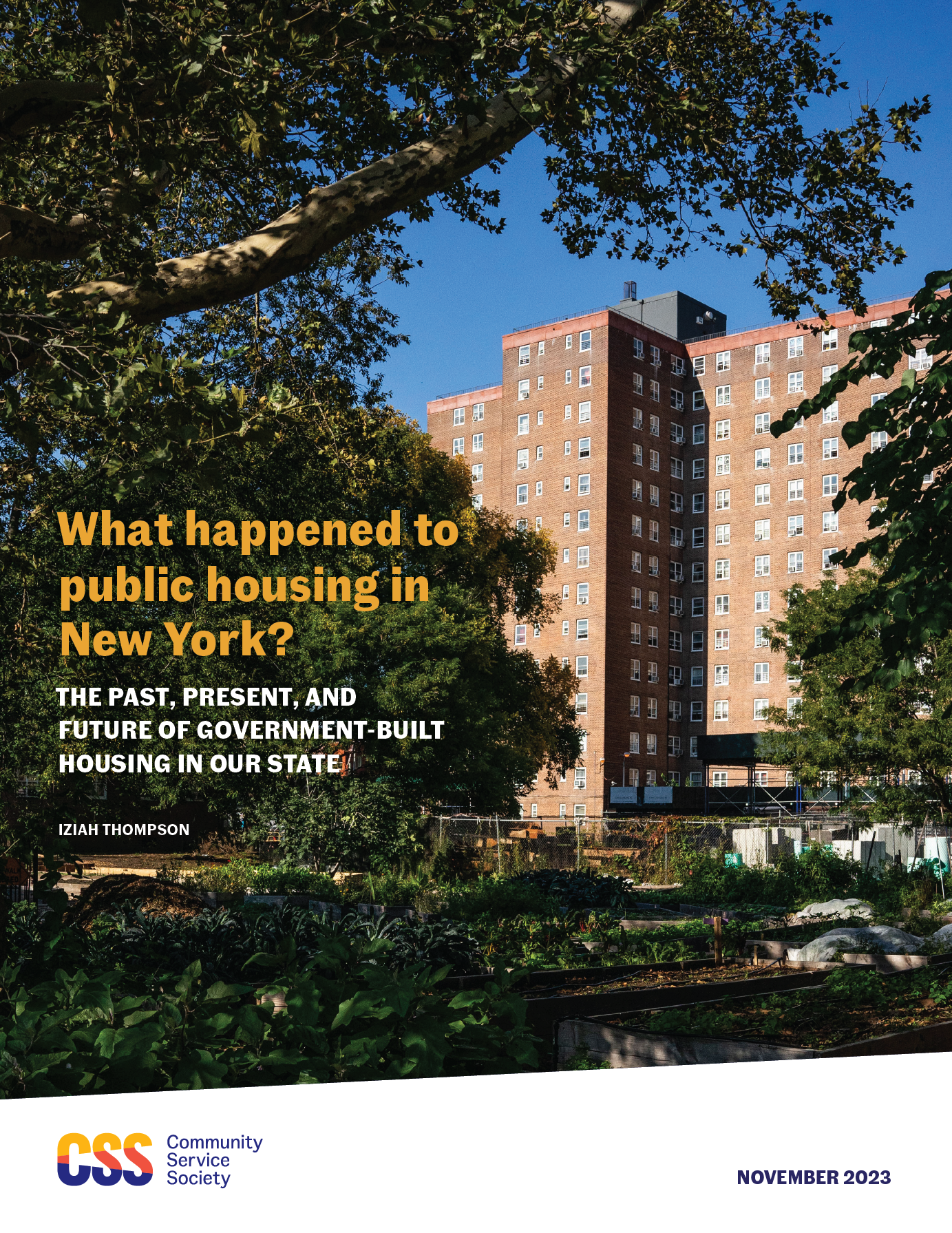
Across New York State, public housing residents often face similar issues whether it's long-needed repairs, lapses in accountability, or a host of other problems. A movement for the preservation and transformation of public housing in New York must leverage New York City’s strong foundation of resident advocacy and the 36,000 public housing residents across the state, from Long Island’s Gladys Gardens in Hempstead to the Packard Court of Niagara Falls.
While the worst of the effects of the COVID-19 pandemic are past us and residents look to find some sense of normalcy, economic impacts linger for New Yorkers. U.S. labor markets have rebounded to pre-pandemic levels and the city has regained most of the jobs lost to the pandemic, but serious inequities persist across racial lines. Most strikingly, the unemployment rate for Black New Yorkers was estimated to be at 12.2 percent compared to 1.3 percent for White workers.
By June 2023, CSS estimates that more than 50,000 public housing households in New York State will owe housing authorities a total of $589.4 million in rental arrears, most piled on since the onset of the pandemic.
For decades, the New York City Housing Authority (NYCHA) and its residents have been facing a difficult present and an uncertain future. Nevertheless, in the past two years, there have been reasons for cautious optimism.
Beginning in 2023, NYCHA residents will have the opportunity to vote on the future of their developments. They can decide to renovate through RAD conversion, renovate through the new Preservation Trust, or remain HUD Section 9 housing. However, 39% of residents say they don't have enough information to make a decision.
Before the outbreak of the coronavirus pandemic, NYCHA was already in a state of acute crisis. NYCHA In Flux: Public Housing Residents Respond attempts to capture the views and experiences of residents as of late 2019, marking a period of enormous institutional change for public housing in NYC.
With NYCHA in flux, this is a crucial time. Residents and their advocates need to know what’s happening and how they can have a stronger voice in decisions that affect them. Our monthly newsletter "NYCHA Need to Know" keeps people informed on the most important news related to public housing, including:
Public housing residents from across NY have called for $1 billion annually over the next five years for public housing to be included in the state’s adopted budget. The Governor’s executive budget did not include any dedicated funding for public housing. However, the New York State Senate and Assembly released one-house budget bills that meet the moment, as the federal government lessens its role in affordable housing. The Assembly’s budget gives full support to residents’ budget ask, allocating $1 billion for public housing. The funding is broken down into:
The Assembly, Speaker Heastie, Housing Committee Chair Linda Rosenthal, and many others are leading the charge to save public housing. But the work is not finished!
We need Governor Hochul and the State Senate to support the adoption of a budget that includes $1 Billion in funding for public housing, as laid out in the Assembly One House Budget Bill, and we have to tell the state to stop slowing down public housing construction. Every year we are left in the dark about how the housing agencies spend money and why construction takes forever. Part of the issue is that state law is forcing agencies to use a long, drawn-out process for construction projects. To undo this, all they just have to allow the hiring of companies that can plan, design, and do construction work also known as progressive design build authority, instead of making them bid to separate companies for the same projects! A3965/S6672 (Rosenthal/Cleare) is a bill that does this, and it requires housing authorities to provide clear reports on how much money they received in a year, from what sources, what it was spent on, and how much remains. Governor Hochul gave NYCHA progressive design-build authority in the recent executive budget; however, all housing authorities should be able to use it.
If you'd like to support and advocate this budget ask use our letter generator to send a message to your state elected officials.
Instructions: Choose or type your development below. Then insert your name and email address. A letter will be generated addressed to your assembly member and your state senator. Using the Send Email buttons, you can choose to send the letter and they will automatically be emailed to your representatives. If you'd like to download the email, edit, and/or send them yourself, use the Download Letter button. Or, if you'd prefer for us to mail the letter for you, press the We'll Mail It For You button.