2021 Voter Guide
- Viewing Candidate 5 of 10 ← Prev Next →
- Back to Voter Guide
Dianne Morales (D)
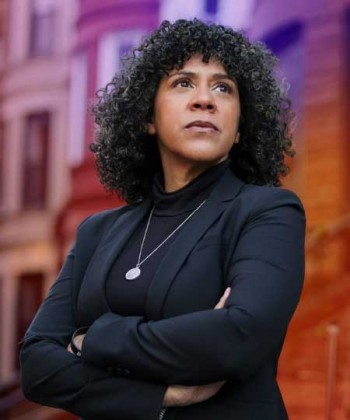 dianne.nyc


Latest News from CSS
Press Release: CSS Statement on FY 2027 State Budget
Albany can’t let half a million New Yorkers lose health coverage
Click a topic to see this candidate’s answers.
PrintCOVID-19
+1. Workers who have been hit hardest by pandemic-related job losses worked overwhelmingly in low-paid service industries such as restaurants, hotels, and other sectors requiring in-person interactions. These sectors have experienced widespread layoffs and business closures. How will your administration ensure that these workers can transition back to full-time employment?
To ensure that people are able to return to work we need a different type of economic growth that centers the well being and quality of life of all New Yorkers. In order to even begin to rebuild, we must first sign onto the demands for rent cancellation and debt relief to be paid for by taxing New York City’s wealthiest and/or federal aid. Additionally, we must expand funding for and the reach of city-based relief funds. This includes creating and funding more city-based emergency relief funds. Many of our most vulnerable are excluded workers who are unable to tap into federal assistance, and through city funds, we can make them more accessible and equitable. We must also urge wider reform, and sign onto the demands for rent cancellation and debt relief paid for by New York City’s most wealthy and/or federal aid. We must make investments in jobs programs, social housing, NYCHA, food justice, green spaces, and sustainable infrastructure, and build out the care economy with quality public childcare, paid family leave, and a Federal Jobs Guarantee program.
We are currently waiting on a response to this question.
2. The pandemic has exposed the absence of an adequate social safety net for undocumented workers, app-based gig workers, and other New Yorkers in nonstandard work arrangements. These workers are ineligible for employer-provided health coverage, unemployment benefits, and emergency government relief. What is your position on providing more financial assistance and workplace protections to these workers?
Where the federal and state governments fail to consider excluded workers like the undocumented, gig workers, and others in nonstandard work arrangements, the city must step in. The means testing that accompanies most safety net programs are barriers even to those who qualify for assistance. A Morales administration would build out programs to ensure that all workers are guaranteed quality healthcare/insurance, workplace protections (even those who do not work in traditional workplaces), and access to a safety net when they are under- or unemployed. We will also work toward guaranteeing a basic livable income so that under- or unemployment will not derail a New Yorker’s life.
We are currently waiting on a response to this question.
3. The pandemic and ensuing recession has destabilized the city’s low-income families, who were twice as likely as those with higher incomes to suffer permanent job loss related to COVID-19. The most vulnerable are children in households reeling from loss of income, food insecurity, and housing instability. What steps would you take to provide relief for low-income families struggling to survive as the city begins its economic recovery?
When the city begins economic recovery, we must make sure no one is left behind. The eviction moratorium must continue, and efforts made to cease any additional housing loss or displacement of residents. We must resist austerity. NYCHA should be completely reimagined by investing in existing and new housing in line with the Green New Deal on Public Housing to promote stable, safe, and sustainable homes for low-income families.
An integrated and holistic approach to food justice involves a reshaping of NYC policies that understands the role of large-scale poverty reduction, secure housing, the reduction and eventual elimination of unemployment, and access to nutrition. I would reduce barriers to food assistance as well as investment into more direct community food production involving community urban gardens, waste reduction systems, food upcycling, supporting local farmers and education for minority urban farmers, and finally expanding food and consumer cooperative and mutual aid systems in service of the most food insecure.
I’d prioritize creating more city funds that will actually bring cash with fewer constraints than the federal level into the hands of those who need it the most and rebuilding our social safety net. We must reinvest in public hospitals, clinics, and continued education on COVID-19 to ensure that we are prepared for the next crisis. This crisis has shown that our foundations around public health and language justice are weak and have allowed for the deaths of thousands of New Yorkers.
I also will partner with local CBOs and trusted community entities to implement information, testing, and vaccinations into communities with an equity lens and a strong commitment in ensuring language justice. Within my first 100 days I will implement a COVID-19 equity and data response unit to assess and address the ongoing vaccine disparities throughout NYC.
We are currently waiting on a response to this question.
Economic Equity
+1. According to a recent report from the New York State Comptroller, New York City is currently facing a $4 billion budget gap. How would you strengthen the city’s fiscal outlook while minimizing the impact of potential cuts in critical public services on low-income New Yorkers?
I’m on the record for defunding the NYPD by $3 billion. Some other ways to increase municipal revenue include supporting progressive tax policy such as a wealth tax, vacancy taxes, financial speculation taxes, and a land value tax. This would require working towards bringing more tax authority to the city. In addition, the city must be prepared to use alternatives for its investment capacity that does not require revenue but rather fiscal credit generating capabilities. Such ideas include the introduction of a city complementary currency and public banking. Lastly, a mayor must work to establish a coalition of cities that will pressure the federal government to use its power of the purse to provide municipalities with automatic stabilizing spending policies as needed.
We are currently waiting on a response to this question.
2. The COVID-19 pandemic has demonstrated the devastating racial inequities that exist in our city – from healthcare access to housing discrimination to education resources. What will you do as mayor to address racial disparities in city policymaking?
My entire campaign is based on the notion of dismantling the systems and structures of oppression. My platform prioritizes striking at the key pillars that work to maintain the status quo. I will work to create safe communities that increase access and opportunities for low-income, Black and Brown communities by providing housing for all, desegregating education, building a democratized, solidarity economy, and divesting from police and investing in communities. These measures will begin to address the critical needs of our communities that will allow all New Yorkers to be able to live in dignity.
My career has been dedicated to serving the underserved. I will ensure that all New Yorkers receive fair and equitable treatment from the city government. The implicit bias that pervades our government requires many changes in policy funding, operating culture and attitudes. My administration will shift resources from arresting and incarcerating Black and Brown New Yorkers to supportive and preventive services. We will create equity and opportunity in the education system, provide housing for all, and champion fair wages and worker safety.
In addition, we need deep collective healing, and a full commitment from all of our community members. It starts with centering a racial justice lens in our education system, and it continues by finding equity in the leadership of institutions who value and understand the urgent need to eradicate the white supremacy that flows through so many of our systems.
We are currently waiting on a response to this question.
3. Student loan debt is impacting about one million New York City residents, and first-generation college students and communities of color are bearing the brunt of this debt. What role can New York City play in tackling student loan debt and how would you start to address these disparities?
In order to eliminate student debt, we must take a double pronged approach, looking at both the short-term and long-term processes. To begin to make an impact the city should educate high schoolers and their guardians on the college admissions process from choosing where to apply, to how to identify predatory lending offers. The loan companies take advantage of the fact that students, particularly young, first generation and low-income applicants, do not know their rights when it comes to borrowing. I will work with our delegation in Albany to expand the Student Borrowers Bill of Rights passed in 2019. But of course, financial literacy classes do not mitigate the harm from generations of economic and racial oppression, and I will be working to lessen these gaps throughout my tenure.
As mayor, I would work to make the CUNY system tuition-free, and focus additional funding to CUNY’s continued academic excellence. I would also collaborate with our representatives in DC to push legislation that ends the practice of opaque deals between the government and private loan companies, which allow them to make disadvantageous terms for the borrower. I would also lobby for total student loan debt forgiveness.
We are currently waiting on a response to this question.
4. More than 220,000 New Yorkers have enrolled in Fair Fares, a program that provides half-priced MetroCards to New Yorkers living at or below poverty. Yet the program was slashed by $65 million in the city's Fiscal Year 2021 budget. Most low-income New Yorkers continue to rely on public transit for their daily commute and jobless New Yorkers struggle to afford the fare as they attempt to return to the workforce. What is your position on ensuring adequate funding for the continued expansion of Fair Fares?
New Yorkers that qualify for the Fair Fares program should not be burdened by losing their entitlement or having to pay more. The cuts that were approved last July further threaten those that have been affected the most by the pandemic - low-income essential workers and their families - and puts another barrier in their path to recovery. As mayor, I would advocate for a transportation budget that would allow us to expand the program.
We are currently waiting on a response to this question.
Housing
+1. Under the de Blasio mayoralty, affordable housing has been a key priority, but the housing that has been produced has not met the needs of the bottom 40 percent of income earners. How would you re-align both the city’s affordable housing programs and its land use policies to promote deeper levels of affordability at a larger scale?
A Housing for All initiative that fights to bring down and stabilize rents, prioritizes low-income earners, takes housing development and land significantly off the speculative market and instead builds needs based quality mixed income housing similar to the Vienna model. We would also implement a better use of land and existing space policy that includes a land value tax for vacant and blighted land to discourage speculation. Through the use of land banks, community land trusts, and cooperative housing models, the Morales administration would also democratize housing to meet New Yorker’s needs and not simply to profit off of space and real estate.
We can assure affordability and sustainability by imposing vacancy taxes on pieds-à-terre and vacant luxury apartments held by landlords; implementing land value taxes; exercising eminent domain, converting city-owned vacant land into community land trusts, and placing them in community land trusts for safe keeping; and creating contracts that prioritize non-profits who will hire unionized workers and supers from workers collectives, especially in immigrant neighborhoods. We would also move away from the traditional model of speculative housing to one that prioritizes social and cooperative housing.
I am also a strong proponent of the Vienna model for social housing. A large part of the success for the public housing in Vienna can be attributed to the local government buying properties to keep them off of the speculative market. This allowed housing projects to be built for and by the working class. The result has been decades of decent, affordable, and community based social housing. The tenants have democratic say in the building and city’s practices. We should follow their lead and utilize the existing community land trusts while developing a mechanism for the city to obtain land and put it back in the hands of the community.
We are currently waiting on a response to this question.
2. NYCHA and its 500,000 residents are an integral part of the city, and homelessness has reached record highs. Yet public housing and homelessness are often treated as afterthoughts or outliers in city planning discussions. How should the next mayor integrate preserving public housing and ending homelessness into their comprehensive affordable housing plan?
Housing for All is not just about a roof and four walls: it’s about living in dignity. Public housing, historically, has been discriminatorily underfunded for over 5 decades on a federal level. As incoming mayor, I will work hard with the Biden administration, and the incoming Secretary of Housing and Urban Development, Hon. Marcia Fudge, to ensure that the funding schemes equitably prioritize New York City. Our policies must reflect housing as a human right, and I will work with the New York City Human Rights Commission to design a framework around that. I believe in fully funding NYCHA as needed, in alignment with the Green New Deal for Public Housing, including employing NYCHA residents in retrofitting and upgrading NYCHA stock as part of a climate adaptation and resiliency program. I am opposed to the privatization of NYCHA and support the democratization of NYCHA governance by putting more decision-making authority and power in the hands of tenants.
I would also bring together a commission tasked with providing a pathway to totally eliminate homelessness in New York City within a reasonable timeframe. We will work with the newly elected Super Majority at the state level to renew the ESSHI (Empire State Supportive Housing Initiative) and integrate its services into our Housing for All policy platform. This means bringing a substantial part of housing development out of the speculative for-profit market and instead centering development for need through a mixed income social housing initiative and adequate rent stabilization and tenant protections to avoid displacement. We will ensure that the city’s supportive housing works side-by-side with an expansion of public healthcare services including mental health and disability services for the displaced and formerly homeless. We must also work through economic development policy to support employment programs and a basic income program.
We are currently waiting on a response to this question.
3. Despite new city investments in NYCHA public housing during the de Blasio administration, the data indicates these investments have not kept pace with worsening, accelerating deterioration of resident living conditions. What initiatives would you take to improve NYCHA living conditions and address its $40 billion capital backlog?
I support the Green New Deal for Public Housing and Rep. Nydia Velazquez’s current bill that will work to fully fund NYCHA repairs. We need to rethink the governance structure of NYCHA and make sure that the tenants have the resources and power to truly maintain community control of their housing. We need an expansion of public and social housing and could secure this through use of eminent domain and the municipalization of public land. The capital backlog could also be addressed through the city enforcing and increasing fines on violations by real estate developers, and land value and vacancy taxes.
We are currently waiting on a response to this question.
4. Decades of risky financial practices have left rental buildings overleveraged and vulnerable to foreclosures or debt buy-outs, with pandemic-related rent arrears adding to their financial distress. As a result, many landlords are having difficulty maintaining payments on their buildings. What would you do as mayor to prevent speculative investors from buying up these buildings and their debt, and to instead promote their preservation as permanently affordable forms of social housing?
I am a strong proponent of the Vienna model for social housing. A large part of the success for the public housing in Vienna can be attributed to the local government buying properties to keep them off of the speculative market. This allowed housing projects to be built for and by the working class. The result has been decades of decent, affordable, and community based social housing. The tenants have democratic say in the building and city’s practices. I believe that we should follow their lead and utilize the existing community land trusts while developing a mechanism for the city to obtain land and put it back in the hands of the community.
We can assure affordability and sustainability by imposing vacancy taxes on pieds-à-terre and vacant luxury apartments held by landlords; implementing land value taxes; exercising eminent domain, converting city-owned vacant land into community land trusts, and placing them in community land trusts for safe keeping; and creating contracts that prioritize non-profits who will hire unionized workers and supers from workers collectives, especially in immigrant neighborhoods. We would also move away from the traditional model of speculative housing to one that prioritizes social and cooperative housing.
We need an expansion of public and social housing and could secure this through use of eminent domain and the municipalization of public land. The capital backlog could also be addressed through the city enforcing and increasing fines on violations by real estate developers and implementing land value and vacancy taxes.
We are currently waiting on a response to this question.
Health Care
+1. Immigrants are disproportionately uninsured due to federal and state policies that limit eligibility and discourage access to health programs available to citizens and lawful residents. As mayor, what types of programs or policies would you champion to maximize enrollment of immigrants in quality insurance coverage that they can afford?
I would champion the passage of the New York Health Act, and in the interim, would see that local community-based health organizations were given funding to cover and assist immigrants with their health needs since they are often more trusted, especially by those most vulnerable and undocumented.
We are currently waiting on a response to this question.
2. In 2020, Manhattan had 6.4 hospital beds for every 1,000 residents, while Queens had only 1.5 hospital beds for every 1,000 residents. Similar disparities exist in the Bronx and Brooklyn. The COVID-19 pandemic is exposing the devastating toll these maldistributions have had on New York’s communities of color in the outer boroughs. What would you do as mayor to ensure that healthcare infrastructure is distributed equitably?
In the last two decades, we have lost over 20,000 hospital beds through budget cuts and allowing public hospitals to close, often at a disservice if not intentional harm to our communities of color. Under my administration, I will be advocating for, budgeting, and pushing for the creation of more public hospitals, more community health centers, and increasing our healthcare system.
We are currently waiting on a response to this question.
3. Policy experts and advocates have long argued that New York City’s public Health and Hospitals system that serves hundreds of thousands of low-income uninsured patients annually is under-funded by the state lawmakers that control the allocation of billions of Indigent Care Pool and Medicaid dollars. Mayors typically have been unable to turn this situation around. What would you do to improve the financial stability of NYC Health + Hospitals?
Achieving the care we need, especially in light of the pandemic, is about resources as well as an equity strategy. In one of the richest cities in the world, we still witnessed understaffed and poorly equipped hospitals in Queens and Brooklyn during the greatest health crisis of our time. We’d commit more funds to the hospital system in order to ensure that costs for New Yorkers were offset. We’d see to it that NYC’s Office of Management and Budget (OMB) worked alongside H+H leadership to develop a new approach to financial planning and budgeting. We’d want to see multi-year goals to ensure that we were targeting their operating deficit and allocating as appropriate between $1-$3 billion. Benchmarks and goals should be publicly monitored. We would offset costs for programs like NYC Care and will be working to see how we can develop and create universal healthcare and insurance enacted on the local level.
We are currently waiting on a response to this question.
4. Over 6,000 New York City residents have been sued by New York’s non-profit charitable hospitals for medical bills, often at a 9 percent commercial interest rate. Hospital lawyers usually win these cases on default – most patients do not appear in court and none have lawyers. What would you do as mayor to protect patients and prevent non-profit hospitals from filing these lawsuits and other unfair and/or discriminatory hospital policies?
Non-profit hospitals are actually the more likely to sue and keep patients in a cycle of debt and poverty. I will support policies and advocacy to regulate against these harmful practices. I will also work on the local level to ensure patients have access to free legal resources to combat these predatory practices.
We are currently waiting on a response to this question.
5. Black women in New York City are much more likely than white women to die from pregnancy-related causes. What would you do as mayor to address the maternal mortality crisis experienced by Black and Brown women in New York City?
The Reproductive Health Act was a start! In New York City, I’m committed to seeing increased public health access, education, and support especially considering maternal health rates for Black mothers. In NYC, we’re 12 times more likely to lose a Black mother during pregnancy (worse than the national average), and that’s unacceptable. I will ensure funding for programs that continue to increase reproductive & maternal healthcare, especially in our communities of color, and will also continue the funding for the Abortion Access Fund.
Our best healthcare facilities are among the best in the world, but accessing those hospitals and resources is not equitable. As mayor I would move to ensure coverage of every New Yorker, starting with those who are hardest hit by our current inequities. I would work with our delegation to pass Sha-Asia’s law establishing a maternal mortality review board.
We are currently waiting on a response to this question.
Criminal Justice
+1. Following a series of highly publicized police killings of civilians, police reform is on the nation’s agenda. Here in New York City we’ve been concerned over the NYPD’s troubling lack of accountability for officer misconduct, as well as general lack of transparency and apparent lack of real action concerning disciplinary issues. What would you do as mayor to hold officers accountable for misconduct, and how would you reform the NYPD to minimize that misconduct, if not eliminate it?
As Mayor of New York, I will move to end the long history of police brutality against communities of color, especially black people. We can now see in real time, inexcusable acts of violence that have taken place for generations. We will not allow the NYPD or the Police Benevolent Association to protect their members from accountability for acts of misconduct. To create accountability, we will implement an Early Intervention System. Infractions by officers must be tracked, reviewed, be made public, and officers must be held accountable by the public they serve. This system must identify patterns of inappropriate, violent behavior by officers, and report regularly to the Civilian Complaint Review Board (CCRB) and the District Attorney’s office. The Civilian Complaint Review Board has been demonstrably inadequate in its ability to hold police accountable. It should become an elected body and be given powers to investigate and discipline police officers. District Attorney’s offices must create separate, independent divisions responsible solely for criminal prosecution of police. Along with the CCRB, this division will build and maintain a comprehensive, verified list of police officers who are accused and found guilty of misconduct. When a police officer violates the public trust, they will be forced to forfeit any privileges afforded to them by the public, including salaries, pensions and other benefits. We will end placard abuse, and officers will face the same consequences as any other person. Offending officers and their benevolent association will be held financially liable for any restitution owed to their victims.
We are currently waiting on a response to this question.
2. The enduring consequences of a criminal conviction history can result in a “civil life sentence” that denies individuals access to jobs, housing, higher education, bank accounts, and credit. Given this reality, how would you work to ensure that fewer New Yorkers become entangled with the criminal justice system in the first place? In your answer please include any diversion programs you think should be introduced or expanded, particularly those that could obviate the need for arrest in certain circumstances.
I support the ‘de-coupling” of mental health crises from policing through the creation of a Community First Responders Department that would be staffed by trained professionals skilled in de-escalation and intervention in order to respond to needs of the community. We know that the majority of 911 calls do not require police, and that those in mental health crisis are more vulnerable (if not deadly) when it is a police officer showing up, and not someone trained to help de-escalate in those situations.
The best diversion programs are those that prevent interaction between New Yorkers and the criminal justice system. When people are having mental health episodes, they do not need to encounter the NYPD. Unhoused people who may be loitering or camped somewhere (“trespassing”), they do not need to encounter the NYPD. They need help that the NYPD cannot offer them. They need mental health resources, and/or housing. By defunding the NYPD and decriminalizing certain offenses, we can prevent New Yorkers from becoming entangled with the criminal justice system. Even a day of incarceration has such adverse effects on a person’s life, and we can do best by vulnerable New Yorkers by investing in their quality of life.
We are currently waiting on a response to this question.
3. Of the 13.3 percent of Americans currently looking for work, individuals with a criminal record will almost certainly be among those last hired once jobs do reappear. What are your thoughts on legislation that allows individuals to have their record expunged after a certain period of time?
I don’t believe that a criminal record should affect anyone’s employment opportunities for any length of time. I would support legislation that proactively prevents formerly incarcerated people from being discriminated against in employment or otherwise excludes them from employment opportunities. If we hope to break cycles of incarceration, we have to stop creating barriers to employment, housing, financial support, and other services for those who have entered the system.
We are currently waiting on a response to this question.