2021 Voter Guide
- Viewing Candidate 4 of 10 ← Prev Next →
- Back to Voter Guide
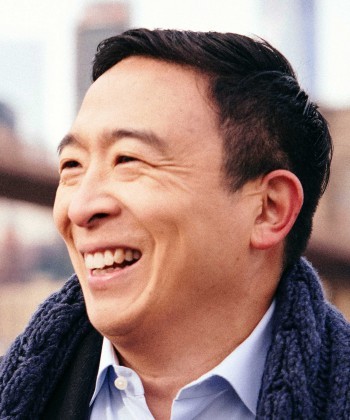
Andrew Yang (D)
 www.yangforny.com/

Latest News from CSS
Press Release: CSS Statement on FY 2027 State Budget
Albany can’t let half a million New Yorkers lose health coverage
Click a topic to see this candidate’s answers.
PrintCOVID-19
+1. Workers who have been hit hardest by pandemic-related job losses worked overwhelmingly in low-paid service industries such as restaurants, hotels, and other sectors requiring in-person interactions. These sectors have experienced widespread layoffs and business closures. How will your administration ensure that these workers can transition back to full-time employment?
Under a Yang administration, the first step would be to implement a $1 billion cash relief program for New Yorkers experiencing deep poverty, many of whom live in our most marginalized neighborhoods. These are the folks who have suffered the most through the pandemic and long before it. I am also looking into ways to make property tax reform more fair, ensure that for-profit sports arenas – who currently pay $0 in property taxes – contribute more to help us recover and to build additional affordable housing throughout the city. Indeed, NYC has more wealth than any other city in the world and we have to reallocate resources to create a more economically just system. We will bring a People’s Bank to New York, the nation’s first city-backed financial institution with the goal of not only making use of the huge amount of financial capital in this city, but to have it flow towards New Yorkers beyond the ultra-wealthy.
I have also laid out a small business plan that focuses on bringing back our local establishments by reducing regulatory burdens, curing violations, expanding existing programs that work like permanent outdoor dining, and building 15,000 new businesses in 2022.
Above all, I aim to make NYC the COVID comeback city of the nation. To do that we will need to effectively and equitably vaccinate our population. We need to restore confidence that the city is safe and welcoming so that tourists want to come here and families want to stay here. We also need to restore confidence that it is safe to go to restaurants and performances, which is why I have proposed a vaccine app to verify one’s vaccination status so that people in establishments can be assured they are safe and our economy can open up as soon as possible.
Read more about my preliminary small business plan here (more to come): https://www.yangforny.com/policies/relief-for-our-small-businesses
Read more about my effective and equitable vaccine distribution plan here: https://www.yangforny.com/policies/effective-equitable-vaccine-distribution
We are currently waiting on a response to this question.
2. The pandemic has exposed the absence of an adequate social safety net for undocumented workers, app-based gig workers, and other New Yorkers in nonstandard work arrangements. These workers are ineligible for employer-provided health coverage, unemployment benefits, and emergency government relief. What is your position on providing more financial assistance and workplace protections to these workers?
I ran an education company for years. We had a choice between classifying teachers as independent contractors or employees with benefits. We chose employees because we thought it would enable them to access benefits. It was more expensive but I believed it was the right thing to do in part because more employees preferred it.
A key theme of my presidential platform was that the market has failed to properly value most of our labor in this country, and that many of the rules of economics that built the middle class of the last century no longer apply. In the mid-1900s, someone could find a company, work there for several decades, and retire with a house, pension, and healthcare. Today, companies do everything in their power to avoid providing benefits and a living wage to workers, especially the undocumented. Through the course of the pandemic, I advocated at the federal level to make sure all workers were treated equally well, and that a legal distinction would not stand in the way of gig workers, freelancers and other independent contractors receiving a baseline level of rights and benefits.
The pandemic made clear that cash relief is one of the most important ways that the government can help families, independent workers and the working-class get back on their feet and have some stability in between gigs/contracts or during slower times for their work. New policies are needed to address these economic inequities and I intend to do just that as mayor. That is why I am exploring options to create the first-of-its-kind city-run portable benefits fund to ensure independent workers have access to health coverage, paid sick leave, workers compensation and other protections.
We are currently waiting on a response to this question.
3. The pandemic and ensuing recession has destabilized the city’s low-income families, who were twice as likely as those with higher incomes to suffer permanent job loss related to COVID-19. The most vulnerable are children in households reeling from loss of income, food insecurity, and housing instability. What steps would you take to provide relief for low-income families struggling to survive as the city begins its economic recovery?
I am running because, now more than ever, New York City needs an anti-poverty mayor who will address the root causes that have led to severe economic inequality in New York City. During my presidential campaign, we built a movement of millions of Americans hoping to transform our economic system – a system with too many jobs that didn’t meet the changing needs of our 21st century economy.
Throughout this mayoral campaign, I intend on fostering a broad-based movement across all five boroughs. New Yorkers want a robust and fair COVID-19 recovery and I believe our cash relief plan that will direct a $1 billion basic income program to provide direct cash relief to the most impacted New Yorkers, along with our commitment to growing small businesses, establishing a People’s Bank, building more affordable housing driven by community needs, and reforming our criminal justice system will lead to the rebuilding of a stronger New York City.
We are currently waiting on a response to this question.
Economic Equity
+1. According to a recent report from the New York State Comptroller, New York City is currently facing a $4 billion budget gap. How would you strengthen the city’s fiscal outlook while minimizing the impact of potential cuts in critical public services on low-income New Yorkers?
When it comes to getting our budget back on track, there is nothing more important than getting the city opened back up safely. New York City small business revenue is down by more than 50% versus a year earlier and unemployment in the city remains above 11%. To safely reopen, we need to get New Yorkers vaccinated and, with so much of the city shut down, there is no shortage of potential vaccination sites to make the vaccine more accessible to Black and Hispanic communities. As vaccination rates increase, we need to start giving New Yorkers tools such as certifications they can display on their mobile devices to show they have been vaccinated and build trust among each other that it is safe to resume normal life. We need to build upon the vaccination tailwinds and make New York City the first urban center to come back stronger from the pandemic by focusing on the restaurants, cultural institutions, street life, and nightlife that make New York a top draw for creative professionals and, consequently, their employers.
That being said, we do need to be smart and creative to generate the revenue we desperately need to close our budget gap and invest properly in our social services and infrastructure. In New York City, we have an antiquated property tax reform system that’s been unbalanced too long, where rich people end up paying next-to-nothing. We have an array of unjust carveouts for institutions like Madison Square Garden that reap all of the benefits of city services without paying their fair share. These unfair stipulations are baked into the way our city operates that in practice, continue to benefit the rich and well-connected operatives. My administration will reform this system in a way that raises significant revenue for the city.
We are currently waiting on a response to this question.
2. The COVID-19 pandemic has demonstrated the devastating racial inequities that exist in our city – from healthcare access to housing discrimination to education resources. What will you do as mayor to address racial disparities in city policymaking?
In New York City, poverty – and subsequent lack of access to healthcare, quality education, and affordable housing – is an issue that overwhelmingly impacts communities of color, above and beyond our city’s white residents. As New York City’s anti-poverty mayor, I will bring a strong and principled racial justice lens to governing. New York City also has a rich history of activism in New York City led by people of color who have been most directly impacted by poverty and its many tentacles. As mayor, I am committed to bringing all stakeholders to the table, hearing from each of them, and proposing solutions that have broad buy-in. That also means bringing groups that have traditionally been excluded from policy decisions to the table. I look forward to working with New Yorkers of different backgrounds and with different needs to solve the most pressing problems facing our schools and our city when I’m mayor.
We are currently waiting on a response to this question.
3. Student loan debt is impacting about one million New York City residents, and first-generation college students and communities of color are bearing the brunt of this debt. What role can New York City play in tackling student loan debt and how would you start to address these disparities?
It should not be this expensive to get a college education. As mayor, I would use my existing relationships with the Biden White House to advocate to cancel student loan debt, particularly for low-income borrowers and those involved in public service. But we also have the crown jewel of public education here in NYC – our CUNY system is a precious resource that requires further investment. We must also connect more New Yorkers to the fantastic programming CUNY runs and expand on these opportunities so that they are responsive to community needs and accessible to more students. For example, I have proposed creating a stronger pipeline for more people of color to become birth workers and doulas, this will involve strengthening programs at CUNY that already provide this and other training.
We are currently waiting on a response to this question.
4. More than 220,000 New Yorkers have enrolled in Fair Fares, a program that provides half-priced MetroCards to New Yorkers living at or below poverty. Yet the program was slashed by $65 million in the city's Fiscal Year 2021 budget. Most low-income New Yorkers continue to rely on public transit for their daily commute and jobless New Yorkers struggle to afford the fare as they attempt to return to the workforce. What is your position on ensuring adequate funding for the continued expansion of Fair Fares?
Fair Fares must be restored and expanded. Enabling safe and affordable access to the city’s buses and subways will be crucial to getting our economy back-on-track. I plan to expand the program to CUNY students to begin with. If we want young people to stay and move to the City, and then stay here once they have families, we need to be more responsive to their needs and show we care about their trajectory in the city.
We are currently waiting on a response to this question.
Housing
+1. Under the de Blasio mayoralty, affordable housing has been a key priority, but the housing that has been produced has not met the needs of the bottom 40 percent of income earners. How would you re-align both the city’s affordable housing programs and its land use policies to promote deeper levels of affordability at a larger scale?
Addressing housing affordability requires that we support rent burdened New Yorkers to prevent displacement in our communities and increase the supply of affordable housing.
To address the immediate eviction crisis caused by COVID-19, I support reasonable extensions of the current eviction moratorium, expanded federal rent relief, and making sure that any city-administered rent relief program is accessible to all tenants, not just those with the means to navigate the system. Landlords who agree to either share with tenants impending property tax reductions caused by reduced assessments or forgive unpaid rent during the COVID-19 Covered Period should also receive additional property tax relief from the city. Doing so will prevent a proliferation of debt collection lawsuits against cash strapped tenants. I’m also going to expand the right of counsel in housing court and pilot Eviction Diversion programs which will divert many eviction proceedings out of housing courts so that willing landlords and tenants can find payment options without the threat of immediate eviction.
Increasing the supply of affordable housing requires us to use innovative housing models that get more use out of the existing housing stock. I am going to modernize the city’s Housing Maintenance Code and Zoning Resolution to allow for co-living uses, Small Dwelling Efficiency Units, Accessory Dwelling Units, and conversions of obsolete commercial building and unused hotels to residential uses. We must also look at existing MIH options and ensure that we are pulling the right levers to incentivize deeper levels of affordable housing and push back on developers who say it is not economically feasible to build deep affordable units. It also will require incentivizing the creation of two and three-bedroom units, rather than just studios, like under the de Blasio administration. We must adjust the MIH program so that it serves the needs of communities.
We are currently waiting on a response to this question.
2. NYCHA and its 500,000 residents are an integral part of the city, and homelessness has reached record highs. Yet public housing and homelessness are often treated as afterthoughts or outliers in city planning discussions. How should the next mayor integrate preserving public housing and ending homelessness into their comprehensive affordable housing plan?
There are far too many homeless individuals and families who live on the streets and reside in our shelters. As mayor, my anti-poverty agenda speaks directly to the core of this problem, seeking to uplift 500,000 of the city’s poorest so that they can have a fighting chance. Beyond this, I plan to convert limited-service hotels, particularly in the outer boroughs, into supportive housing, giving people the resources they need to find permanent housing and build a sustainable life, create more deeply affordable units, including micro units for single adults who might otherwise be in the shelter system and expanding supply overall, which will lead to more housing opportunities and options, particularly for low income New Yorkers. Homelessness is the end result of the housing instability that affects millions of New Yorkers. The same policies that I would use to prevent displacement and assist rent burdened New Yorkers will also help to make sure more working families have a permanent, affordable place to live. Above all, we must ensure our most vulnerable have access to the mental health, jobs and supportive services they need.
We are currently waiting on a response to this question.
3. Despite new city investments in NYCHA public housing during the de Blasio administration, the data indicates these investments have not kept pace with worsening, accelerating deterioration of resident living conditions. What initiatives would you take to improve NYCHA living conditions and address its $40 billion capital backlog?
Just last week I joined Rep Ritchie Torres and tenant leaders in launching a robust plan to not only secure the needed $40 billion in capital repairs from the federal government but ensure that any new infrastructure and upgrades are in accordance with the highest energy efficiency standards. A green revolution for NYCHA will address the systemic failures that have led to leaks, mold, lead paint and worsening conditions. Beyond this, I’ve also put forth a plan for expanded resident democracy and vowing to not build luxury developments on NYCHA land.
Read more about my plan for Green Reinvestment in NYCHA: https://www.yangforny.com/policies/green-reinvestment-in-nycha
And my plan for greater Resident Democracy: https://www.yangforny.com/policies/expanding-resident-democracy-at-nycha
We are currently waiting on a response to this question.
4. Decades of risky financial practices have left rental buildings overleveraged and vulnerable to foreclosures or debt buy-outs, with pandemic-related rent arrears adding to their financial distress. As a result, many landlords are having difficulty maintaining payments on their buildings. What would you do as mayor to prevent speculative investors from buying up these buildings and their debt, and to instead promote their preservation as permanently affordable forms of social housing?
Keeping multi-family residential rental buildings out of the hands of speculative investors requires the city to support community-based organizations (“CBOs”) and community land trusts (“CLTs”) that want to purchase properties. Properties owned by CBOs and CLTs will be managed for the benefit of tenants, not profit maximizing private investors. I would dedicate city resources to assist CLTs and CBOs in financing and purchasing properties in their communities. I will also work with the Biden administration and Congressional Democrats to establish federally guaranteed mortgages that CBOs and CLTs can use to purchase distressed properties and finance rehabilitation and ongoing operating expenses. Properties owned by CBOs and CLTs will be permanently affordable. To prevent buildings owned by small landlords from becoming distressed, I support efforts to give small landlords rent relief, including establishing a Housing Stability Relief Fund that would pay rent arrears for tenants in buildings owned by small landlords.
Financially distressed owners of single family and two-family homes are vulnerable to speculative practices. We must fight back against predatory investors that come into communities and exploit vulnerable homeowners, triggering further displacement.
I believe in comprehensive community-led rezonings. By ensuring that communities are rezoned smartly and with community input, we will prevent developers from coming in and building how they want to, when they want to. Take Bushwick for example. Currently, speculative practices have gone unchecked and development has been out-of-context, along with great pressures on rent increases and displacement, because the city has not made good on the neighborhood's efforts to prevent displacement, maintain affordability, and bring city resources to the area through the Bushwick neighborhood plan.
We are currently waiting on a response to this question.
Health Care
+1. Immigrants are disproportionately uninsured due to federal and state policies that limit eligibility and discourage access to health programs available to citizens and lawful residents. As mayor, what types of programs or policies would you champion to maximize enrollment of immigrants in quality insurance coverage that they can afford?
In 2020, the city rolled out NYC Care, an insurance program that intended to extend health insurance coverage to people who do not qualify for any other options, mostly undocumented adults. In spite of the urgency of the pandemic, this administration has done little to extend awareness, enrollment and the importance of a program like NYC Care, which can serve a critical role in our safety net that continues to leave so many immigrant New Yorkers out. I will unequivocally extend NYC Care to cover people seeking care at providers other than only H+H, and will ensure that we engage in a robust outreach campaign so all people who might qualify can get the healthcare – and especially preventative healthcare – that they are due.
More on my commitment to immigrant communities is detailed in my Sanctuary City platform here: https://www.yangforny.com/policies/a-sanctuary-city
We are currently waiting on a response to this question.
2. In 2020, Manhattan had 6.4 hospital beds for every 1,000 residents, while Queens had only 1.5 hospital beds for every 1,000 residents. Similar disparities exist in the Bronx and Brooklyn. The COVID-19 pandemic is exposing the devastating toll these maldistributions have had on New York’s communities of color in the outer boroughs. What would you do as mayor to ensure that healthcare infrastructure is distributed equitably?
Well before COVID-19 hit, race-based health disparities in New York City were stark. Black women in New York have been eight times more likely to die of pregnancy-related complications than white women, much higher than the national average. East New York and the South Bronx, two neighborhoods that are predominantly Black and Latinx, have among the highest asthma rates in the city. These gross health disparities are the result of systemic injustices and the failure of our public health systems. That is why I have dedicated a plan specifically to addressing racial equity in healthcare delivery that includes:
- amending the NYC Charter to make ending racial health disparities the mandate of DOHMH;
- building a diverse, culturally competent health workforce;
- ensuring fair staffing ratios; expanding access to healthcare at trusted providers;
-requiring racial equity competency for all healthcare providers;
- expanding neighborhood action centers;
- expanding NYC Care to make sure the important program is reaching the city’s most vulnerable where they are;
- focusing on improving Black maternal mortality by expanding doula care and treating gun violence like the public health crisis it is.
These steps combined put equity and social justice at the forefront of our public health delivery system and will change the systemic injustices in how people of color, LGBTQ+ communities and low-income families are treated.
Read more about my plan for racial equity in healthcare delivery here: https://www.yangforny.com/policies/racial-equity-in-healthcare-delivery
We are currently waiting on a response to this question.
3. Policy experts and advocates have long argued that New York City’s public Health and Hospitals system that serves hundreds of thousands of low-income uninsured patients annually is under-funded by the state lawmakers that control the allocation of billions of Indigent Care Pool and Medicaid dollars. Mayors typically have been unable to turn this situation around. What would you do to improve the financial stability of NYC Health + Hospitals?
NYC Health + Hospitals is absolutely essential to keeping New Yorkers, especially low-income, uninsured, and immigrant New Yorkers, healthy. We need to fix the ongoing operational and financial issues that have hamstrung H+H by building on Mayor de Blasio’s 2016 Transformation Plan so that we can strengthen H+H’s finances in advance of the next crisis. One key part of that will be calling on Albany to reverse the $400 million in Medicaid cuts to NYC Hospitals enacted in March, which would be disastrous for the system’s finances and causing even more stress on a system that is stretched to the maximum. The state absolutely should not be looking for budget relief in a system that provides healthcare for ⅙ of NYC residents in the middle of a public health crisis. As mayor, I will work with leadership at H+H to identify key places where we can trim costs, while maintaining world-class service across all 11 hospitals, outpatient clinics and health centers.
A Yang administration will also expand NYC Care to all New York City providers, including and beyond H+H, and engage in an aggressive outreach campaign with advocacy organizations to connect those who would currently lack access to health care with access to this program. Expanding NYC Care will encourage New Yorkers to seek primary care and preventative care at community-based health providers rather than going to emergency rooms. Ultimately I will work towards more seamless coordination between DOHMH and H+H – the pandemic has demonstrated that a coordinated response across both our public hospital system, and our public health department, is absolutely essential. I will ensure that we coordinate efforts between the two entities and eliminate confusion, duplication of efforts and continue to maintain the highest quality services that our city can provide.
We are currently waiting on a response to this question.
4. Over 6,000 New York City residents have been sued by New York’s non-profit charitable hospitals for medical bills, often at a 9 percent commercial interest rate. Hospital lawyers usually win these cases on default – most patients do not appear in court and none have lawyers. What would you do as mayor to protect patients and prevent non-profit hospitals from filing these lawsuits and other unfair and/or discriminatory hospital policies?
As revealed through a recent expose of predatory practices at Northwell, hospitals have taken advantage of New Yorkers for far too long. Typically patients can work within a health system to negotiate outstanding costs so they are not burdened with predatory lawsuits. As mayor, I will ensure that hospitals no longer take advantage of patients seeking healthcare, that social workers and healthcare navigators make sure patients take advantage of all forms of healthcare coverage or charity care, and that patients are made fully aware of their rights so that the last place they ever find themselves is a courtroom simply because they sought basic health care in our city.
We are currently waiting on a response to this question.
5. Black women in New York City are much more likely than white women to die from pregnancy-related causes. What would you do as mayor to address the maternal mortality crisis experienced by Black and Brown women in New York City?
Doulas are critical in ensuring that all birthing parents, and especially Black birthing parents, can advocate for their needs during the birth process. The city has made important strides in centering this issue, but this work is far from complete. A Yang administration will expand New York State’s doula pilot program by providing direct support to all parents who seek doula care with one-time grants to pay for this critical healthcare service, and with DOHMH, create a pipeline for more people of color to become birth workers and doulas. At the same time, we will continue to advocate for all private insurance and Medicaid to cover doula care for all patients.
Read more about my racial equity in healthcare delivery plan here: https://www.yangforny.com/policies/racial-equity-in-healthcare-delivery
We are currently waiting on a response to this question.
Criminal Justice
+1. Following a series of highly publicized police killings of civilians, police reform is on the nation’s agenda. Here in New York City we’ve been concerned over the NYPD’s troubling lack of accountability for officer misconduct, as well as general lack of transparency and apparent lack of real action concerning disciplinary issues. What would you do as mayor to hold officers accountable for misconduct, and how would you reform the NYPD to minimize that misconduct, if not eliminate it?
During my presidential campaign and following the George Floyd murder, I shared my plans for police reform on a national scale. It is beyond disturbing that those who are supposed to be keeping us safe are often instead violating our civil rights and treating communities of color with unnecessary violence.
I will appoint a civilian NYPD Commissioner whose background is not one primarily in law enforcement so that we can integrate the NYPD into a more just criminal justice system that is far less punitive in how it is structured.
From there, we will begin restructuring oversight of the NYPD by removing final disciplinary power from the Commissioner and potentially merging the oversight agencies to have greater impact and less excuse to not take action on misconduct.
We will also work to decriminalize certain crimes, including sex work for the sex worker, so that the police focus on neighborhood policing and not on criminalizing nonviolent actions. We will also work to legalize marijuana and decriminalize opioids. And individuals who have criminal records for these past crimes should have their records expunged.
We will also expand violence interrupter programs so that communities are empowered to keep neighborhoods safe without having to rely solely on law enforcement.
We are currently waiting on a response to this question.
2. The enduring consequences of a criminal conviction history can result in a “civil life sentence” that denies individuals access to jobs, housing, higher education, bank accounts, and credit. Given this reality, how would you work to ensure that fewer New Yorkers become entangled with the criminal justice system in the first place? In your answer please include any diversion programs you think should be introduced or expanded, particularly those that could obviate the need for arrest in certain circumstances.
We need more diversion programs in NYC. Individuals struggling with substance use should go to drug treatment facilities. And we should work closely with communities and the Center for Court Innovation and other organizations to create alternatives to the typical court and incarceration system.
We are currently waiting on a response to this question.
3. Of the 13.3 percent of Americans currently looking for work, individuals with a criminal record will almost certainly be among those last hired once jobs do reappear. What are your thoughts on legislation that allows individuals to have their record expunged after a certain period of time?
During my presidential campaign I called for expunging records for individuals who were imprisoned for nonviolent marijuana offenses. I’m happy New York has moved in that direction. We need to do more and that’s why I support the Clean Slate New York campaign.
https://thehill.com/homenews/campaign/457821-andrew-yang-promises-mass-pardon-to-those-imprisoned-for-nonviolent
We are currently waiting on a response to this question.