Our Analysis of NYC’s Fiscal Year 2025 Adopted Budget
On Sunday, June 30, the New York City Council passed the Adopted Budget for Fiscal Year 2025 (FY25), the largest in the city’s history at $112.4 billion. CSS applauds the council and the mayor for restoring cuts to essential services like libraries and cultural institutions and for increasing funding for affordable housing, including baseline funding for the CityFHEPS voucher program and capital funds for the New York City Housing Authority (NYCHA) and Housing Preservation and Development’s Open Door and Neighborhood Pillars programs.
At the same time, the budget falls far short of what this moment demands. As our research this past year has shown, New Yorkers are finding it increasingly difficult to make ends meet and are struggling to afford basic necessities like shelter, food, and transportation. In a city where 43 percent are rent-burdened, the threat of eviction is becoming more commonplace, including among moderate-income New Yorkers.[1] For most city residents, even as jobs seem plentiful and wages continue to rise, the economic gains seem to be eroding as the cost of living also rises. Despite this growing need and rising public costs associated with inflation, funding for the programs and services that allow all New Yorkers to thrive has generally declined or remained stagnant.
In this brief, we assess how the programs we champion fared in the Adopted Budget. Our key findings are:
- Overall funding for key social safety net agencies declined, including for the Department of Social Services (DSS), Department of Homeless Services (DHS), the Department of Health and Mental Hygiene (DOHMH), and Health and Hospitals (H+H).
- Funding increased for programs championed by CSS, including CityFHEPS and Fair Fares.
- The City increased its investment in social housing, including NYCHA and HPD’s Open Door program, and allocated funding for HPD’s Neighborhood Pillars program for the first time since 2018.
- Funding for key public health departments and programs declined or remained flat.
- The FY25 budget for youth-related community and workforce development was mixed: funding for the Department of Youth and Community Development (DYCD) increased while the vast majority of proposed cuts to City University of New York (CUNY) were not restored.
Budget Overview
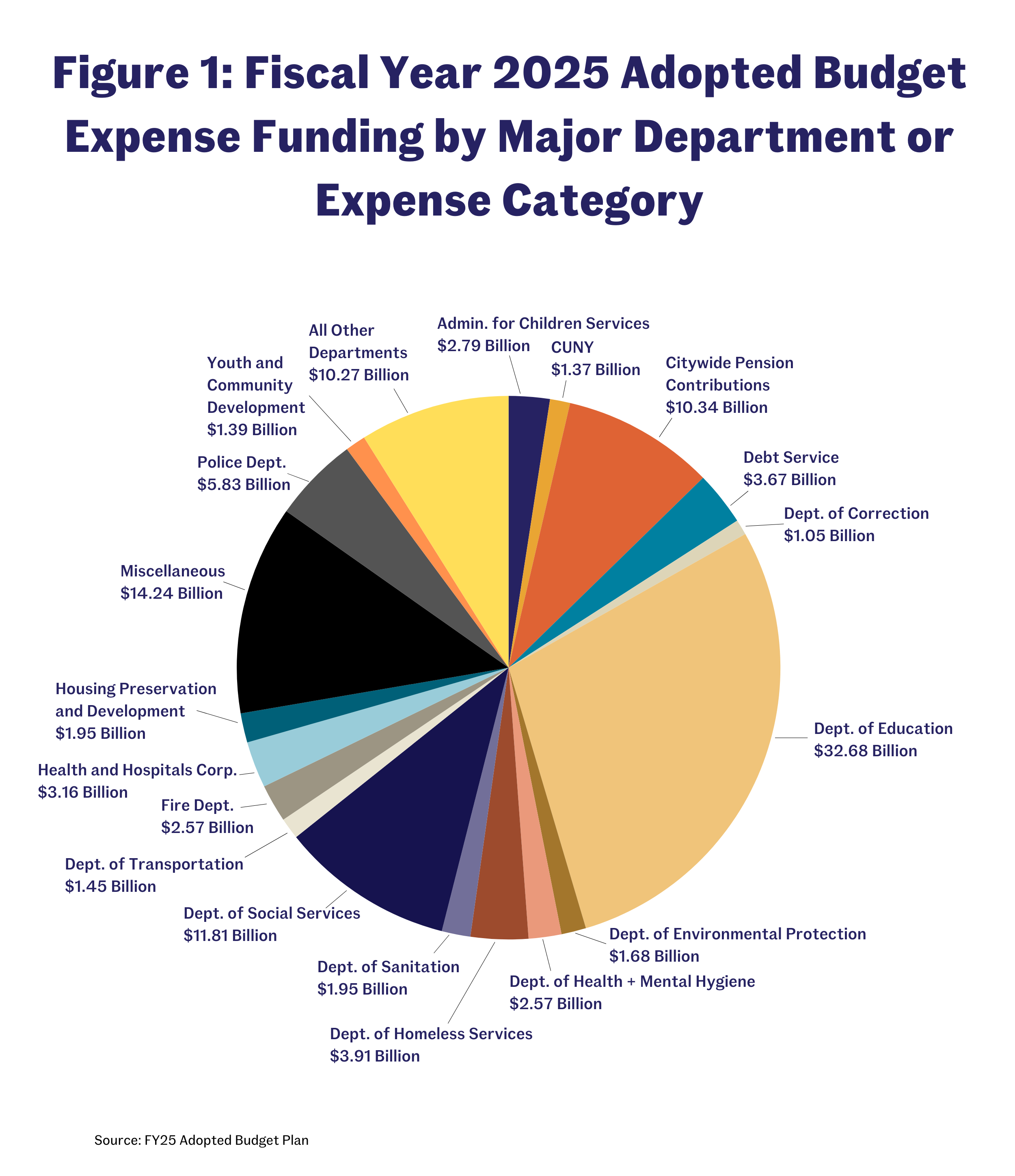
As shown in Figure 1, the largest expenditures funded by the city’s expense budget are the Department of Education (DOE), miscellaneous operations, the Department of Social Services (discussed in more depth below), citywide pension contributions, debt service, and the Police Department.[2] The remainder of this brief will focus on city departments administering programs related to social services, housing, health, and youth and workforce development.
Department of Social Services (DSS) and Department of Homeless Services (DHS)
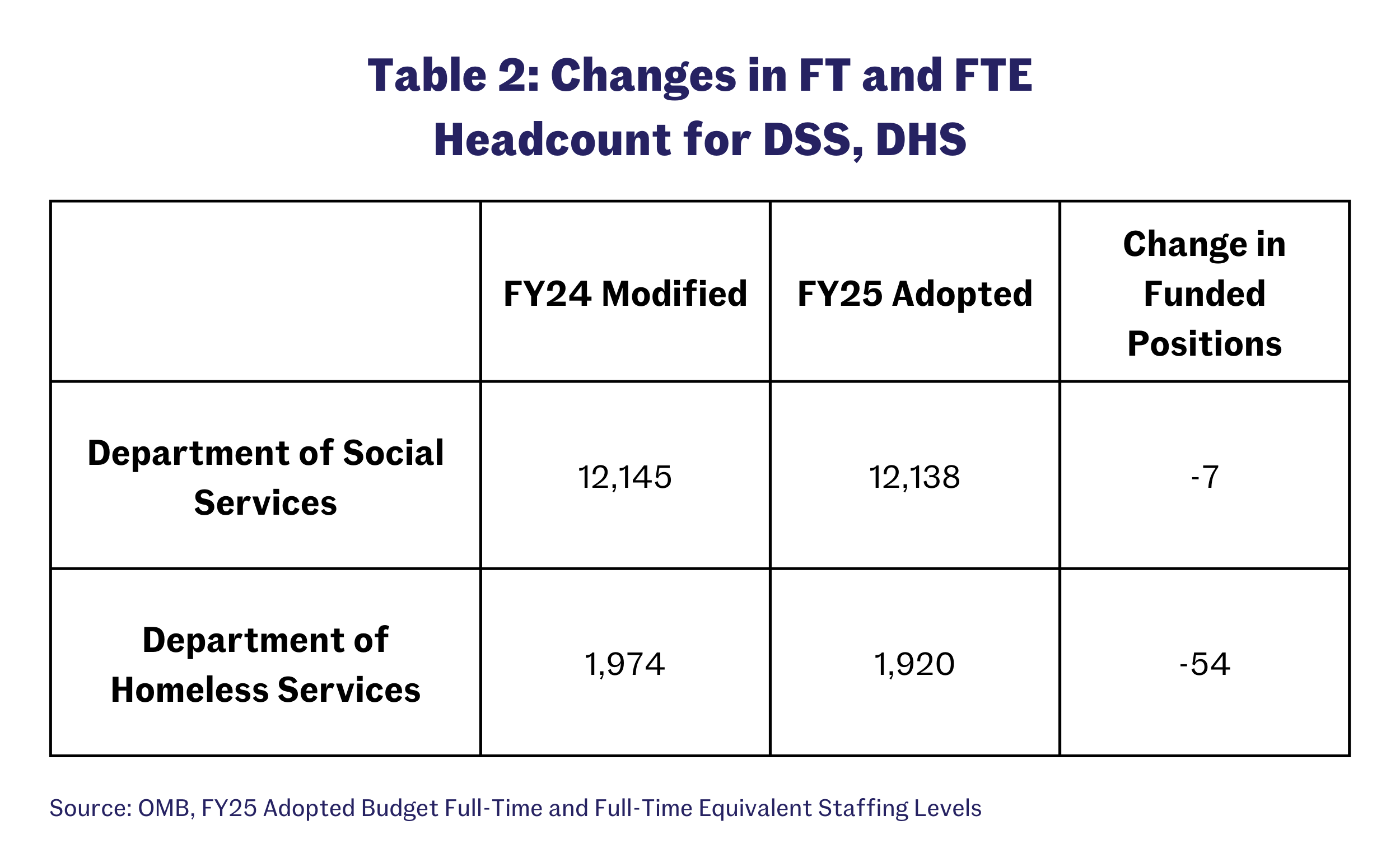
The Department of Social Services (DSS), comprised of the City’s Human Resources Administration (HRA) and the Department of Homeless Services (DHS), is the primary administrator of our city’s social safety net, serving as a lifeline for those experiencing economic, food, and housing insecurity. Despite growing need, however, funding for human services has been declining in recent years relative to other areas of city government.[5] Staffing at DSS and DHS has also been historically low, leading to delays in the delivery of services like SNAP and cash assistance, with matters only recently improving in response to the threat of federal disciplinary action.[6] Despite some improvement throughout FY24, DSS and DHS remain understaffed and funded positions are slated to decline in FY 2025 (as shown in Table 2), suggesting that problems with outreach, application processing, and service delivery will continue.
Transportation: Fair Fares
CSS has called on the city to expand eligibility for and improve the outreach of the Fair Fares program, which provides reduced MTA fares for low-income New Yorkers, to better meet the needs of those who are struggling to afford mass transit in an increasingly expensive city. This year, the council made some progress in this direction, raising the program’s income eligibility threshold from 120 percent to 145 percent of the Federal Poverty Level, making an additional 200,000 city residents eligible.
While the Adopted Budget increases funding for the Fair Fares program by $10.7 million in FY25, bringing the program’s total budget to $115.7 million, this amount will only cover an additional 42,000 people assuming the rate of enrollment remains the same. In our view, enrollment has been low due not only to overly narrow eligibility, but also poor outreach and marketing of the program as evidenced by the fact that around $10 million went unspent in FY24. CSS will continue to track enrollment and the role of Fair Fares program in alleviating transit hardship.
Affordable Housing and Eviction Prevention: CityFHEPS
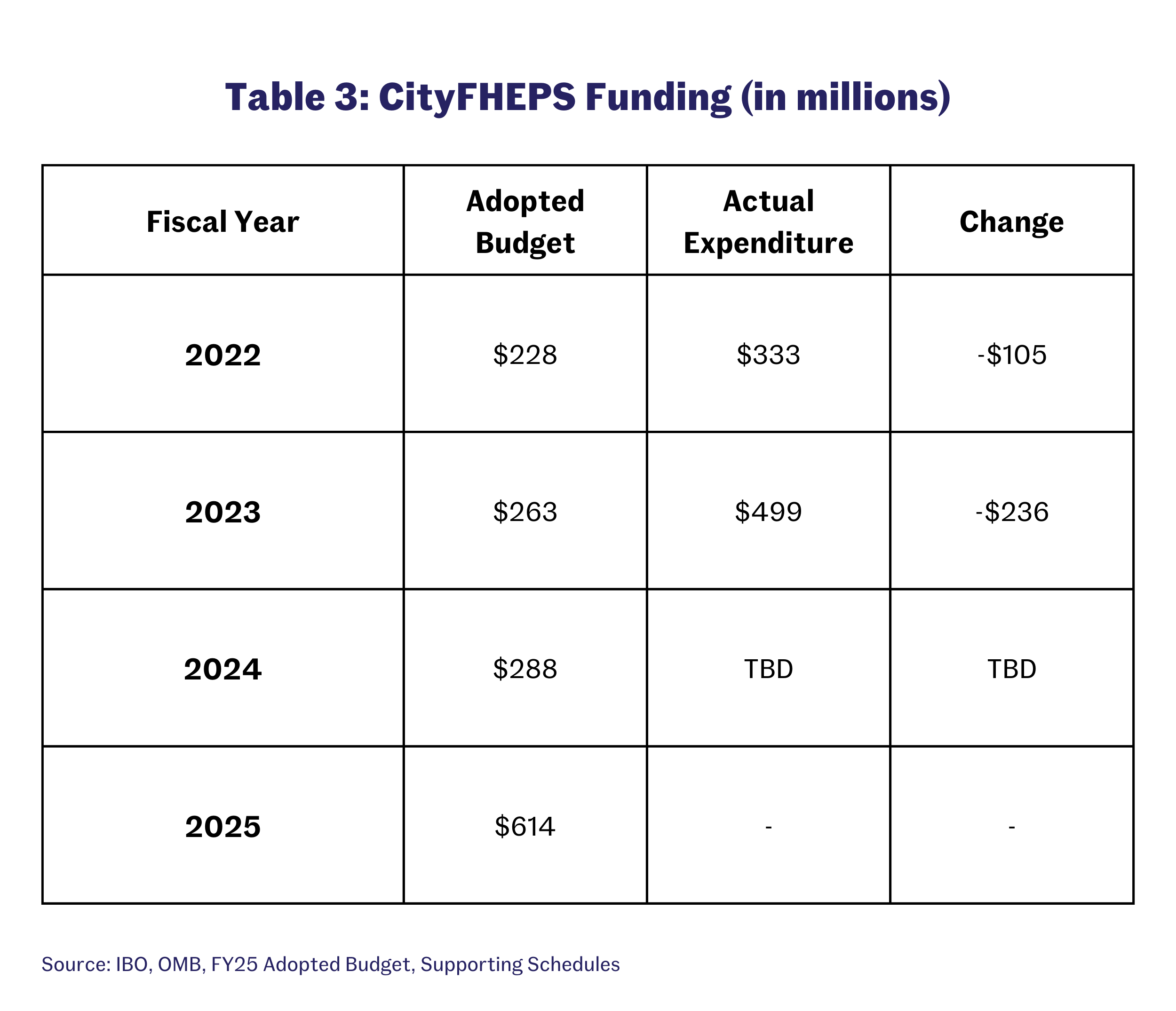
Established in 2019, CityFHEPS consolidated several city housing voucher programs into a single program to assist households exiting the shelter system in securing stable housing in the private rental market. In 2023, the City Council overrode a veto by the mayor to pass a suite of laws expanding the program, including raising eligible income caps and expanding the definition of being at risk of eviction. Despite this overwhelming mandate, implementation of the program has been rocky. According to the Independent Budget Office (IBO), the city has consistently underbudgeted for CityFHEPS since its inception (see Table 3), requiring mid-year modifications to the program budget each year and hampering longer-term planning for both CityFHEPS and the overall city budget.[7]
This year, responding to pressure from CSS and other advocates and for the first time in the program’s history, the council voted to fund CityFHEPS at levels more closely aligned with historical expenditures and CSS’s own recommendations, allocating $614 million in FY25 and baselining program funding at $540.3 for fiscal years 2026 to 2028. This is not only a more fiscally responsible approach, but signals an ongoing commitment to funding the program, which is important for both tenants and landlords.
Legal Justice: Universal Right to Counsel and Source of Income Discrimination
New York City’s legal services are essential for ensuring that low-income New Yorkers can access legal counsel for housing-related challenges. For this reason, CSS has advocated for increased funding and staffing around two key areas: Universal Right to Counsel (RTC) and Source of Income (SoI) discrimination.
DSS’s Office of Civil Justice (OCJ) administers the city’s Universal Right to Counsel (also known as Universal Access), which was established in 2017 to provide legal representation to low-income households facing eviction. Despite rising eviction filings, the FY25 budget does not increase the program’s budget, maintaining it at the current funding level of $112 million.[8] This is troubling given reports of long-standing staffing shortages within the office leading to onerous caseloads for Right to Counsel attorneys and declining rates of representation for tenants appearing in housing court.[9]
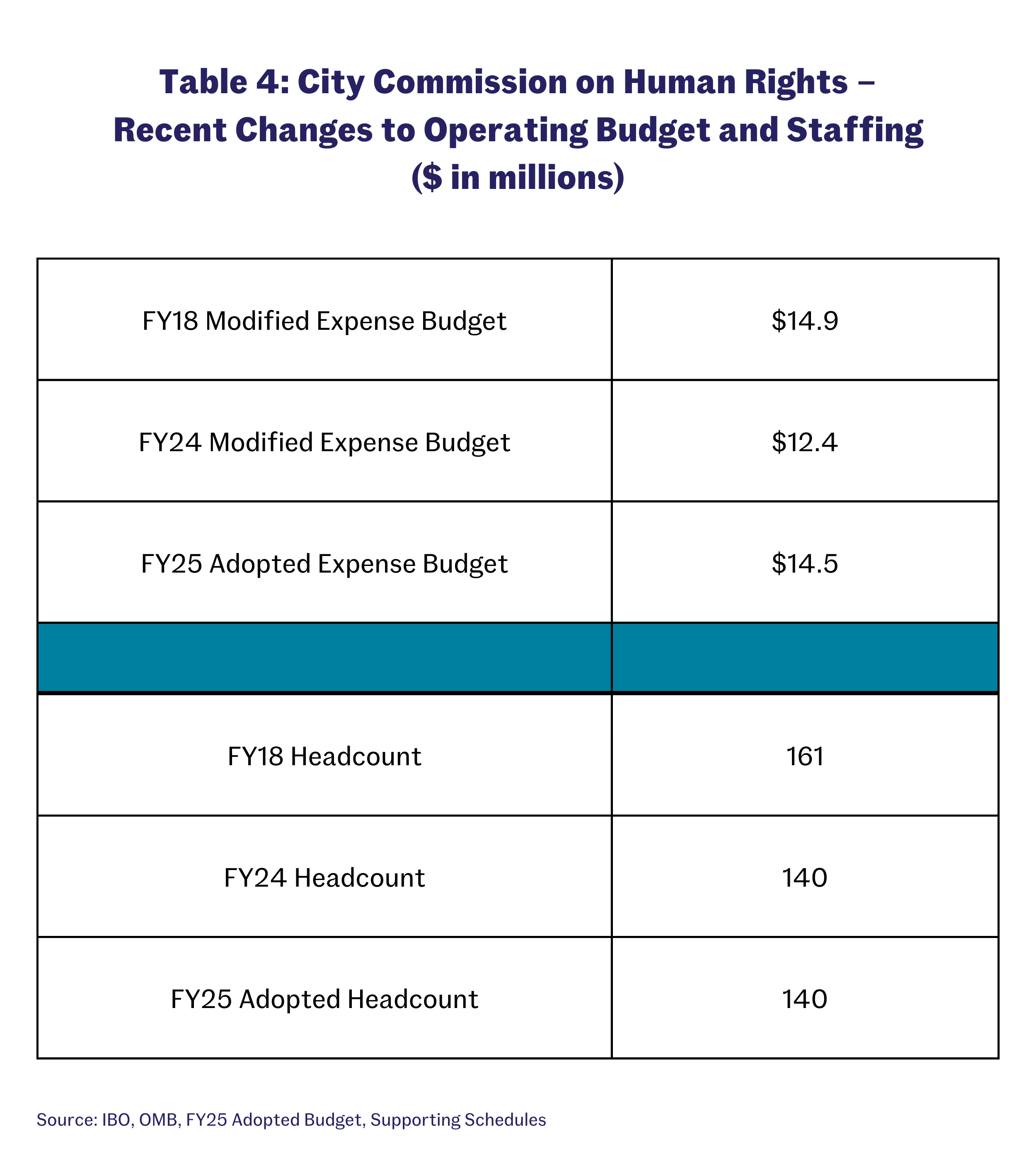
Housed within the City Commission on Human Rights (CCHR), the SoI Unit was created in 2018 to combat the problem of landlords denying leases to housing voucher holders, an illegal form of discrimination that remains a significant barrier for households exiting the shelter system in search of permanent housing. Like other agencies, the CCHR has been routinely understaffed, particularly given substantial increases in complaints filed through the agency in recent years. While the FY25 Adopted budget does increase CCHR’s operating budget slightly (see Table 4), its staffing level will remain unchanged, and both are below pre-pandemic levels.
Social Housing Expansion: Housing, Preservation, and Development (HPD)
This year, CSS advocated alongside allied organizations and councilmembers for increased investment in social housing, including NYCHA and a number of programs administered by HPD. CSS defines social housing as “housing in the public domain,” generally operated through a combination of government, nonprofit, and resident ownership, regulation, and management.[10] We called for an increase of $4 billion in social housing-related capital funds: $1.5 billion for NYCHA in FYs 2025 and 2026 and, as part of the Homes Now, Homes for Generations Campaign (HGHN), $2.5 billion for HPD over the next five years. HGHN specifically called for investment in two programs – Neighborhood Pillars and Open Door – which would facilitate new social housing development and conversions.
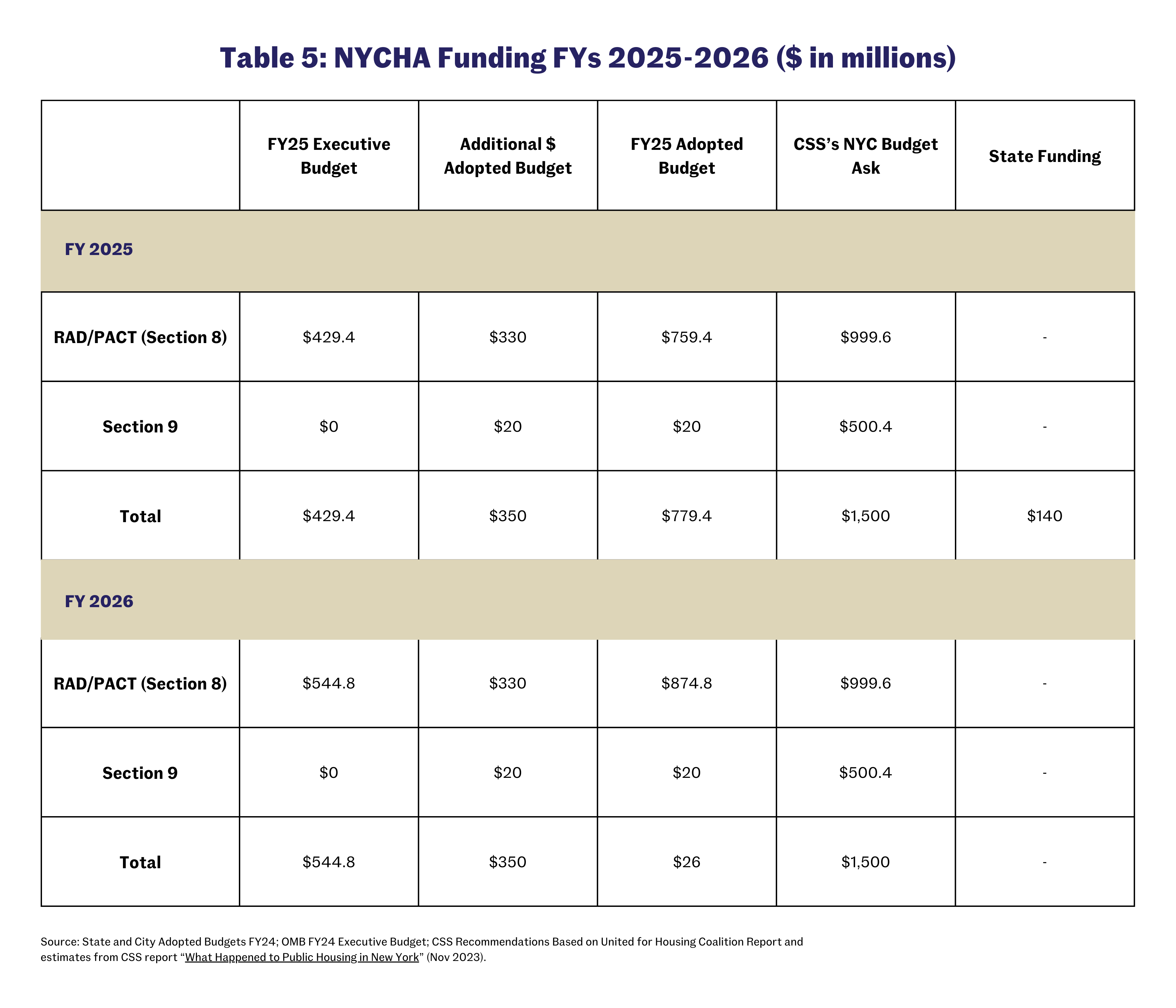
The city’s FY25 Adopted Budget follows New York State’s lead by investing in NYCHA (see in Table 5), increasing the agency’s budget as proposed in April’s Executive Budget by $350 million for fiscal years 2025 and 2026. This brings the total combined investment from both state and city government to just over $900 million for FY25 – an improvement from what was proposed earlier this year, but well below what is needed for crucial deep energy retrofits and billions in backlogged repairs.
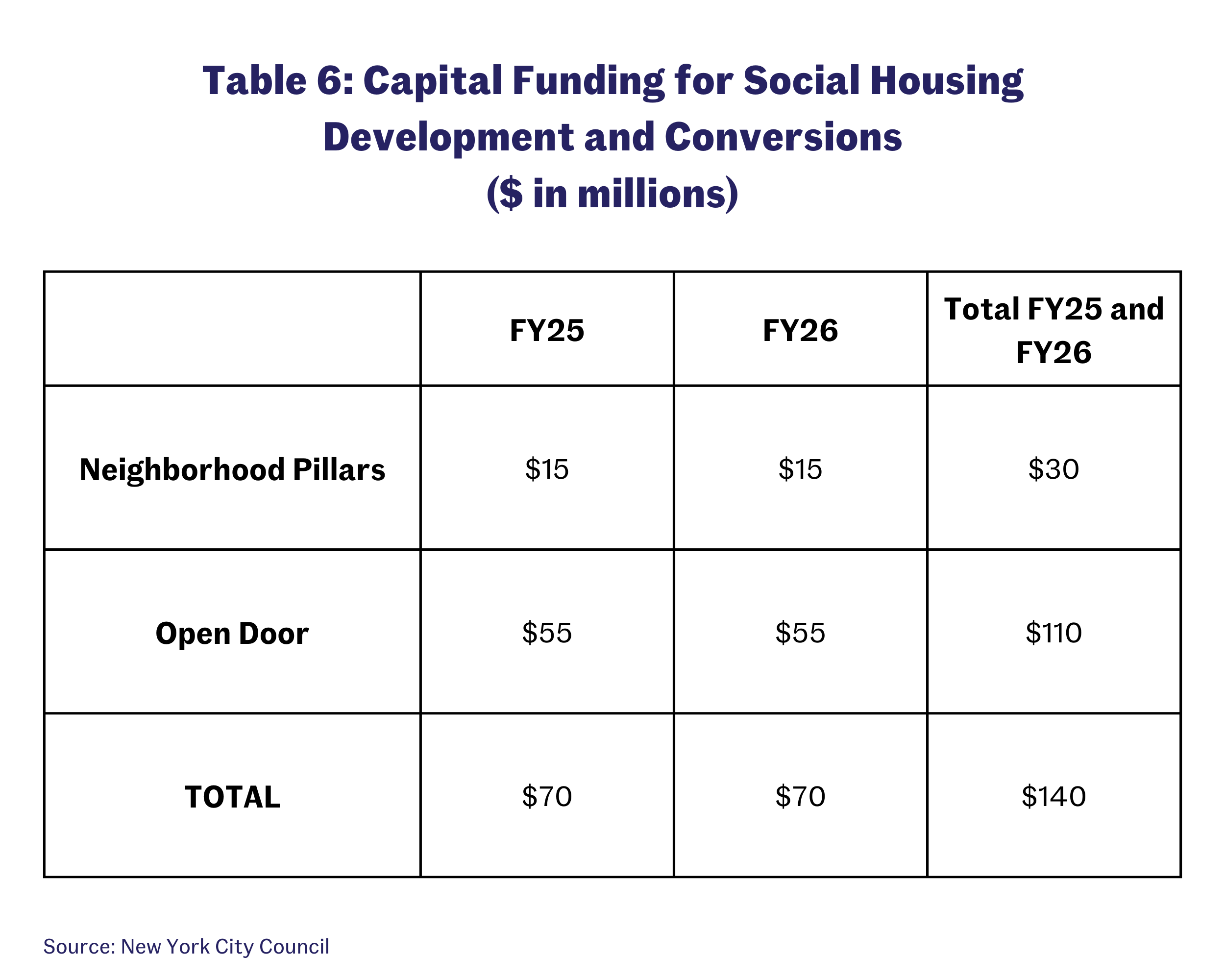
The city also increased HPD’s capital budget by $2 billion over the next two fiscal years, $140 million of which will fund social housing (see Table 6). In addition to ramping up HPD’s Open Door program, which provides funding to build new limited equity cooperative housing, this year’s budget replenishes funding for Neighborhood Pillars – designed to help mission-driven organizations acquire and fix up buildings in disrepair – after going completely unfunded for the last five years.
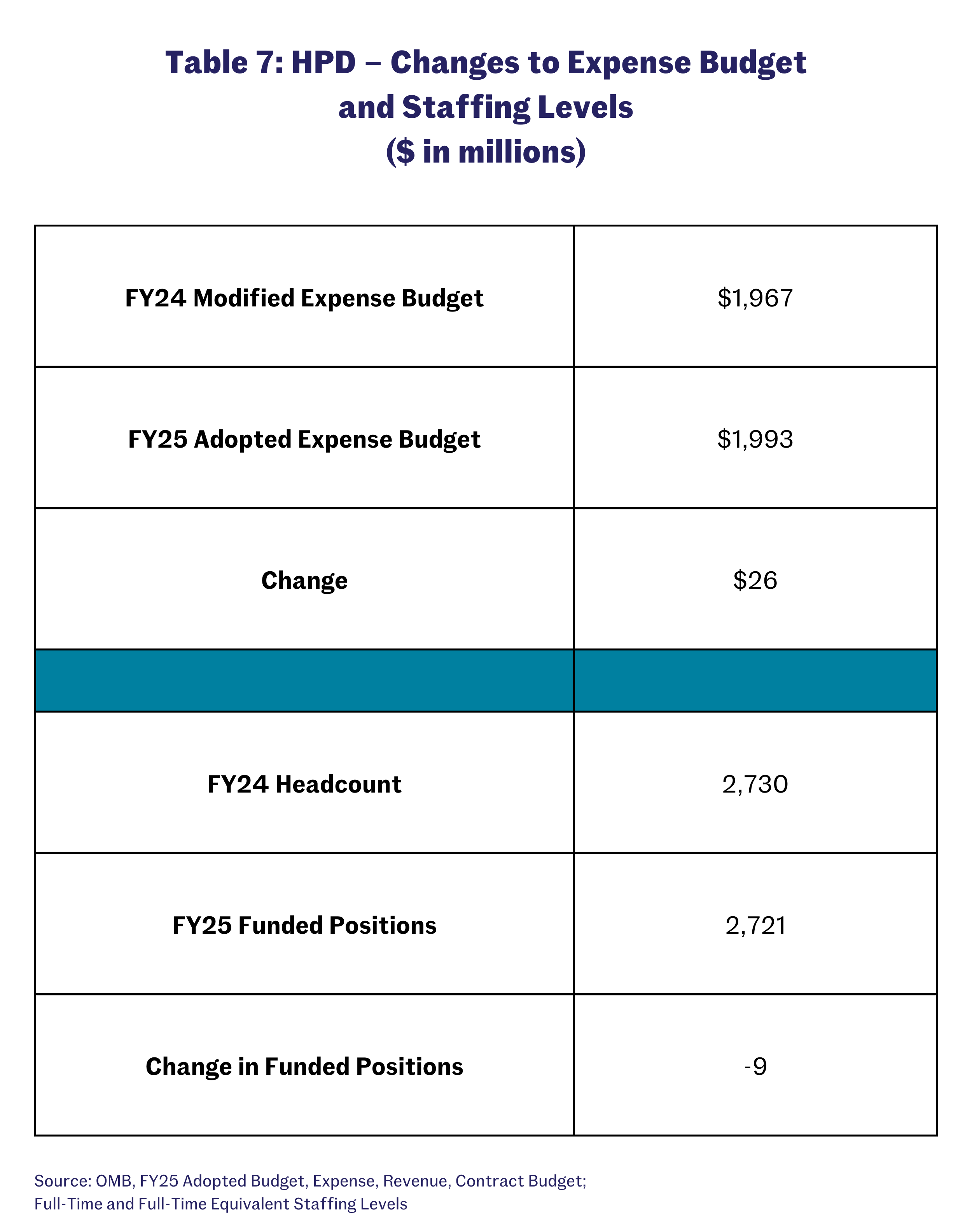
Overall, HPD’s expense budget also increased slightly in FY25, though it is slated to decrease in the outyears 2026-2028. Moreover, a hiring freeze is still in place at HPD, with a slight reduction in funded positions over the next five years even as the city has rightfully moved to expand investment in affordable housing. As the Comptroller has reported, insufficient staffing continues to hamper the agency’s ability to effectively implement capital projects that are already in its pipeline, a problem that will only become worse as HPD’s mandate grows.
Access to Healthcare: Health Services Initiatives
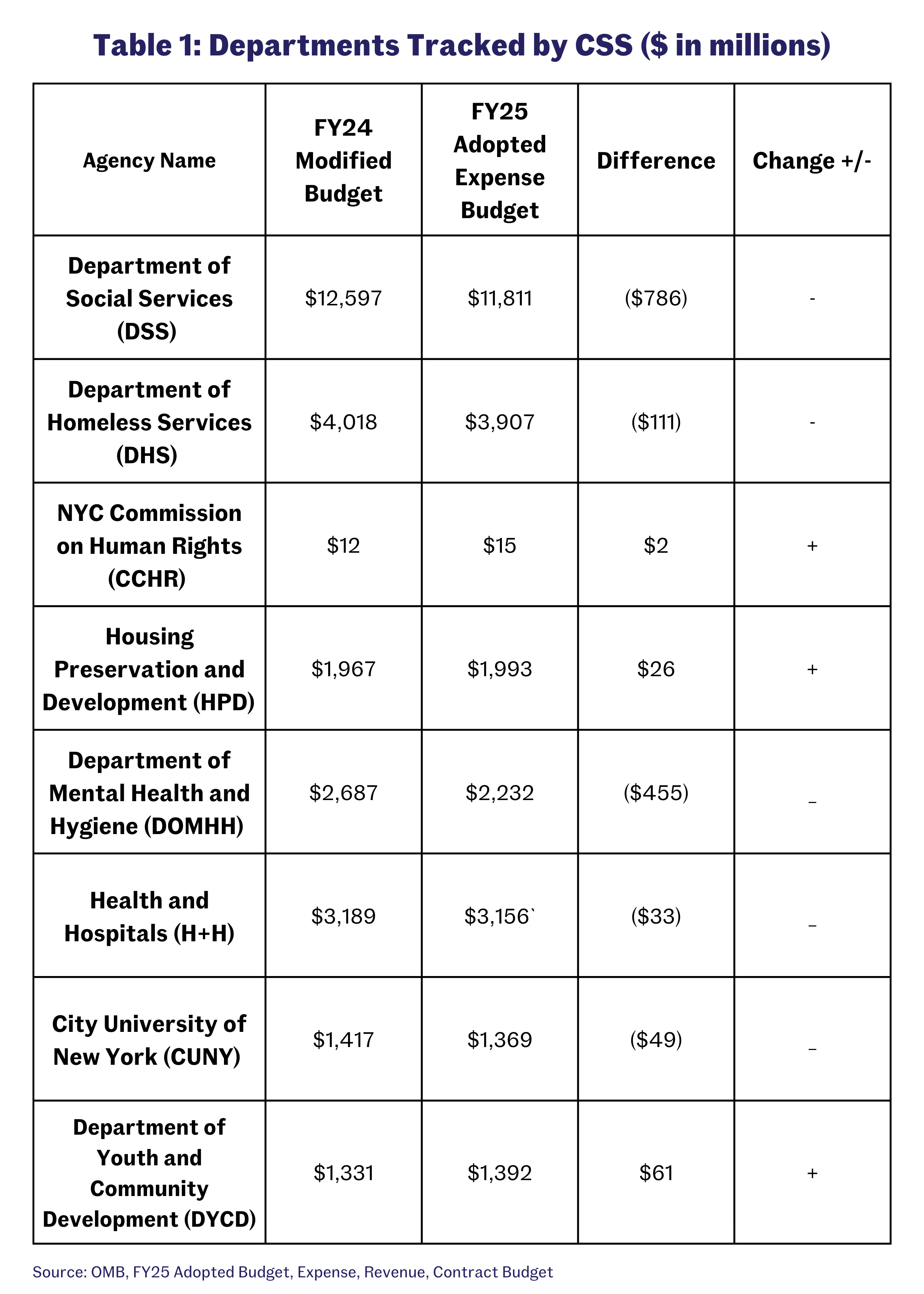
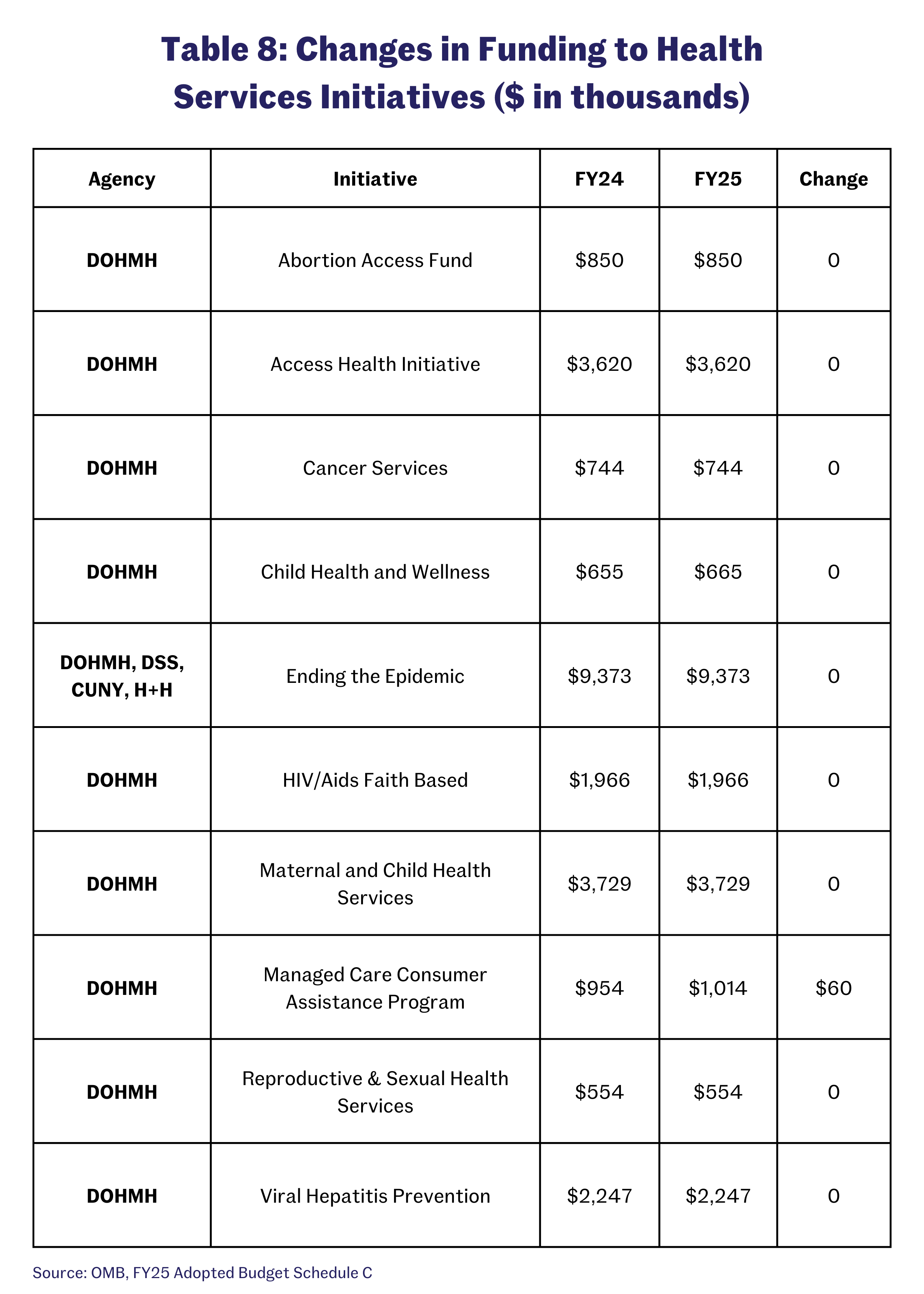
The FY25 Adopted Budget reduces the city’s investment in public health (see Table 1 above). Funding for key programs administered primarily by the Department of Mental Health and Hygiene and championed by CSS will also remain flat in FY25.
A stagnant discretionary funding landscape poses a critical challenge to nonprofit organizations that rely on this source of funding to provide critical healthcare services to New York City residents. Furthermore, it compounds inflationary pressures and long-standing contraction registration and payment delay issues that negatively impact the provision of services.
Many of the healthcare services provided by nonprofits through discretionary funded initiatives are essential to meet local needs and fill gaps in city agency services. CSS has and will continue to advocate for the expansion of these services.
Youth and Workforce Development: CUNY and Department of Youth and Community Development
The Department of Youth and Community Development (DYCD) and the City University of New York (CUNY) provide essential programs to advance youth employment and engagement, support services, economic mobility, and workforce development. As CSS and JobsFirstNYC reported last year, the number of out-of-school and out-of-work (OSOW) youth in New York City is on the rise. Changes to the budgets of DYCD and CUNY can shed light on whether the city is being appropriately responsive to the needs of this growing population of youth who need additional supports.
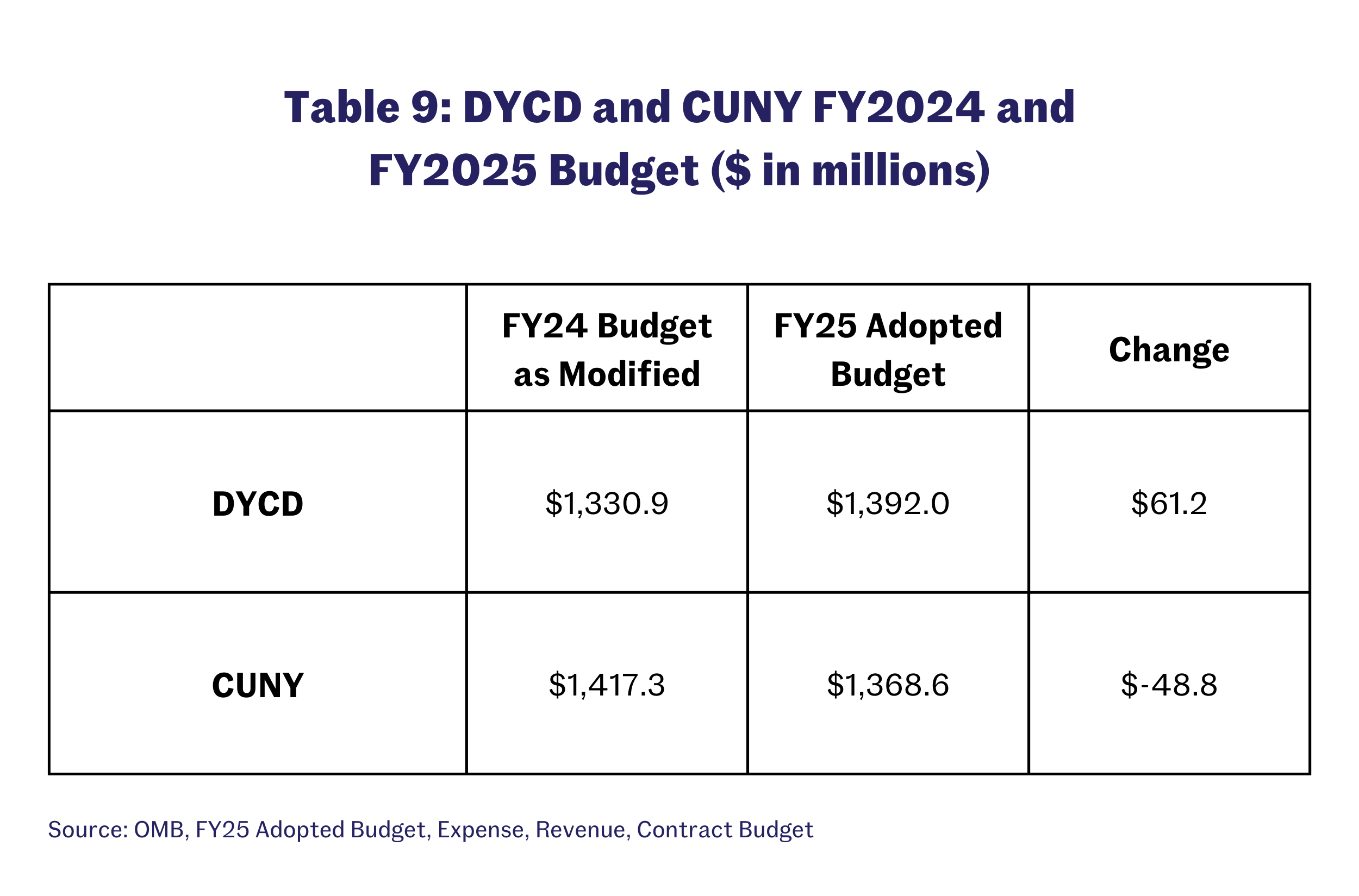
Overall, the DYCD's budget rose from $1.33 billion in FY 2024 to $1.39 billion in FY 2025, marking an increase of $61.2 million. In contrast, most of the cuts to CUNY proposed earlier this year remained in the FY25 Adopted Budget, with only $15 million in restorations. CUNY’s budget is slated to decrease from $1.41 billion in FY24 to $1.36 billion in FY25, reflecting a decline of $48.8 million. Among the programs saved from the chopping block were CUNY Accelerate, Complete, Engage (ACE) and CUNY Reconnect.[11]
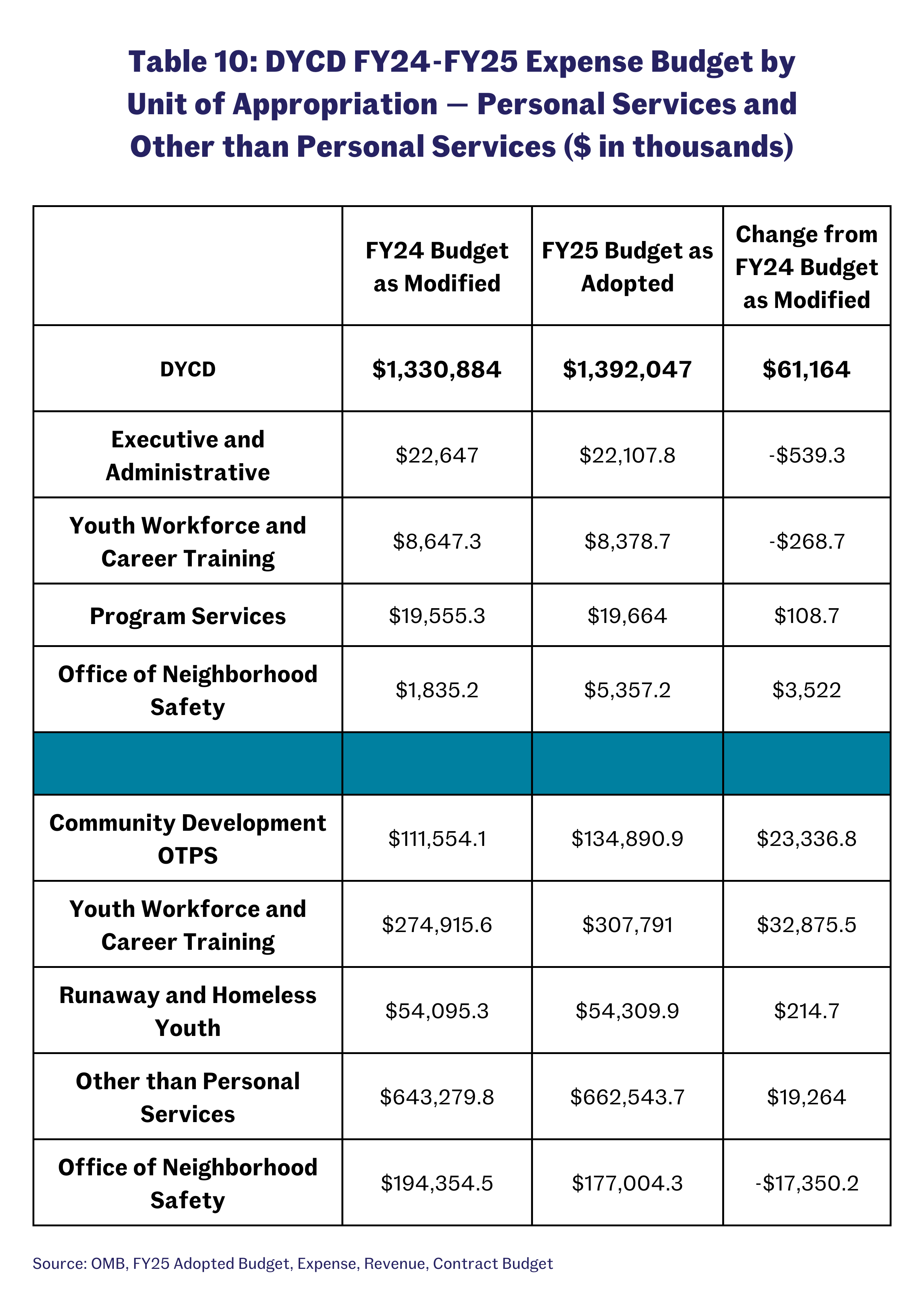
Within the DYCD, most program areas saw a budget increase, reflecting restorations to some of the cuts proposed earlier this year. The department’s full-time and full-time equivalent staffing also rose from its current appropriation of 606 to 621 positions in FY25. As shown in Table 10, this year’s Adopted Budget increases funding for community development, runaway and homeless youth, and program services, which supports community development and youth services through contracts with community-based organizations (CBOs) across the city including initiatives like the comprehensive after-school system known as COMPASS, youth employment programs, community economic development, and adult literacy and immigration support services. Other units of appropriation, including youth workforce and career training and the Office of Neighborhood Safety saw cuts in some areas while others were restored.
Conclusion
While this year’s Adopted Budget makes progress in some key areas, like transportation and social housing, it disinvests from some of our most vital institutions. Moreover, funding and staffing levels remain woefully insufficient to meet the growing need for essential human services. CSS will continue to advocate for the effective implementation of recently expanded programs so they reach all those who are eligible and we look forward to working with elected leaders and fellow advocates to ensure all New Yorkers can achieve economic security and live with dignity.
For inquiries, please contact Jeff Maclin, CSS Vice President for Governmental and Public Relations, at jmaclin@cssny.org.
Notes
1. See Oksana Mironova, Samuel Stein, and Iziah Thompson, Right to Counsel Works: Why Won’t the City and State Use it to Stop More Evictions?, (Community Service Society, Jan 2024), https://www.cssny.org/publications/entry/right-to-counsel-works-why-wont-the-city-and-state-use-it-to-stop-more-evic.
2. Expense funding refers to the city’s operating budget, which generally covers the cost of labor and other overhead expenses. The City adopts a separate capital budget, which accounts for expenditures on physical infrastructure.
3. Note that the total budget presented in this chart (the sum of each expense category) is $114.38 billion, not $112.4 billion as stated above and as widely reported. This is because it does not account for intracity sales of $1.9 billion, which are often subtracted from total expenditures when reporting the total city expense budget.
4. Unless otherwise stated, the source of budget allocation figures are NYC Office of Management and Budget (OMB) publications, which can be found here: https://www.nyc.gov/site/omb/publications/publications.page.
5. See Brad Martin, Emily Pisano, and Zhuojun Lyu, NYC Funds Tracker Fiscal Year 2023, (FPWA, Jan 2024), https://www.fpwa.org/wp-content/uploads/2024/01/NYC-Funds-Tracker-Report-and-Analysis-2.pdf
6. On recent increases in DSS’s FT and FTE headcount, see Emily Whitford, NYC Still Slow To Process Most Food Stamp, Cash Aid Applications, (City Limits, 30 Jan 2024), https://citylimits.org/2024/01/30/nyc-still-slow-to-process-most-food-stamp-cash-aid-applications/ and Preliminary Mayor’s Management Report, (Jan 2024), https://www.nyc.gov/assets/operations/downloads/pdf/pmmr2024/2024_pmmr.pdf.
7. NYC Independent Budget Office, https://www.ibo.nyc.ny.us/iboreports/CityFHEPS_Jan2024.pdf.
8. Here, we cite the subtotal for budget code 9455 (“Access to Counsel”) in OMB’s FY25 Adopted Budget Supporting Schedules.
9. See Emma Whitford, What would it take to fully fund Right To Counsel for NYC Tenants, (City Limits, 10 Apr 2023), https://citylimits.org/2023/04/10/what-would-it-take-to-fully-fund-right-to-counsel-for-nyc-tenants/.
10. Oksana Mironova, Samuel Stein, Celeste Hornbach, and Jacob Udell, Pathways to Social Housing in New York: 20 policies to shift from private profit to public good, (Nov 2022), https://www.cssny.org/pages/pathways-to-social-housing-in-new-york.
11. NYC OMB, FY25 Adopted Budget Schedule C, https://council.nyc.gov/budget/wp-content/uploads/sites/54/2024/07/Fiscal-2025-Schedule-C-MERGE-FINAL-1.pdf.