2021 Voter Guide
- Viewing Candidate 2 of 10 ← Prev Next →
- Back to Voter Guide
Art Chang (D)
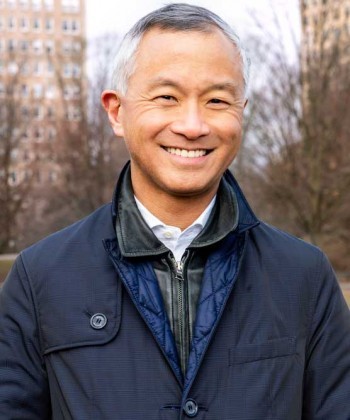 chang.nyc


Latest News from CSS
Press Release: CSS Statement on FY 2027 State Budget
Albany can’t let half a million New Yorkers lose health coverage
Click a topic to see this candidate’s answers.
PrintCOVID-19
+1. Workers who have been hit hardest by pandemic-related job losses worked overwhelmingly in low-paid service industries such as restaurants, hotels, and other sectors requiring in-person interactions. These sectors have experienced widespread layoffs and business closures. How will your administration ensure that these workers can transition back to full-time employment?
1. Ensure workers can return safely: vaccinations 2. Address working families: Universal Childcare and re-opened schools 3. Professional development programs for workers employed in slower-to-return industries 4. Benefits optimization plus direct cash relief 5. Jump-start growth in small businesses.
www.chang.nyc/universal-childcare
www.chang.nyc/small-business
We are currently waiting on a response to this question.
2. The pandemic has exposed the absence of an adequate social safety net for undocumented workers, app-based gig workers, and other New Yorkers in nonstandard work arrangements. These workers are ineligible for employer-provided health coverage, unemployment benefits, and emergency government relief. What is your position on providing more financial assistance and workplace protections to these workers?
There is currently almost no required reporting on workforce diversity or pay equity. We need to collect data on our workforce, and enact more rigorous enforcement of labor protections, especially in lower-wage work and including undocumented workers.
We can create a city-wide benefits program – a “Health and Benefits Trust” – for non-union workers. We can also work individually with each industry to build a complaints and reporting system that allows workers to remain anonymous and fits the needs of each individual industry. Empowering workers to reach out to the city for help can ensure employment laws are not being violated, even in scenarios where the workers may be undocumented, not unionized, or otherwise lack worker protections. There are many industries in NYC that rely heavily on freelance workers and use that to get around laws regarding maternity leave, nursing rooms and facilities, and pregnancy discrimination laws. These laws have no power if they’re not enforced; and they can’t be enforced if we don’t know what’s happening to our own workers.
www.chang.nyc/arts-and-entertainment
We are currently waiting on a response to this question.
3. The pandemic and ensuing recession has destabilized the city’s low-income families, who were twice as likely as those with higher incomes to suffer permanent job loss related to COVID-19. The most vulnerable are children in households reeling from loss of income, food insecurity, and housing instability. What steps would you take to provide relief for low-income families struggling to survive as the city begins its economic recovery?
Both poverty and hunger must end in New York City. Enough food exists in New York City to feed everyone, regardless of income level; This food doesn’t always make it to kitchen tables because we have a massive food waste problem. My point of view is informed by the work of the Natural Resources Defense Council, Feeding America, the Hunter College New York City Food Policy Center, and my nearly 30 years of experience as a member of the Park Slope Food Co-op. So let’s touch on ending poverty and then focus on ending hunger.
Poverty will be greatly reduced by a combination of government relief and economic growth, especially in the small business sector. Longer-term poverty eradication will rely upon holistic solutions that include improved low- and no-income housing, my proposal for Universal Childcare, and an equitable education system that meets every student and their families where they are. I applaud Senator Schumer and Representative Ritchie Torres’ bill to revise the Earned Income Tax Credit and to create a Child Tax Credit to provide direct cash relief to the lowest-earning residents; In the Bronx alone, this may lift 50% of children out of poverty.
We can end hunger by a systemic and strategic approach to our food systems, starting from farms, to distribution centers, to distribution endpoints; including schools, restaurants and commercial food services, consumer grocery stores, food pantries, and soup kitchens. This will include introducing new thinking about the relationship between food and profit. And under my Universal Childcare plan, childcare centers will act as Centers for Community Care that distribute food out to children & community members in need.
www.chang.nyc/housing
We are currently waiting on a response to this question.
Economic Equity
+1. According to a recent report from the New York State Comptroller, New York City is currently facing a $4 billion budget gap. How would you strengthen the city’s fiscal outlook while minimizing the impact of potential cuts in critical public services on low-income New Yorkers?
The city budget exploded by $18 billion (2020 dollars) since 2013. I can reallocate >$10 billion to cover the deficit and increase direct services by eliminating overhead and duplication. I will lead a digital transformation to create efficiencies.
We are currently waiting on a response to this question.
2. The COVID-19 pandemic has demonstrated the devastating racial inequities that exist in our city – from healthcare access to housing discrimination to education resources. What will you do as mayor to address racial disparities in city policymaking?
1. Data is critical and diverse people need to be at the table at every step from data collection to data analysis to decision making.
2. Interconnected problems require inter-agency teams united by common vision, approach and metrics for success.
We are currently waiting on a response to this question.
3. Student loan debt is impacting about one million New York City residents, and first-generation college students and communities of color are bearing the brunt of this debt. What role can New York City play in tackling student loan debt and how would you start to address these disparities?
1. Create a city-sponsored refinancing facility to lower interest rates, perhaps building in a forbearance or payment-free period at the outset.
2. Invest in CUNY to expand matriculation.
3. Review college guidance in the high schools to focus on debt.
We are currently waiting on a response to this question.
4. More than 220,000 New Yorkers have enrolled in Fair Fares, a program that provides half-priced MetroCards to New Yorkers living at or below poverty. Yet the program was slashed by $65 million in the city's Fiscal Year 2021 budget. Most low-income New Yorkers continue to rely on public transit for their daily commute and jobless New Yorkers struggle to afford the fare as they attempt to return to the workforce. What is your position on ensuring adequate funding for the continued expansion of Fair Fares?
1. Public transit must meet the needs of working people, which are increasingly cross borough, which can be addressed by less-capital-intensive bus service.
2. Yes, fully fund Fair Fares for subways.
3. Make bus service free or very low-cost.
We are currently waiting on a response to this question.
Housing
+1. Under the de Blasio mayoralty, affordable housing has been a key priority, but the housing that has been produced has not met the needs of the bottom 40 percent of income earners. How would you re-align both the city’s affordable housing programs and its land use policies to promote deeper levels of affordability at a larger scale?
Increasing the housing supply will lower housing costs for everyone. We have the largest plan to increase housing construction since the Post-WWII era. By increasing the supply of housing across the board, we will achieve greater affordability for everyone.
Increase the city’s portfolio of developable land:
Start with a creative approach to re-assessing city property ownership including underutilized property like parking lots, air rights including air rights over roads and rail yards. Seek use changes to increase density. The city’s 21 golf courses represent significant development opportunities, starting with the Trump course in the Bronx.
Pursue creative approaches to lowering development costs, including the costs for construction
Give current NYCHA residents the first right to new housing. Collect and publish data to demonstrate performance on all issues related to housing.
Finally, facilitate the conversion of underutilized office space in commercial buildings to residential and other uses, including arts uses.
www.chang.nyc/housing
We are currently waiting on a response to this question.
2. NYCHA and its 500,000 residents are an integral part of the city, and homelessness has reached record highs. Yet public housing and homelessness are often treated as afterthoughts or outliers in city planning discussions. How should the next mayor integrate preserving public housing and ending homelessness into their comprehensive affordable housing plan?
The homeless can be housed in a sensible, safe, rational, and humane manner. To do this, we will partner with the city’s many thought leaders and practitioners to creatively think about temporary emergency housing, and consider all possible resources to bring people to safe shelter swiftly, including providing broadband Wi-Fi for students in remote learning.
Then, coordinate the delivery of services for the supportive housing essential to high-need populations;
Finally, we need solutions for long-term housing; the only way to accomplish this is through a major initiative to plan a massive program to build truly affordable housing
Homelessness is driven by conditions pre-existing the onset of COVID: Nearly 50% of homeless families fled domestic violence, and nearly 50% of homeless teenagers fled gender violence in their own homes. We will start treating these as the public health crises they are.
www.chang.nyc/housing
We are currently waiting on a response to this question.
3. Despite new city investments in NYCHA public housing during the de Blasio administration, the data indicates these investments have not kept pace with worsening, accelerating deterioration of resident living conditions. What initiatives would you take to improve NYCHA living conditions and address its $40 billion capital backlog?
1. Initiate data-driven programs to make maintenance issues transparent.
Make maintenance accountable, including satisfaction of terms of RAD agreements.
2. Give NYCHA residents first right to new low-income housing as a way to incentivize vacancies to make repairs more efficient.
We are currently waiting on a response to this question.
4. Decades of risky financial practices have left rental buildings overleveraged and vulnerable to foreclosures or debt buy-outs, with pandemic-related rent arrears adding to their financial distress. As a result, many landlords are having difficulty maintaining payments on their buildings. What would you do as mayor to prevent speculative investors from buying up these buildings and their debt, and to instead promote their preservation as permanently affordable forms of social housing?
When landlords experience financial hardship, property taxes and other fees owed to the city become delinquent. The city must exert its first lien position to take control of these properties. Refinancing can include conversion to social ownership of these buildings.
We are currently waiting on a response to this question.
Health Care
+1. Immigrants are disproportionately uninsured due to federal and state policies that limit eligibility and discourage access to health programs available to citizens and lawful residents. As mayor, what types of programs or policies would you champion to maximize enrollment of immigrants in quality insurance coverage that they can afford?
Technology can solve this problem. The city knows the income of every adult and should therefore be able to automate the calculation of all benefits, including health insurance.
We are currently waiting on a response to this question.
2. In 2020, Manhattan had 6.4 hospital beds for every 1,000 residents, while Queens had only 1.5 hospital beds for every 1,000 residents. Similar disparities exist in the Bronx and Brooklyn. The COVID-19 pandemic is exposing the devastating toll these maldistributions have had on New York’s communities of color in the outer boroughs. What would you do as mayor to ensure that healthcare infrastructure is distributed equitably?
NYC residents experience inequitable two-tier healthcare in which quality and availability is concentrated in Manhattan’s research hospitals. Two alternative approaches: 1) incentivize new quality hospitals outside Manhattan; 2) improve community health for resiliency, reducing the need for more intensive responses.
We are currently waiting on a response to this question.
3. Policy experts and advocates have long argued that New York City’s public Health and Hospitals system that serves hundreds of thousands of low-income uninsured patients annually is under-funded by the state lawmakers that control the allocation of billions of Indigent Care Pool and Medicaid dollars. Mayors typically have been unable to turn this situation around. What would you do to improve the financial stability of NYC Health + Hospitals?
The city’s health care “rainy day” fund must be restored to its original intent, to shore up the financial stability of New York Health and Hospitals and other healthcare needs.
We are currently waiting on a response to this question.
4. Over 6,000 New York City residents have been sued by New York’s non-profit charitable hospitals for medical bills, often at a 9 percent commercial interest rate. Hospital lawyers usually win these cases on default – most patients do not appear in court and none have lawyers. What would you do as mayor to protect patients and prevent non-profit hospitals from filing these lawsuits and other unfair and/or discriminatory hospital policies?
I would task the Corporation Counsel’s office to create a legal facility to pool these claims and address them in bulk with the respective claimants. The Corporation Counsel would enlist private lawyers to represent on a pro bono basis.
We are currently waiting on a response to this question.
5. Black women in New York City are much more likely than white women to die from pregnancy-related causes. What would you do as mayor to address the maternal mortality crisis experienced by Black and Brown women in New York City?
Maternal mortality is correlated with structural inequities and its associated stresses. Until we solve those structural problems, we must consider pregnancy care for women in communities experiencing high maternal mortality as an extension to my Universal Childcare policy.
We are currently waiting on a response to this question.
Criminal Justice
+1. Following a series of highly publicized police killings of civilians, police reform is on the nation’s agenda. Here in New York City we’ve been concerned over the NYPD’s troubling lack of accountability for officer misconduct, as well as general lack of transparency and apparent lack of real action concerning disciplinary issues. What would you do as mayor to hold officers accountable for misconduct, and how would you reform the NYPD to minimize that misconduct, if not eliminate it?
I have a plan to cut $1.3 billion from the NYPD, which is only the beginning of a transformation of what we think of policing. Read here for my full plan on how to drastically transform the NYPD budget.
As a part of that plan, we will:
Re-frame our use of CompStat. Instead of CompStat being used solely to organize armed response to crime, CompStat will be used to signal where we have potential community distress and to direct intensive and coordinated responses from the different components of government that would lead to healthier communities.
We will create rapid response teams alongside police that have training in crisis de-escalation, mental health issues and social work that operate 24-7-365 like the police.
We need to demilitarize the NYPD. We need to suspend tech-driven surveillance when the algorithms that power them are shown to be racially discriminatory.
Make data about policing more transparent and actionable.
We know that the application of policing has been unequal and discriminatory, particularly with respect to black communities. We must be able to react to that.
Emphasize restorative justice and alternatives to jail.
Not every crime is equal. Not every alleged perpetrator is equal. We have first offenders. We have nonviolent crimes. We have youth crimes. And those folks need to be treated differently than people who have repeat criminal records.
Lessen the trauma of imprisonment.
We must think about criminal justice in the context of a person’s life with the goal of reintegrating people back into their communities. This means preserving the mental health of the prisoners, especially young people, and abolishing solitary confinement. Some are imprisoned because they’re hardened criminals. But for too many, the process of being in jail actually makes people worse when they come out.
www.chang.nyc/policing
We are currently waiting on a response to this question.
2. The enduring consequences of a criminal conviction history can result in a “civil life sentence” that denies individuals access to jobs, housing, higher education, bank accounts, and credit. Given this reality, how would you work to ensure that fewer New Yorkers become entangled with the criminal justice system in the first place? In your answer please include any diversion programs you think should be introduced or expanded, particularly those that could obviate the need for arrest in certain circumstances.
1. Re-envision crisis response with unarmed responders to 911 calls and put these unarmed responders on the streets.
2. For non-violent and first-time offenders, prioritize restorative justice.
3. Safety must work hand-in-hand with communities, on a foundation of trust.
We are currently waiting on a response to this question.
3. Of the 13.3 percent of Americans currently looking for work, individuals with a criminal record will almost certainly be among those last hired once jobs do reappear. What are your thoughts on legislation that allows individuals to have their record expunged after a certain period of time?
I am fully in support. I am currently focused on the impending legalization of pot, which must be accompanied by expungement, and restorative justice for individuals, families and communities hurt by prior enforcement.
We are currently waiting on a response to this question.