The Climate Bond Act Has Ignored Public Housing
Iziah Thompson
On November 8, 2022, New Yorkers approved a ballot measure known as the Clean Water, Clean Air and Green Jobs Environmental Bond Act (Bond Act for short) to make $4.2 billion available for projects tackling environmental and climate change. The idea was that state agencies, local governments, and community-based organizations could access this funding to protect water quality, reduce pollution, help communities adapt to climate change, improve environmental resiliency, and create green jobs.
Fast forward two years, and only 11 percent of that funding has been spent. When we take a closer look at where the money’s been going and what kinds of projects are being funded so far, one thing is clear: housing—especially in communities hit hardest by climate change and environmental racism—has been ignored.
Bond Act Funding Spent by Region (as of November 2024
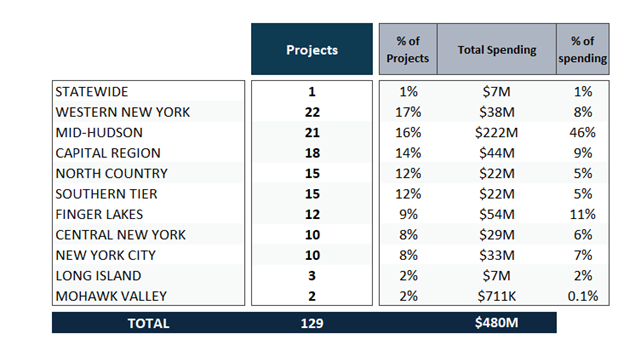
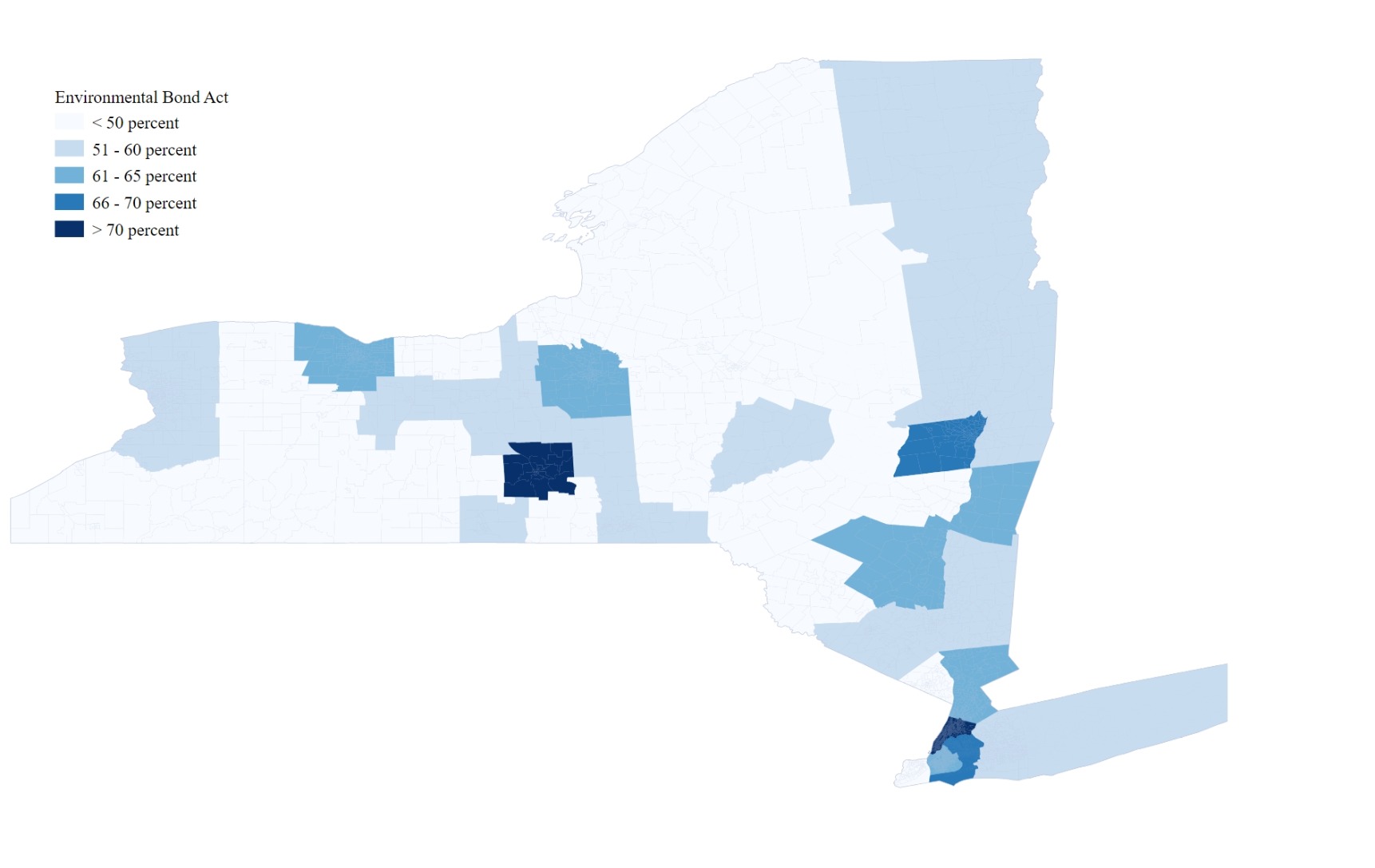
So far, about $480 million of the Bond Act funds have been spent across 129 projects. But when you break it down by geography, only 17 of those projects are in downstate areas, and just 10 of them are in New York City. That means New York City has received less than 8 percent of both the projects and the funding, despite making up 40 percent of the state’s population. The lack of New York City projects is problematic because not only is it home to the majority of the state’s residents, but it also provided the bulk of the support for the ballot measure. Over 70 percent of voters in the Bronx and Manhattan supported the Bond Act, and more than 65 percent in Queens and Brooklyn did too. Despite that, the needs of these voters are still not being met.
Geographic Breakdown of Bond Act Support
One of the key parts of the Bond Act is that 40 percent of its funding is required to go toward disadvantaged communities. As "Climate Change is Hurting Public Housing, and Residents Say a Green New Deal Is the Solution" shows, the criteria New York State uses to define these communities’ lines up almost perfectly with where public housing is located. However, none of the projects so far have impacted public housing communities, and agencies still haven’t released any guidance on how the funds could be used for deep energy retrofits of multifamily housing.
The Bond Act, as passed, includes several funding streams that could be used for public and other housing retrofits. Right from the start, the $4.2 billion was separated into five categories:
- Restoration and Flood Risk Reduction
- Open Space, Land Conservation and Recreation
- Climate Change Mitigation
- Water Quality Improvement and Resilient Infrastructure
- Unallocated
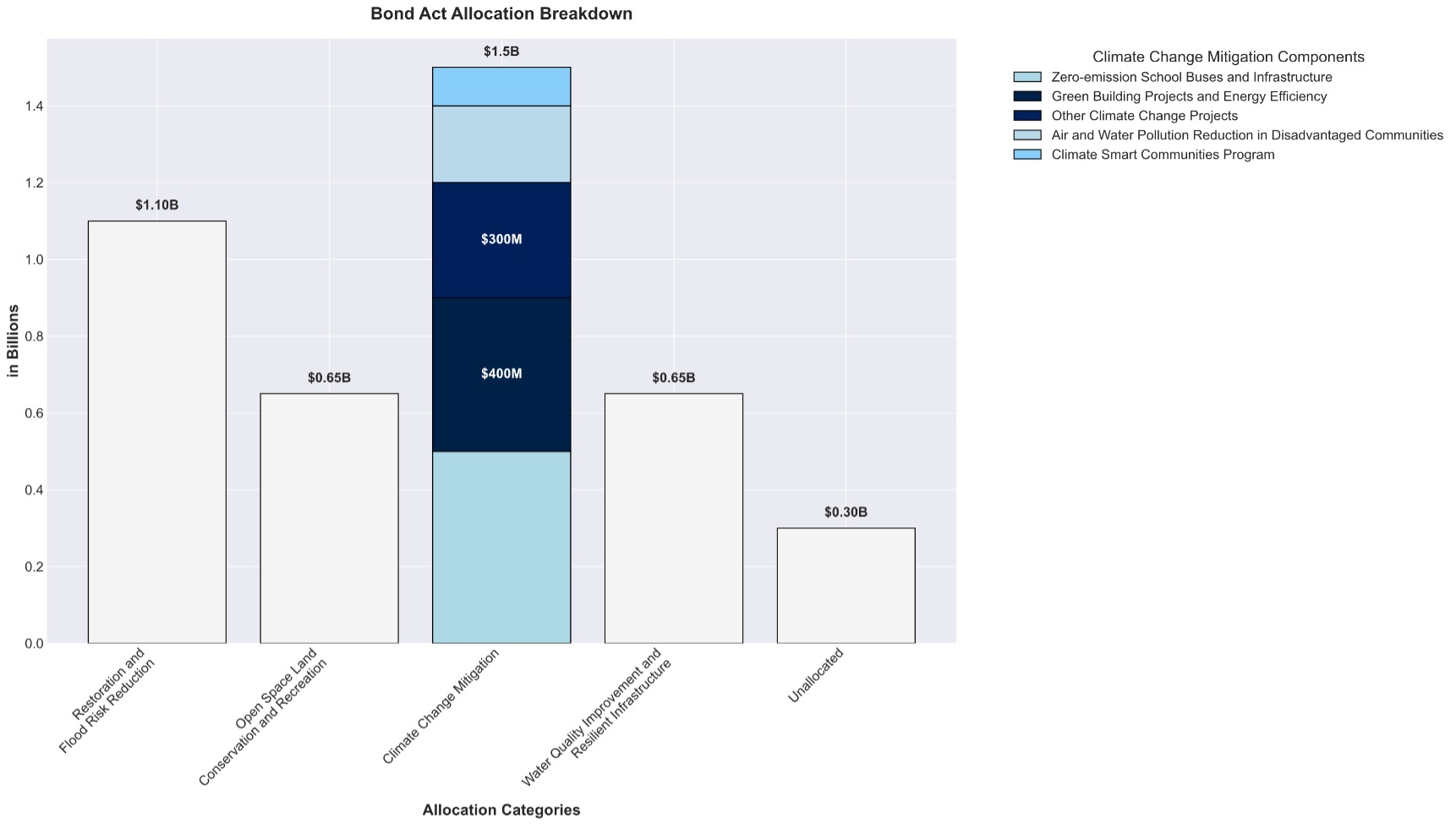
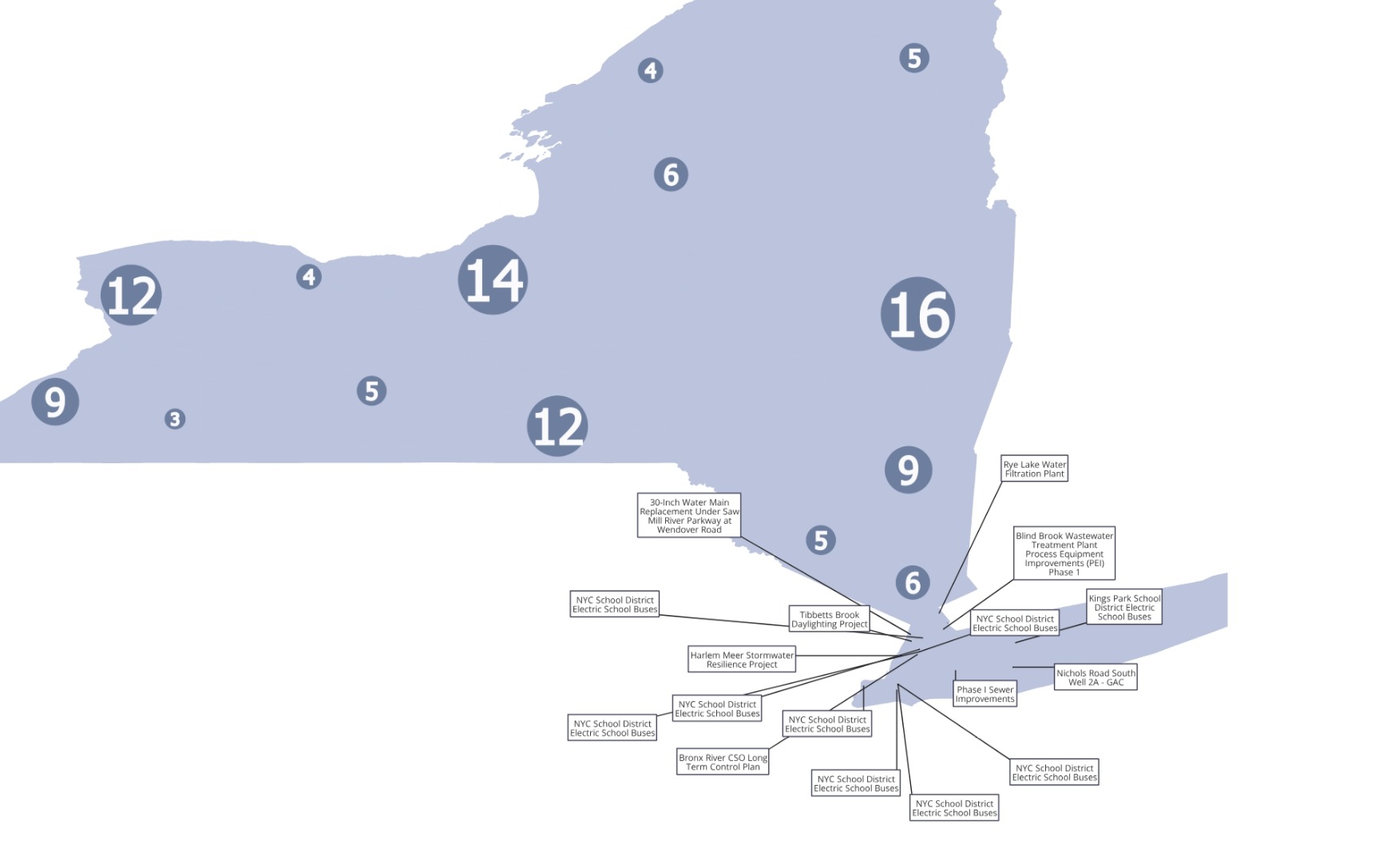
The climate change mitigation category has a $1.5 billion allocation, broken down into $400 million for green building projects and energy efficiency, and $300 million for “Other” Climate Change projects, like roof greening. Both categories could—and really should—support retrofits for multifamily housing in disadvantaged communities. But so far, none of the funded projects have focused on green buildings, let alone public housing retrofits. In fact, a majority of the climate mitigation projects have been for purchasing electric school buses. Out of the 10 New York City projects mentioned earlier, 7 are school bus purchases.
Almost half of the allocated funding ($220 million) has gone toward a December 2023 award for sewer, water collection, and flood resilience projects throughout the state. These projects aim to improve water quality in places like Lake Erie and Lake Ontario, and in the Hudson, Niagara, Onondaga, and Susquehanna Rivers. In New York City, though, the only such improvements have been two projects in Manhattan (including work in Central Park) and a waterway restoration on the border of the Bronx and Yonkers. Meanwhile, in December 2024, a century-old water main rupture filled Bronx streets and apartments with mud, debris, and feet of water, submerging vehicles and destroying millions of dollars worth of property. Another third of the funding ($160 million) has gone to three projects in the “open space land conservation and recreation” category. These were for renovations of recreational park sites, including work on a beach promenade and a mule barn.
There are still billions of Bond Act dollars left to be spent, but the eligibility rules for project applications have mostly all been published. Relevant state agencies like NYS Department of Environmental Conservation (DEC) and NYS Energy Research and Development Authority (NYSERDA) released these guidelines between March 2023 and December 2024. However, the public comment period was incredibly short—only a month or less—after each set of rules came out. Some project areas, like those dealing with soil and water conservation and watershed/wetland restoration and preservation, already limit where funding can be spent. For example, regions without watersheds would never be eligible for those programs. There are also serious concerns about fairness in how the funds are distributed. For instance, Bond Act-funded programs have had arbitrary caps on the grants, making them infeasible for projects in metro areas. This has been an ongoing problem for green investments from the state, even before the Bond Act.
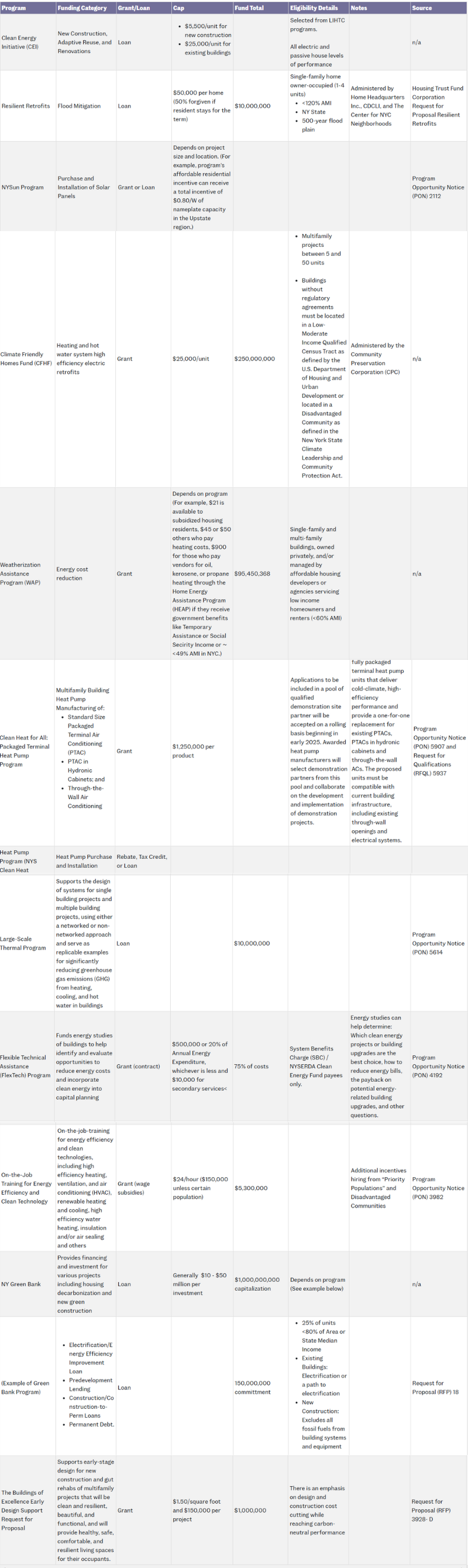
Take the Clean Energy Initiative (CEI) as an example. The NY Department of Homes and Community Renewal (HCR) partnered with the New York State Energy Research and Development Authority (NYSERDA) to create this program, which supports clean energy incentives and technical assistance for affordable housing. CEI funds highly efficient, all-electric retrofits, with both a moderate and substantial rehab path. The program could definitely be used for public housing or other multifamily housing projects in New York City, but the substantial rehab path only covers up to $30,000/unit per project, capped at $9 million, and the moderate rehab program allows up to $21,500/unit per project, capped at $3.2 million. HCR is willing to be flexible with these terms, but since the Bond Act didn’t provide any funding for the CEI and the projects are only pulled from the Low-Income Housing Tax Credit Applicants (LIHTC),[1] the current funding could never fit a public housing retrofit.
NY State is creating many green funding opportunities that impact housing. Take HCR’s Climate Friendly Homes program for heat pump installation and other energy conservation projects for multifamily buildings. The program provides grants capped at $25k per unit for work in buildings with between 5 and 50 residential units in either Low-Moderate Income Qualified Census Tract as defined by the U.S. Department of Housing and Urban Development or NYSERDA Disadvantaged Communities are eligible. So, there is no reason small public housing developments shouldn’t be targeted, except for the lack of adequate funding. Other opportunities include a Green Bank which invests in climate infrastructure and housing and was capitalized with a $1 billion investment, and the Large-Scale Thermal and The Buildings of Excellence Program which both fund early-stage design work that can be costly and timely. A more thorough (but not conclusive) list of relevant programs are listed in the table below.
Ultimately, the Bond Act clearly allows its funding to be used for multifamily projects like those in public housing. The law specifically mentions green building projects and those that reduce the heat island effect. While it only directly mentions state-owned buildings and schools, government-owned multifamily housing fits well within the legislative text.[2] When residents voted “Yes” on the Bond Act, they surely didn’t expect that “green building projects” would exclude multifamily projects, especially those in public housing where the greatest advances in sustainability have occurred.
Relevant state agencies (NYSERDA and HCR) must create clear guidance for green energy retrofits and green roof applications under the Climate Change Mitigation and Unallocated funding streams of the Bond Act. While the variety of programs, funding, and approaches New York has initiated to address the GHG emissions in the building sector is laudable, it is insufficient. New Yorkers support green investments in public housing, and the Green New Deal for Public Housing (A9745), introduced by Assembly Housing Committee Chair Linda Rosenthal, is the measure to do just that.
There’s no way to fulfill the commitment to disadvantaged communities without addressing the needs of those most neglected and impacted by environmental racism, even when using the state’s own standard. Existing programs are full of incentives and rules being juggled by various stakeholders in an earnest attempt to help the market find projects in disadvantaged communities. Public housing advocates and residents are calling out—look no further!
New York has a responsibility to fairly and effectively distribute the Bond Act funds to make a real impact on people’s lives and on the planet today. We should also be cautious about the long-term impact on public trust in such future funding initiatives if the benefits go unseen or the money ends up in the pockets of consultants[3] instead of communities that need it most.
Other State-Funded Climate/Housing Programs
Notes
1. LIHTC are only used on public housing in the case of developments where units are converted to RAD.
2. As per Environmental Conservation (ENV) CHAPTER 43-B, ARTICLE 58, TITLE 7 § 58-0701 “Allocation of moneys,” which states that “Not less than four hundred million dollars ($400,000,000) of this amount shall be available for green buildings projects…”
The type of projects that should be funded as Climate Change Mitigation efforts are further specified in § 58-0703 1., which include:
- “green building projects”
- “projects to reduce or eliminate air pollution from stationary or mobile sources of air pollution affecting disadvantaged communities”
- “projects that reduce urban heat island effect”
- “projects that increase energy efficiency or the use or siting of renewable energy on state-owned buildings or properties including buildings owned by the state university of the state of New York, city university of the state of New York, community colleges, and public schools…”
3. New York’s government spends more per capita on environmental consulting https://www.pellresearch.com/professional-scientific-technical-services/environmental-consulting, a quickly growing industry https://www.mordorintelligence.com/industry-reports/environmental-consulting-market