Sadie Stewart Hobday, Public Health Pioneer: A Black History Month Story
CSS has a 180-year history of innovation and advocacy to make life more livable for people facing economic insecurity and systemic injustice. Over the course of that history, many trailblazing leaders have helped lay a path for major advances in the fields of social work, public health, public social welfare programs, workers' rights, and more. But as with so much of American history, many of these heroes have gone unrecognized over the course of time due to bias in its many forms.

In honor of Black History Month, we dug a little deeper into our own past to tell the story of an unsung pioneer in the development of community-centered public health care: Sadie Stewart Hobday, who led a team of all-Black nurses to improve health outcomes in Columbus Hill, one of the most underserved neighborhoods in New York City in the 1920s and 30s.
Hobday’s path to CSS began in the Gullah community of Saint Helena Island, South Carolina, where she worked as a teacher and social worker at the renowned Penn School. Her role involved visiting local families and assessing their needs. She was often accompanied by a doctor or nurse and was moved by the nutritional and health deficiencies she encountered on these visits. This was her inspiration for the study of nursing.
Hobday received her graduate degree at Lincoln School for Nurses in the Bronx, the nation’s first professional nursing school for Black women, founded in 1898. After her graduation in 1923 she was sent to Tulsa, Oklahoma, a community still reeling from the horrific massacre in 1921 that killed hundreds of residents, destroyed over 1,250 homes, and razed a thriving Black commercial district to the ground. In addition to these incalculable losses, the community also lost its health center. 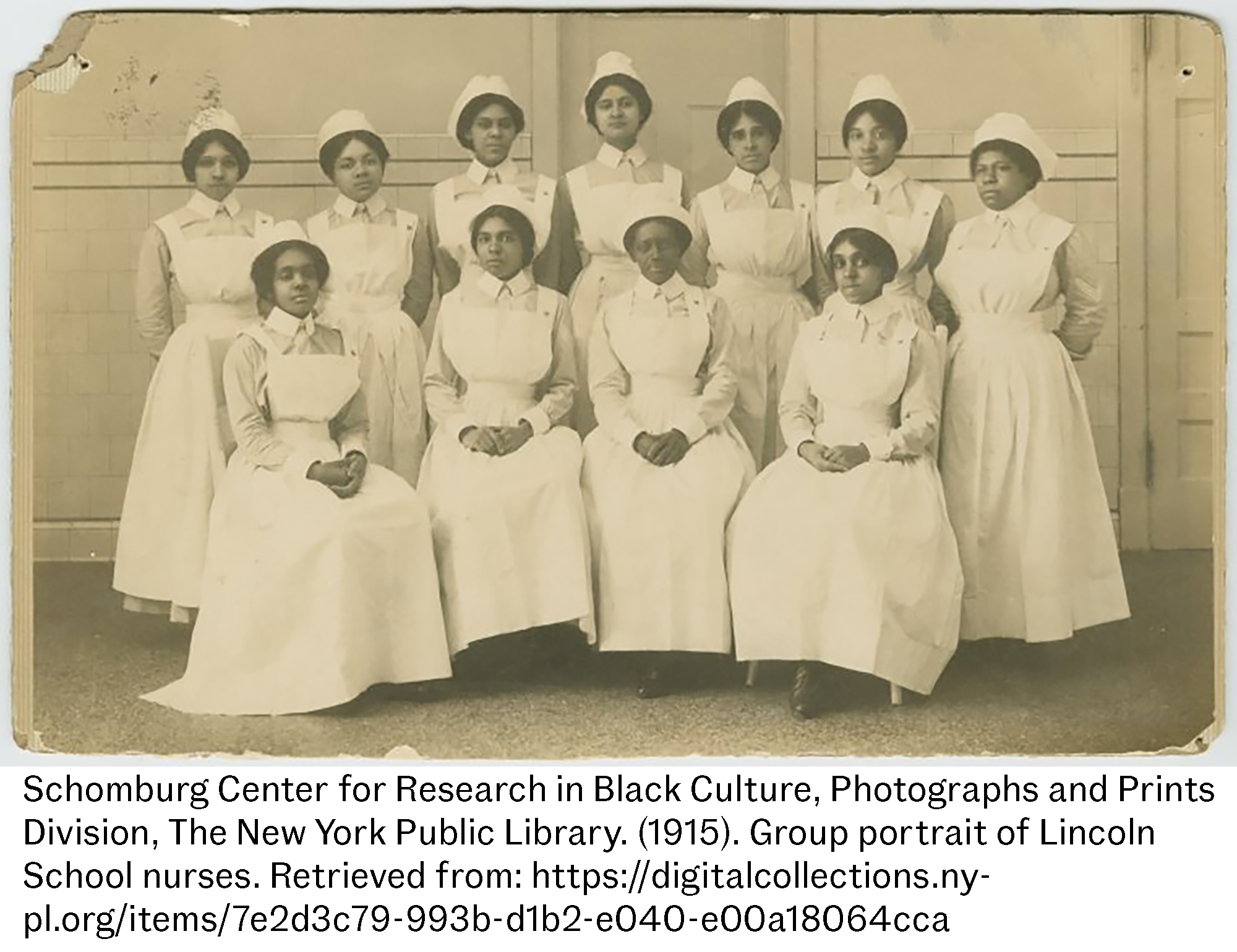
When Hobday arrived in Tulsa, she was the lone public health nurse for all of the city’s 15,000 Black residents. She immediately set to work establishing weekly clinics in prenatal care, child welfare, and tuberculosis and began lobbying faith and medical groups and city officials for a new permanent health center to serve the community. Nearly every Sunday, she could be found visiting local churches to marshal support.
Her vision became a reality in 1925, when a new health center was built with donated land, donated labor, and Hobday’s own persistence. Hobday also helped equip the local school district with a Black nurse and doctor, recruit dentists to the health center, and appoint a new “colored health officer,” employed by the city, to coordinate public health work. By 1928, Tulsa’s Black residents had a nexus of public health outreach and education in its new health center, a well-organized public health infrastructure at the city level, and a connected network of churches and health care providers through which to share health information with the community.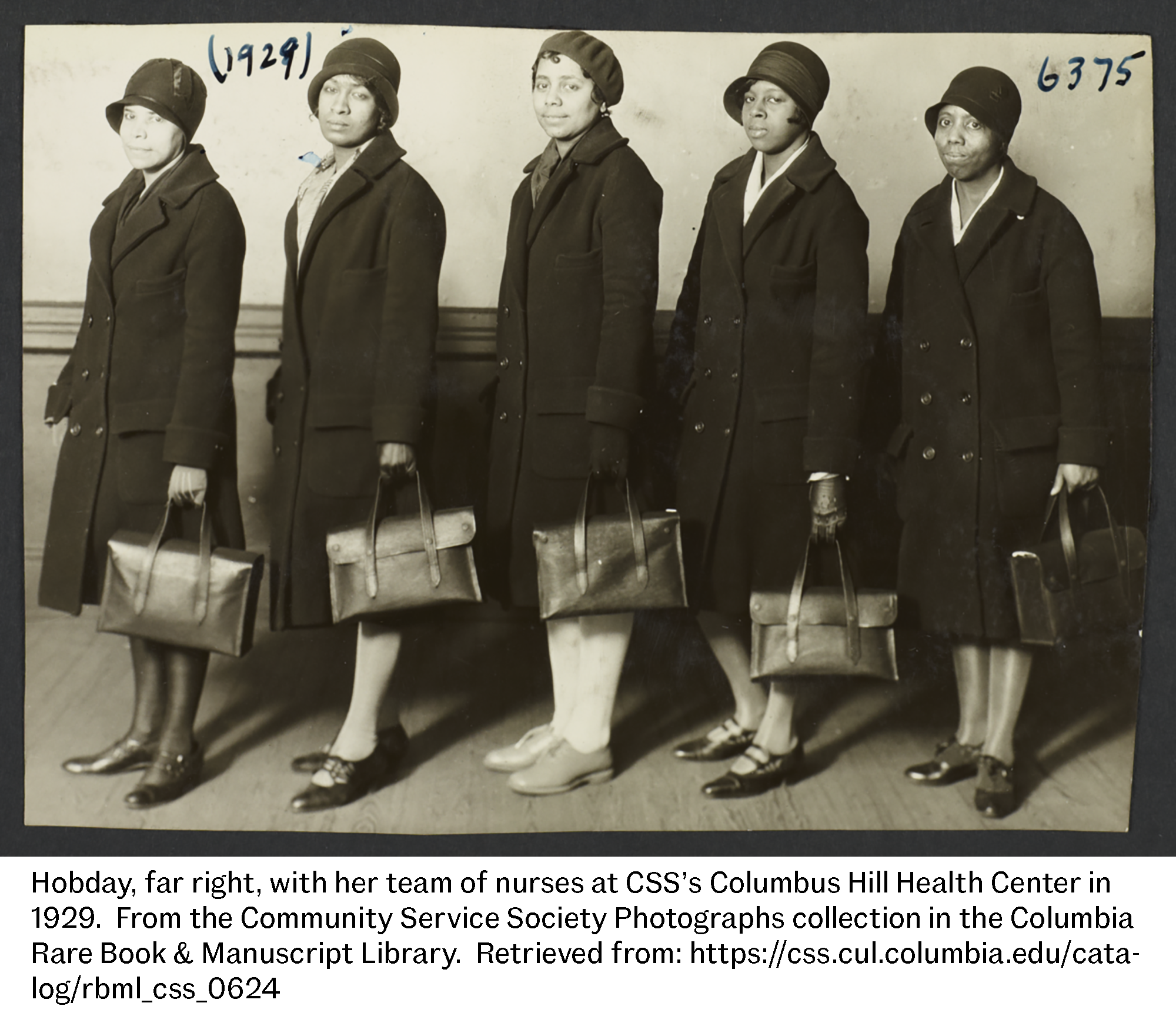
After achieving her vision in Tulsa, Hobday left to take on new challenges, and that’s where her story merges with ours. CSS established the Columbus Hill Center in 1917 in response to a city survey that showed extremely high rates of mortality among Black mothers and babies in New York City. Columbus Hill, which stretched from 59th to 66th and from Amsterdam Avenue to West End Avenue, housed one of the most concentrated populations of African American New Yorkers in the city.
In July 1928, Hobday was appointed to lead a new all-Black staff in Columbus Hill. This included at least 4 graduate public health nurses, a pre-natal supervisor, a clinic worker, and a clerk. In addition to ongoing services and education in maternal and child health, Hobday’s team soon added services in nutrition, dentistry, and yearly physical examinations for every member of every family served by the clinic. She also advocated to improve housing conditions and expand employment opportunities and training for men and women in the district. 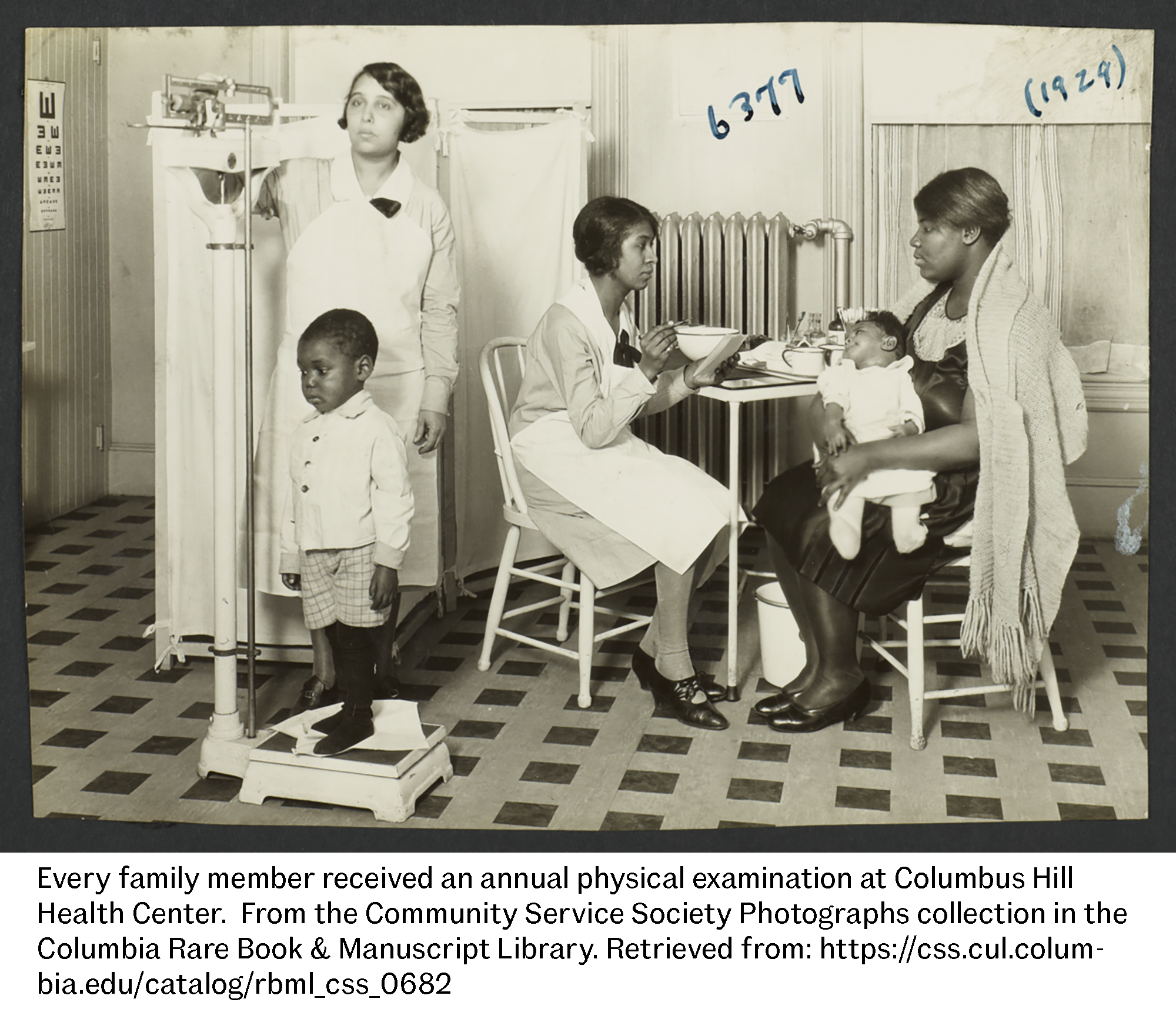
The Columbus Hill Health Center and a sister facility, the Mulberry Health Center established by CSS in 1919 to serve the immigrant community in Little Italy in 1919, informed a program of public health education and outreach that became integrated in all of CSS’s work and shaped the emerging professional practice of public health. As a pioneering public health nurse in New York City and Tulsa, Sadie Stewart Hobday’s contributions to improving child and maternal health care and building the essential infrastructure for public health education and outreach were central.
A note on sources: Information for this post was derived from CSS archival material and a contemporary narrative of Sadie Stewart Hobday's nursing career, found in Pathfinders: A History of the Progress of Colored Graduate Nurses, by Adah B. Thoms (Kay Printing House, New York, 1929).