Race and Evictions in New York City
Oksana Mironova
New York State’s universal eviction moratorium expired last week. While Governor Cuomo extended the prohibition on evictions for those with proof of direct impact by the pandemic until late August, New York City’s housing courts–which were cramped and chaotic spaces before the pandemic–opened their doors for certain types of cases on Monday. As eviction cases begin to run their course within the courts’ chambers, New York does not have an adequate plan for addressing the long-term economic impacts of the pandemic on tenants. Below, we review pre-pandemic eviction data and the latest U.S. Census survey measuring COVID-19’s economic toll. We find that New York’s Black renter households face the greatest eviction risk as the moratorium expires.[1] Latinx tenants are also in danger of increased eviction-related housing insecurity.
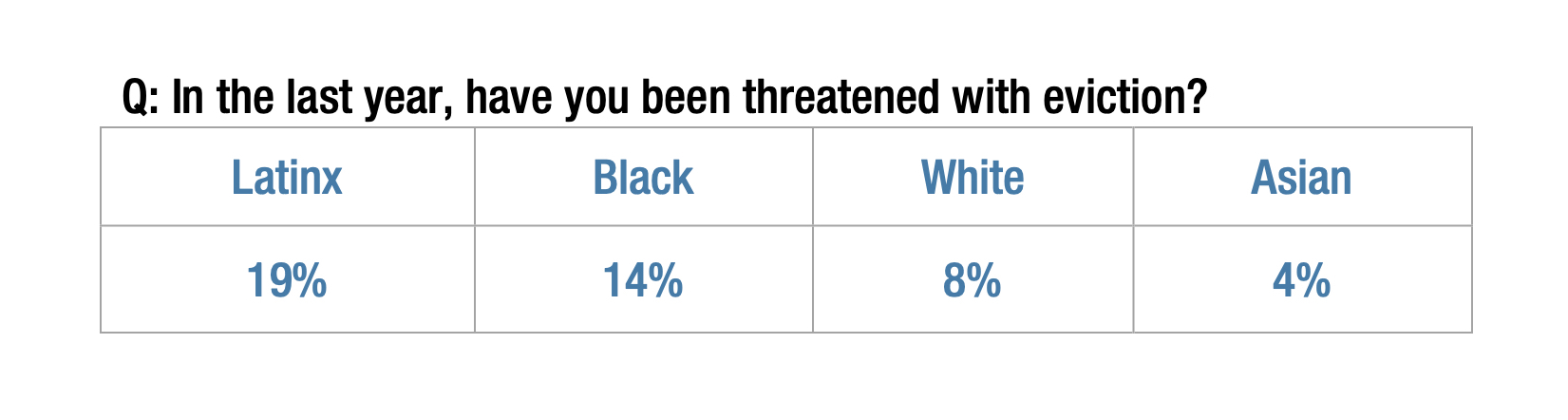
Figure 1. Before the pandemic, Latinx tenants were the most likely to be threatened with eviction.[2]
Source: 2019 Unheard Third survey
Before the pandemic began, the role of evictions in long-term housing instability among Black tenants had been well-documented by housing justice groups across the country and scholarly-organizing efforts like the Anti-Eviction Mapping Project. Evictions perpetuate poverty, especially among women-led Black households, and have long-term adverse effects on health outcomes, demonstrated by increased emergency room use and mental health hospitalizations. According to our 2019 Unheard Third survey, Latinx and Black tenants were more likely to be threatened with an eviction than white or Asian tenants (See Figure 1).
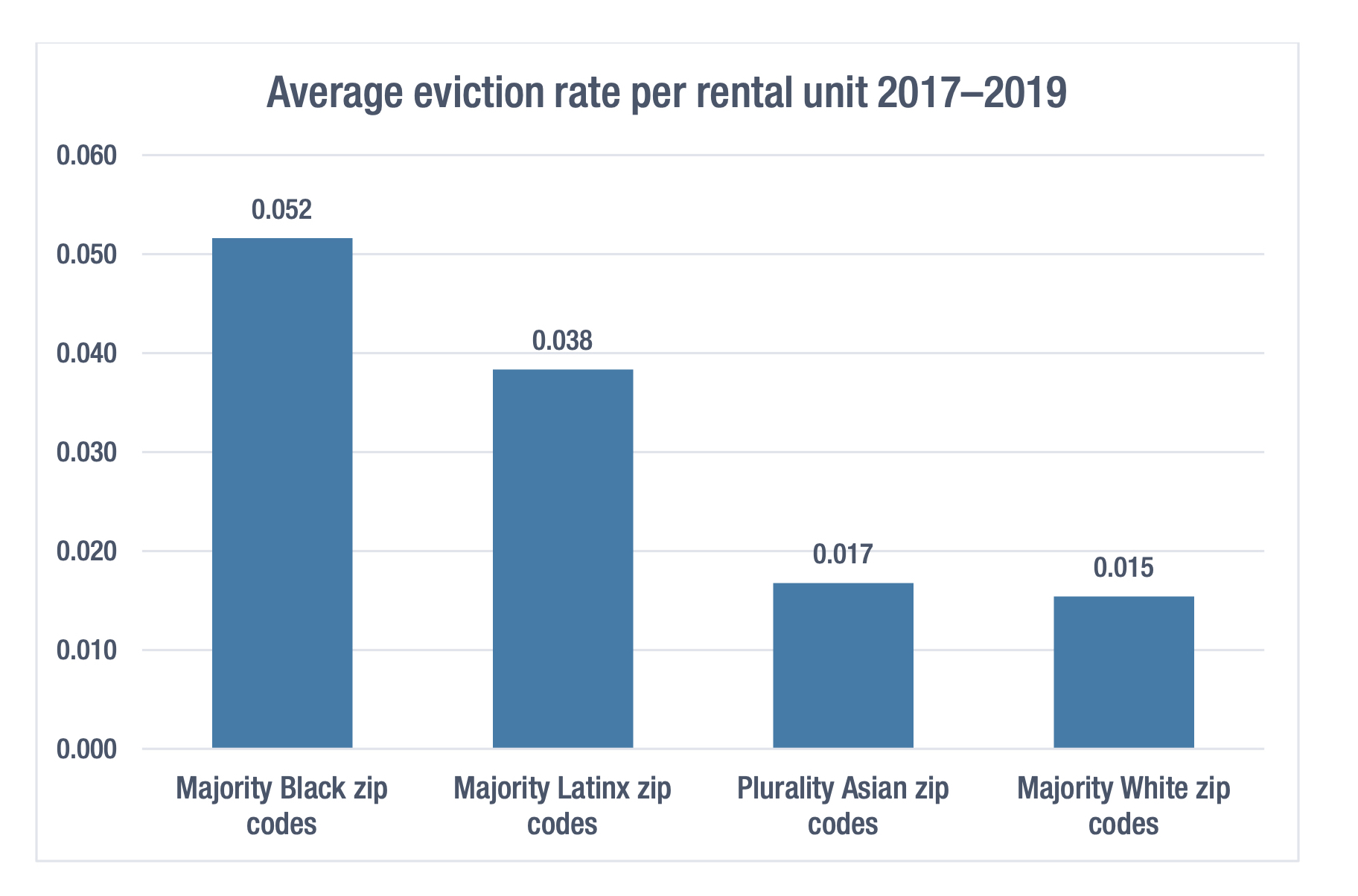
Figure 2. Between 2017 and 2019, tenants living in majority Black zip codes were more than three times as likely to be evicted as tenants living in majority white zip codes.[3]
Source: 2017-2019 DOI eviction data and US Census 2017 ACS 5 Year estimate.
Even though Latinx tenants were more likely to be threatened with evictions than black tenants, tenants living in majority black zip codes experienced the highest average eviction rates between 2017 and 2019. Tenants living in majority black or Latinx zip codes were more likely to be evicted than those living in majority white zip codes – more than three times and more than double, respectively (see Figure 2). While we don’t have enough data to understand exactly why the threat of eviction was highest for Latinx tenants, there is emerging scholarship about the different ways landlords use evictions: in some cases to remove tenants directly, while in others to capitalize on tenants in precarious economic situations to create an “additional revenue stream from fees and fines.”
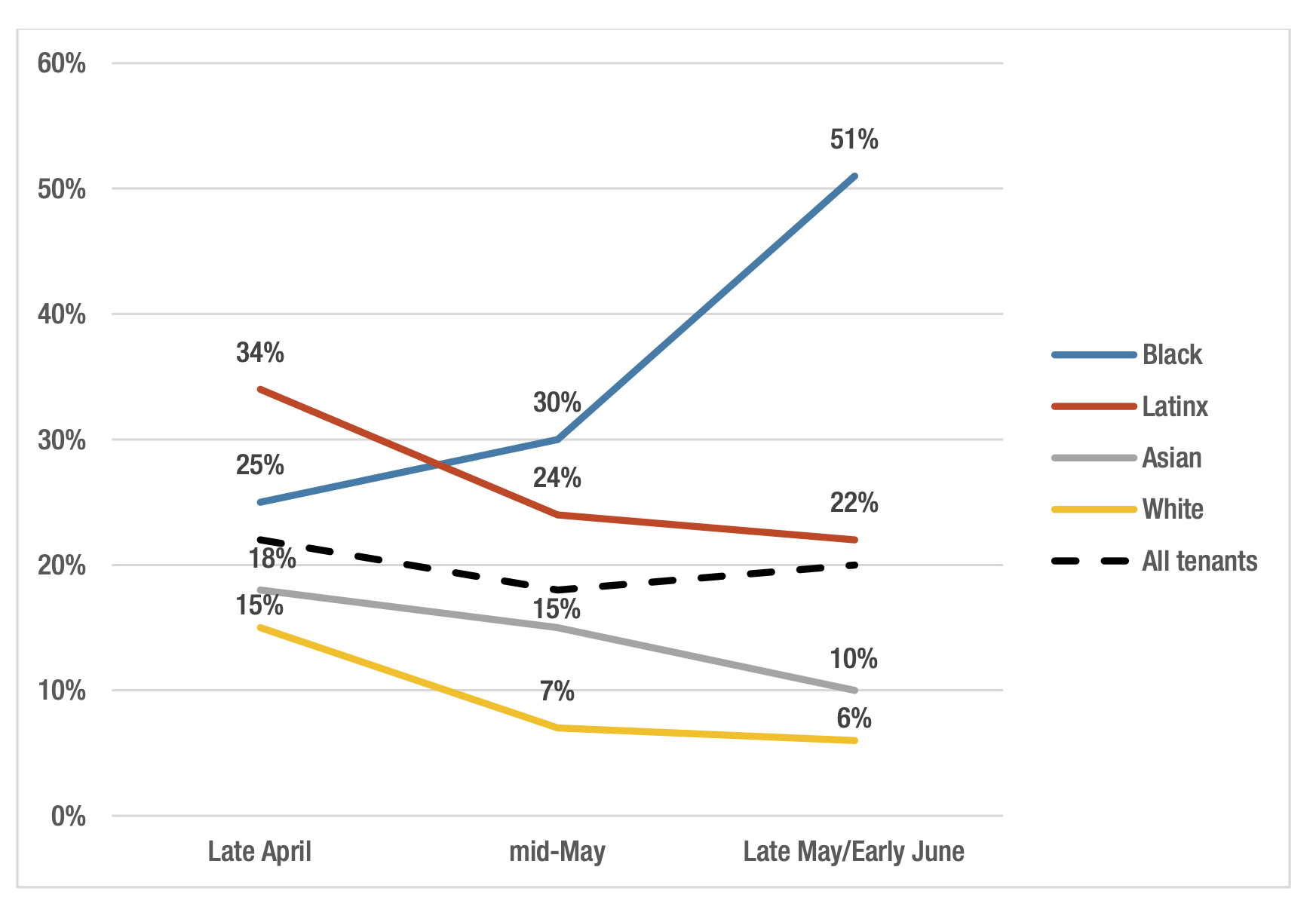
Figure 3. Half of Black tenant households in New York State fell behind on their rent as of late May/early June 2020.
Source: U.S. Census Bureau Household Pulse Survey (weeks 1,3,5)
The pandemic has had a disproportionate impact on communities of color, from healthcare access to social distancing arrests. Within the housing sphere, racist lending and real estate practices, often with support from public policy, have produced an environment where black tenants were experiencing the most acute level of eviction risk before the pandemic, with the threat of eviction-related housing insecurity also extending out to Latinx tenants.[4] The pandemic has also amplified these existing racial disparities. As illustrated in Figure 3, six percent of white tenants in New York State were behind on their rent as of late May/early June, compared to 22 percent of Latinx tenants and half of black tenants. And, while the trend among Latinx, Asian, and white tenants seems to be moving downward, perhaps indicative of tenants catching up on their rent as they access unemployment benefits or return to work, the trend among black tenants is moving in the opposite direction: alarmingly upward. Analysis of nationwide employment data by the New York Times shows rising job losses in May and June among black workers relative to white and Latinx workers. This unemployment data should be viewed in the context of an existing racial wealth gap.
Figure 4. A higher than average share of Latinx, Black, and Asian tenants in New York State have little or no confidence in their ability to make their next month’s rent payment.

Source: U.S. Census Bureau Household Pulse Survey (weeks 1,3,5)
As New York State’s courts open their doors to eviction hearings this week, Black, Latinx, and Asian renters are three or four times as likely to report having little or no confidence in being able to make their next rent payment, as compared to white tenants (see Figure 4). As the summer progresses and increased unemployment benefits that have allowed many people to continue to pay their rent expire at the end of July, the steady stream of eviction cases making their way through the now open housing courts will turn into a tsunami. Based on the above Census data, paired with pre-pandemic eviction patterns, black tenants will face the greatest level of direct eviction risk, with Latinx tenants also facing a significant level of housing insecurity.
It is paramount for the state to take immediate action and expand the universal eviction moratorium while developing a plan to make housing court safe and accessible. Our previous research has shown that evictions in zip codes where tenants have the right to counsel declined by 29 percent, compared to a 16 percent decline in similar zip codes without right to counsel. The city should prioritize the law’s expansion and provide funding for housing organizing and outreach in the budget for the coming year, which is being negotiated between the City Council and the Mayor this month. Finally, New York State should develop a universal and comprehensive approach for addressing rent arrears that is easily accessible to everyone impacted by the pandemic.
Footnotes
1. This is not unique to New York. See more here.
2. The Unheard Third is a scientific telephone survey designed by Community Service Society in collaboration with Lake Research Partners who administer it using Random Digit Dialing and professional interviewers. In 2019, 1,829 New York City residents were reached by cell phones and landlines from June 18 to July 20. Interviews were conducted in English, Spanish and Chinese. The margin of error for the entire survey is +/- 2.29 percentage points and +/- 2.97 percentage points for the low-income component.
3. New York City has approximately 180 residential zip codes. Of those, 27 are majority black, 25 are majority Latinx, and 64 are majority white. There are 12 zip codes that are plurality Asian (only two zip codes are majority Asian).
4. Organizers in other U.S. cities have observed similar dynamics around evictions. See for example “Moms 4 Housing: Redefining the Right to a Home in Oakland”: “As Fife would soon learn, ACCE’s Latino renters often faced threats and harassment, but weren’t often thrown out, “whereas black families are actually evicted, especially black mothers.” (In 2016, renters in majority-black neighborhoods of Oakland were more than twice as likely to receive an eviction notice, compared to majority-Latino neighborhoods.)”