Q&A: Meet Rachel Swaner, CSS’s new VP of Policy, Research & Advocacy
We’re thrilled to welcome Rachel Swaner as the new Vice President of Policy, Research & Advocacy at CSS! A lifelong New Yorker and dedicated public servant, Rachel brings a wealth of experience in tackling systemic injustices, promoting equitable communities, and driving innovative policy solutions.
In this interview, Rachel shares her journey to CSS, her vision for addressing New York’s most pressing challenges, and her passion for building a more equitable future.
Q: Can you tell us a bit about your background and what brought you to CSS?
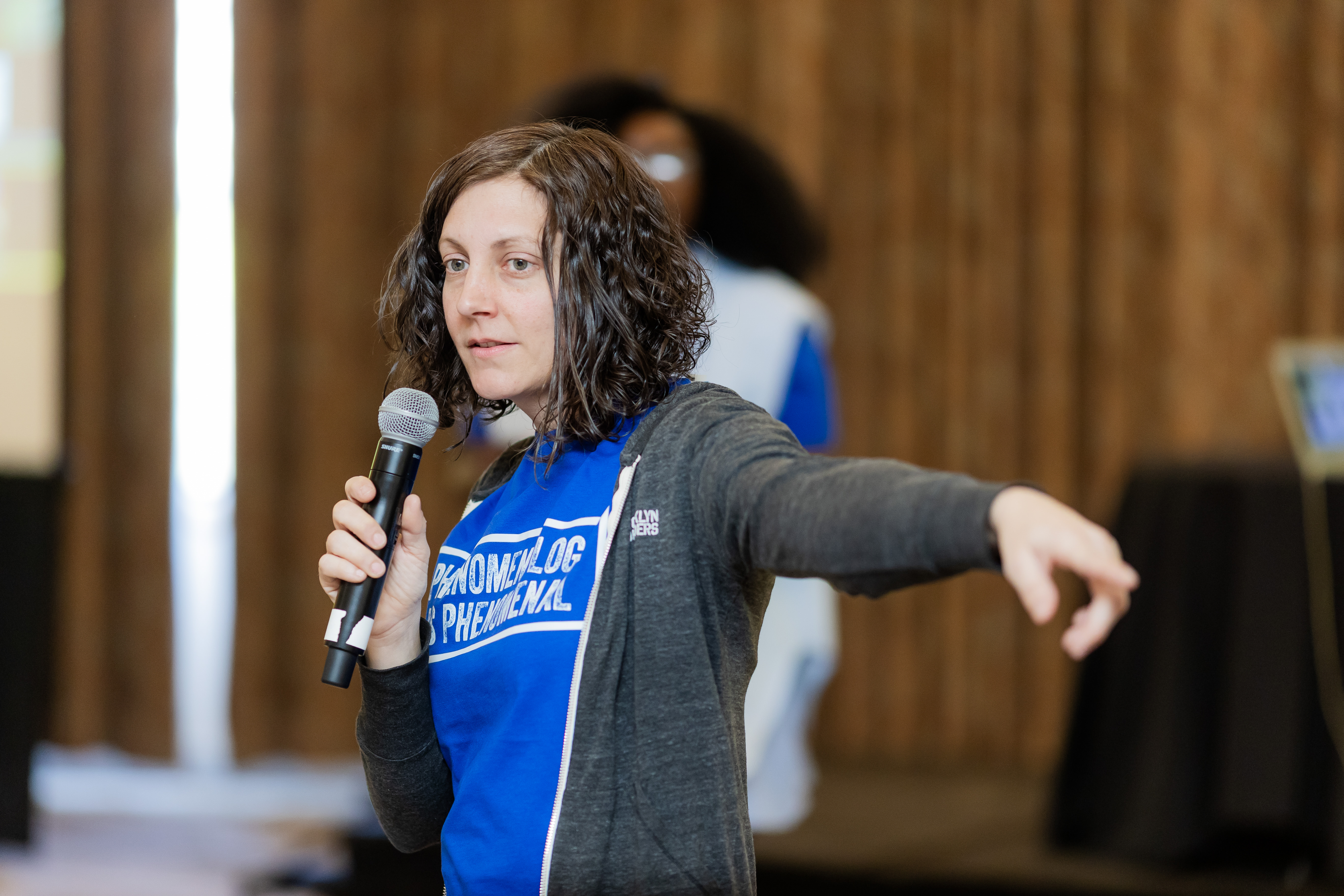 A: I’m a lifelong New Yorker and my whole career has been in public service. I started out running youth programs at two schools on the Lower East Side before transitioning from direct service to research and policy. After spending a few years on anti-poverty initiatives at Harlem Children’s Zone, I joined the Center for Justice Innovation, where I worked for 16 years. As their research director, I led a team studying how we could reduce unnecessary incarceration and surveillance while promoting community safety and well-being. A lot of that work focused on New York City. Over time, I became familiar with CSS’s work, especially its stance on issues like the overpolicing of poor communities and fare evasion. I was impressed with CSS’s commitment to tackling systemic injustices head-on. In the back of my mind, I always thought, “I’d love to work with them someday.”
Q: What excites you most about joining CSS as the VP of Policy, Research & Advocacy?
A: The opportunity to integrate three critical areas—policy, research, and advocacy—that are often siloed and treated as separate pieces, even though they are most effective when they are deeply interconnected.
Q: What do you see as some of the biggest opportunities for policy innovation in New York right now?
A: I think there’s a lot of room for innovation in areas like affordable housing and climate action. With housing shortages and rising rents, we really need to focus on creating more affordable options for residents. On the climate front, there’s exciting potential for new approaches. For example, at the end of 2024, New York passed a bill holding oil companies accountable for the costs of climate-related damage. As extreme weather events become more frequent, we must better prepare neighborhoods that we know are particularly vulnerable, like the Rockaways and Red Hook. Not just because of their location in flood-prone areas, but because decades of systemic neglect and underfunding have left them without the infrastructure and resources necessary to withstand these growing threats. Finally, on these and other issues, I think it’s time to explore more participatory policymaking—ensuring that everyone, especially those most impacted, has a seat at the table when we’re shaping solutions.
Q: How do you envision expanding CSS’s NYC survey of low-income New Yorkers (the Unheard Third) to a statewide survey (the Annual Survey of Housing and Economic Security) will impact our understanding of the challenges faced by communities across all of New York?
A: Expanding the survey statewide gives us a much clearer picture of what people are facing across all of New York. It allows us to capture the unique needs—and strengths!—of urban, suburban, and rural communities. With this broader view, we’ll be equipped to tailor our policy recommendations to each region's specific challenges, and to highlight the issues that cross party lines, geography, and demographics. I also think the survey expansion will strengthen our relationships with upstate community organizations working on housing and economic security, as well as with elected officials, since we’ll be able to share data that reflects the experiences of their neighbors and constituents. Especially post-election, in this shifting political landscape, it’s critical to stay connected to the diverse group of New Yorkers we’re all working to support.
Q: What are some key policy areas you’re looking forward to addressing in the coming year?
A: I’m excited to conduct research on the social and structural factors that affect workers with criminal records. I want to better understand the barriers they face, the policies and practices that help them succeed, and how employers can create more inclusive environments. This will help us craft a policy agenda to best support workers and Fair Chance employers.
I’m also interested in gathering lived experience data that adds nuance to the conversation around how economic security and housing affordability challenges shape people’s daily lives.
And of course, I’m excited to continue the important housing work our team is doing, particularly around social housing, rent stabilization, eviction prevention, and a Green New Deal for public housing.
Q: What motivates you personally to work toward social and economic justice?
A: A lot of the inequality we see isn’t accidental—it's built into the systems around us. Too many injustices persist because we haven’t challenged the structures that perpetuate them. I'm committed to using the skills I have to help shift narratives, address power dynamics, and transform policies, practices, and resource allocation to make the world a more just and equitable place.
Q: What does it mean to you to build a more equitable New York?
A: Building a more equitable New York means creating spaces where everyone has access to what they need to thrive. It means challenging structures of power that for too long have concentrated wealth and privilege in the hands of a few. It’s about listening to communities and ensuring that policies are informed by the people they impact the most.

Q: When you’re not working, what’s your favorite way to unwind or recharge?
A: Three things: 1) I love rock climbing, and I hit the climbing gym a few times a week. 2) I’m in a rock band where I play…the accordion. Unconventional, I know, but it works! I’ve been playing piano since I was 5. Creating music with and for my friends is something that’s really special to me. My husband also owns a venue (The Owl Music Parlor in Brooklyn...come by!), so music is a big part of my life. 3) I’m an obsessive NY Times crossword solver (and shout out to the Newsday Saturday Stumper)—definitely a proud cruciverbalist!