Blame Speculation, Not Rent Regulation: Why New York Must Enforce and Protect the 2019 Rent Laws
Oksana MironovaSamuel Stein
Context
The last three years have been ones of momentous changes in our housing system, particularly for the more than two million people living in New York City’s 1,006,000 rent stabilized apartments. In June 2019, tenants in New York State won some of the most important, far-reaching, and comprehensive protections in about a half-century, through the Housing Stability and Tenant Protection Act (HSTPA). Before the law had even been fully implemented, COVID-19 hit the State, with long-reaching health and economic consequences for low-income people. The tenant movement responded with demands for an eviction moratorium, which they won through January 2022. As the pandemic continued, the state established an Emergency Rental Assistance Program (ERAP) with federal support, helping tenants pay back-rent, though it was never funded enough to cover the full need, and the system was unnecessarily difficult to use.
In this brief, part of the series Whose Recovery? Addressing the Needs of Low-Income New Yorkers, we focus on the experience of rent regulated tenants before and after HSTPA was passed, in the context of the pandemic. The brief includes new findings from our 2021 Unheard Third survey – the longest running scientific survey of lowincome communities in the nation — which show that HSTPA has not caused a decline in building maintenance in rent stabilized buildings, despite opponents’ claims that it would. The brief also includes new data from the 2021 Housing Vacancy Survey (HVS), indicating that HSTPA has been highly effective at preventing apartment deregulation and keeping rents in regulated units lower than they would have been otherwise. At the same time, our survey finds that harassment of rent stabilized tenants is ongoing, and that more education and organizing are needed to protect and enforce HSTPA.
Summary of Recommendations
- The state and the city must defend and fully implement existing rent laws, including developing enforcement and accountability mechanisms, while ensuring that rent stabilized tenants know their rights.
- The legislature should pass bold new statewide tenant protection laws, including Good Cause eviction protections and statewide Right to Counsel, bolstering HSTPA’s impact and helping tenants not covered by HSTPA remain in their homes.
Key Findings
- Contrary to landlords’ fearmongering, there is no evidence of HSTPA causing a decline in building conditions or services.
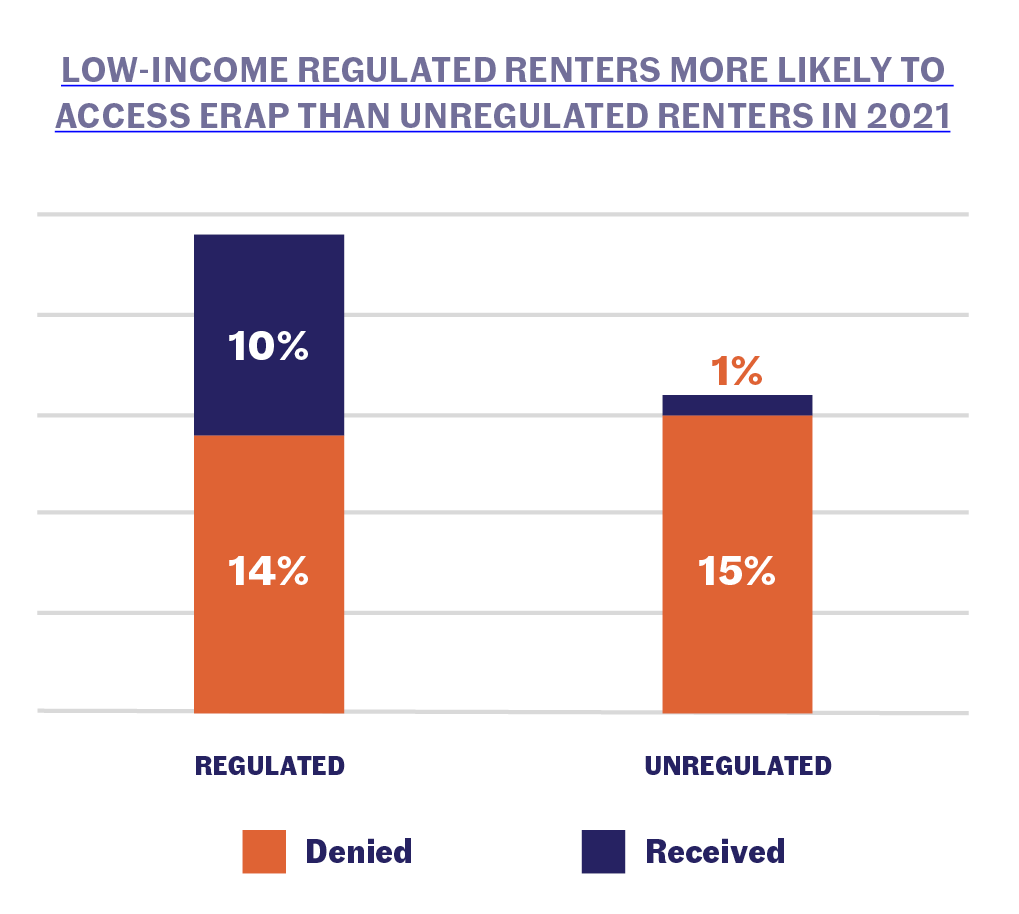
- Low-income rent stabilized tenants were ten times more likely to access rental assistance compared to low-income unregulated tenants, perhaps because stronger tenant rights provide a firmer basis for tenants to push their landlords to accept rental assistance.
- HSTPA saved 15,670 apartments from deregulation. In 37,040 apartments where new tenants moved in since 2019, HSTPA kept rents around the city’s median of $1,500 – $300 lower than they would have been without the 2019 rent law reforms.
- Landlord harassment persists in rent stabilized buildings, suggesting more enforcement and ongoing organizing are necessary.
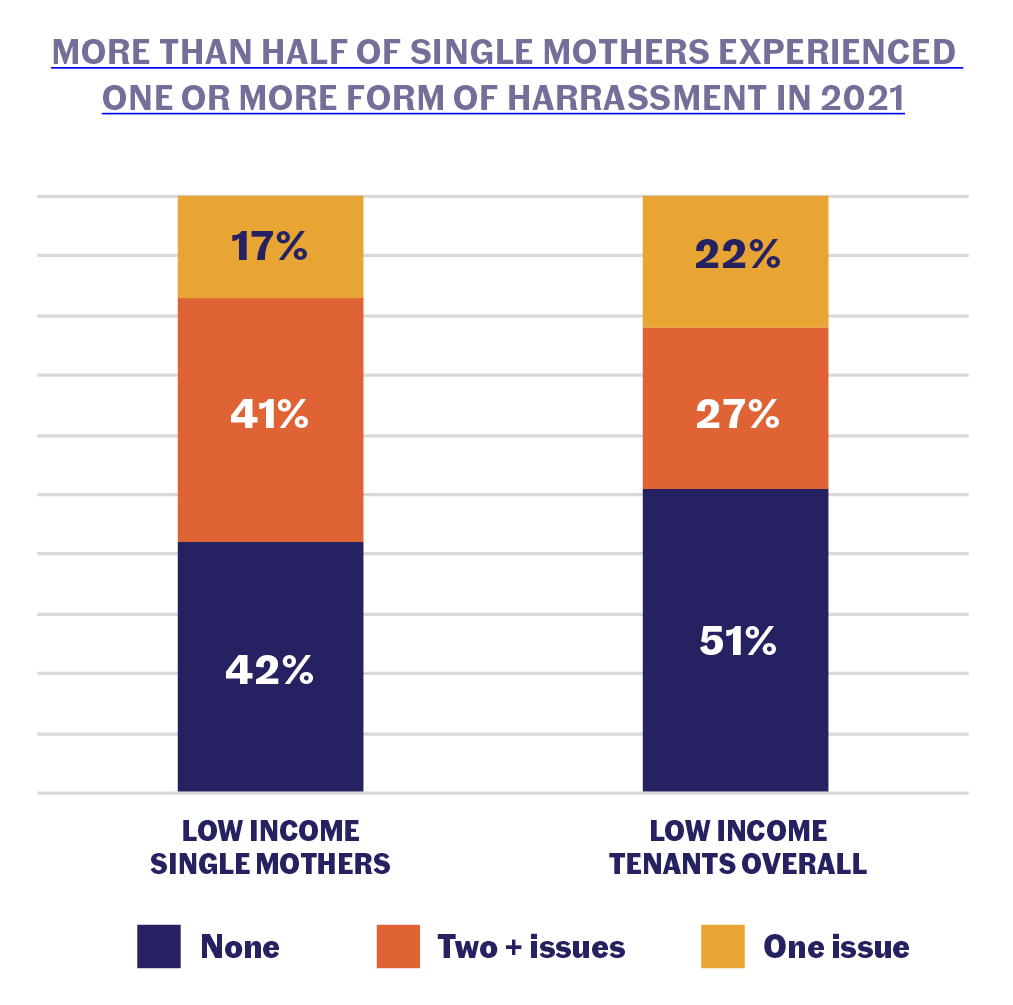
- More than half (58 percent) of low-income single mothers have experienced one form of harassment from their landlords, with most experiencing more than one type.
- Tenants’ knowledge of the rent law changes has declined by 10 points since our last survey, pointing to the need for continuing education and organizing.
Introduction
The 2019 Housing Stability and Tenant Protection Act (HSTPA) strengthened New York State’s rent regulation system, which covers more than a million renter households in New York City, Westchester, and Nassau counties. The law closed loopholes, introduced by real estate-friendly legislatures in the 1990s, which allowed landlords to use apartment and building improvements, as well as tenant turnover, as a pretense for steep rent hikes and deregulation. Further, the law made tweaks to eviction proceedings, capped certain types of fees for all tenants, and introduced good cause eviction protections for manufactured homeowners, mandating manufactured home park owners’ to offer annual site leases and capping site fee increases at 3 percent.
Just nine months later, and before HSTPA could be entirely implemented, the pandemic hit New York, upending the housing market. Tenants lost their jobs, and with them, their ability to pay rent. Government action–including expanded unemployment insurance, economic impact payments, rental assistance, and mortgage forbearance–helped keep many tenants in place and most landlords afloat. According to a JP Morgan study, landlords cut expenses more than rental revenues declined early in the pandemic, and kept those cuts in place even after rental revenues recovered.
Today, landlords of rent stabilized properties are sowing fear that HSTPA–rather than the pandemic–is causing revenues to fall and building conditions to decline, even as building values in New York rise. One industry group has publicly announced that it is warehousing 20,000 empty rent stabilized apartments in order to extort the legislature into allowing them to raise the rents to market rate. These same landlords are suing to undermine and ultimately undo the victories tenants achieved through HSTPA, and have fought hard to block other tenant protections, like Good Cause eviction protections.
Under these circumstances, now is a crucial time to review how tenants in rent stabilized apartments are holding up under the new rent laws and efforts to undermine those laws, in the context of a pandemic. To do this, our report uses the 2021 Unheard Third survey and the Initial Findings of the 2021 Housing and Vacancy Survey to look at building conditions, harassment, and access to benefits among low-income tenants in regulated and unregulated apartments.
No evidence of HSTPA causing a decline in building conditions or service delivery
During the fight for HSTPA in 2019, landlord lobbyists and their supporters claimed enacting stronger rent regulations would cause financial distress in rent regulated buildings, because landlords would not be able to keep up with rising operating costs. These arguments have resurfaced during contemporary debates over Good Cause eviction protections, with landlords claiming that they would not be able to keep up with repairs if their ability to evict tenants and hike rents at will was in any way constrained.
This is not a new argument, and there is ample empirical evidence to debunk this dubious claim. As early as 1981, renowned housing expert Peter Marcuse found that rent regulation did not cause physical distress in buildings:[1] 40 years of research in New Jersey–which has had a Good Cause law for decades and contains municipalities with and without rent control–supports this too.[2]
In line with these historical studies, contemporary data does not show any causal or corollary relationship between stronger rent regulations and worsening building conditions.[3] The NYU Furman Center analyzed HPD complaint data through the beginning of the pandemic, and found that their seasonal pattern–an annual spike in the winter, during heating season–did not change after HSTPA’s passage. CSS’s Unheard Third survey offers additional supporting evidence. Since 2014, we have asked respondents to rate their building’s safety, physical condition, and building service (i.e., heat and water) provision.
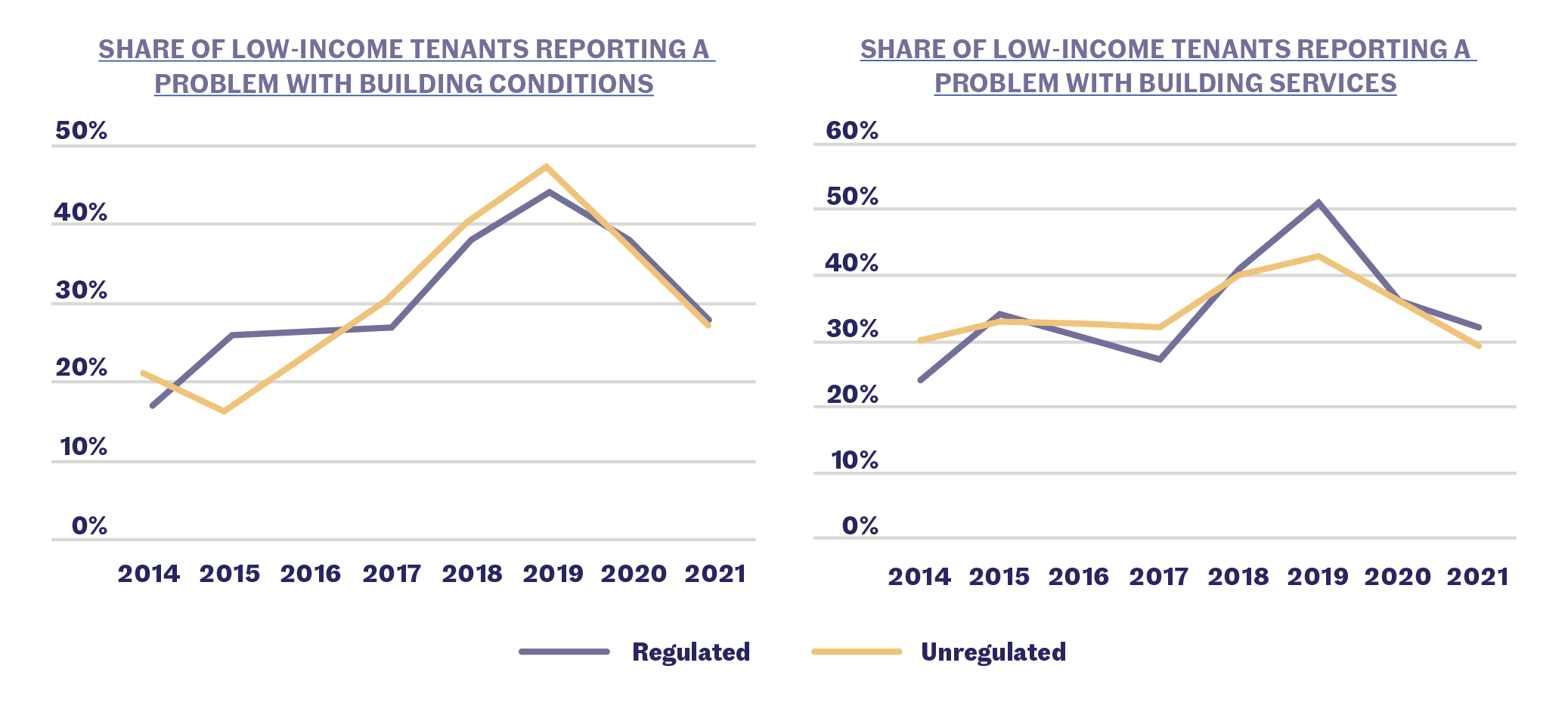
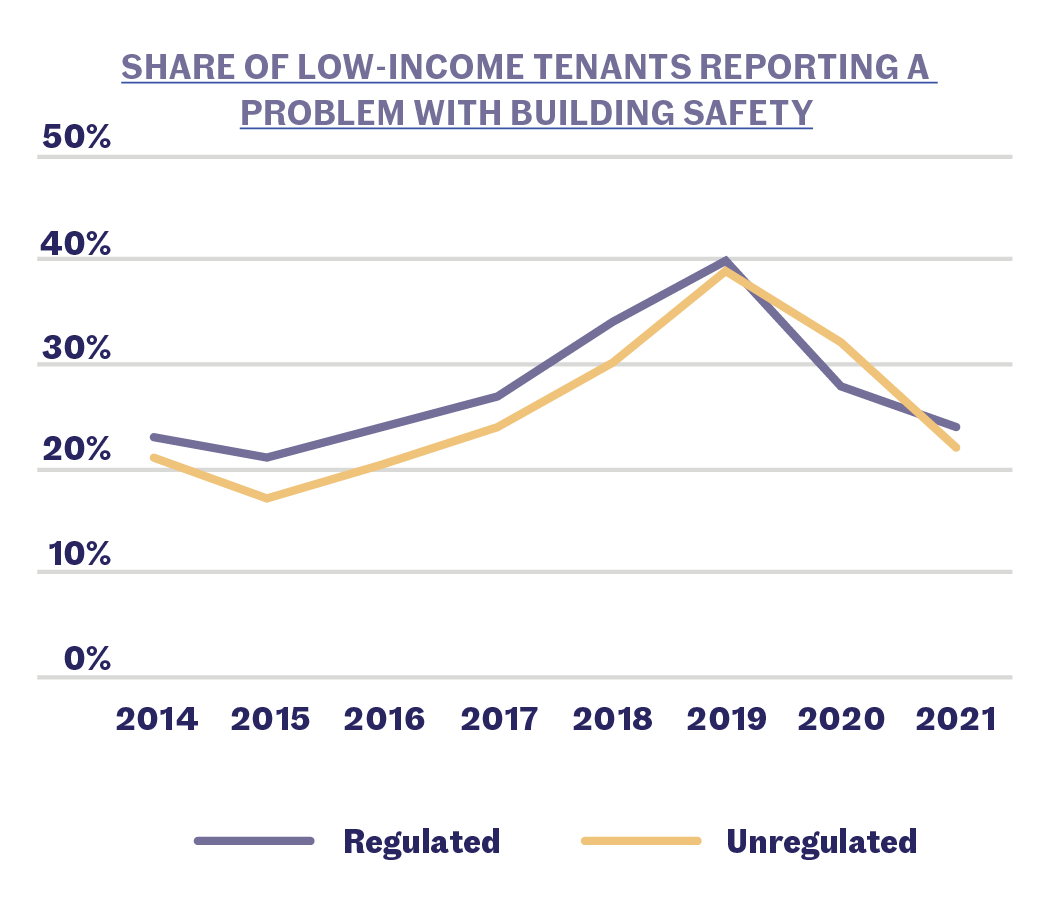
To understand HSTPA’s impact on building quality, we compared low-income regulated renters’ responses to those of low-income unregulated tenants whose landlords are able to raise rents without restrictions,[4] and found a strikingly similar trend. As illustrated in the three figures below, across our three indicators– safety, physical conditions, and building services–the share of low-income regulated and unregulated tenants reporting a problem rose from 2014 to 2019, and then started declining at about the same rate. Similar trends among lowincome regulated and unregulated tenants show a lack of impact of HSTPA on building conditions.
These figures may prompt the question: why are conditions persistently bad in some buildings in New York City? New research from Local Initiative Support Corporation and University Neighborhood Housing Program suggests that real estate speculation–not the regulation of rents–is a primary driver of poor conditions in private rental housing. The report shows that buildings that gained a lot of value did not become better places to live. In fact, rapid property value increases, in addition to high debt levels (both markers of speculative investment), are leading indicators of poor maintenance quality in rental buildings. Buildings with rising values and raising debt loads had 2.7 times the number of HPD violations from 2018 to 2020, compared with those that did not. Rather than benefiting tenants, “additional debt taken on by landlords is more commonly used to extract profit rather than reinvest in properties.”
By discouraging speculation, HSTPA, could–over time, and if properly enforced–prevent the kind of investor behavior that drives poor building conditions. While the law is still fairly new, the Furman Center’s analysis shows that HSTPA may already be cooling speculative investment in some rent stabilized buildings. Their report notes a decrease in alteration job filings[5] immediately after the law’s passage. This decline was most pronounced in buildings that were 26-75 percent stabilized, which also had the highest rate of alteration filings before HSTPA. It is likely that landlords of these partially-stabilized buildings had previously used major renovations as a means for raising rents and deregulating units through permanent Major Capital Improvement (MCI) or Individual Apartment Improvement (IAI) rent increases. Under HSTPA, landlords could no longer claim such extensive rent increases for building or apartment alterations of dubious quality or necessity.
The Furman Center’s research has also shown that partially rent stabilized buildings (in which 26-75 percent of apartments are regulated) saw the greatest loss of value after the passage of HSTPA, likely because before June 2019, properties with the potential for deregulation were particularly sought after by investors, thus ballooning their prices. Under HSTPA, buildings can no longer exit rent stabilization, undermining the speculative practice of purchasing rent regulated buildings with the intent to bring them out of stabilization and massively increase profits. This market correction, then, reflects the reality on the ground for rent-stabilized apartments, and demonstrates the success of this law in precluding harmful speculative practices.
At the same time, it is important to note that while HSTPA severely limited the means to speculate in the rent regulated housing stock, the COVID-related recession expanded the opportunity for speculative buyers to consolidate the housing market. In the years to come, we will find out whether the protections created by HSTPA will be strong enough to stymie the efforts of speculative buyers.
HSTPA keeps apartments regulated and slows rent increases
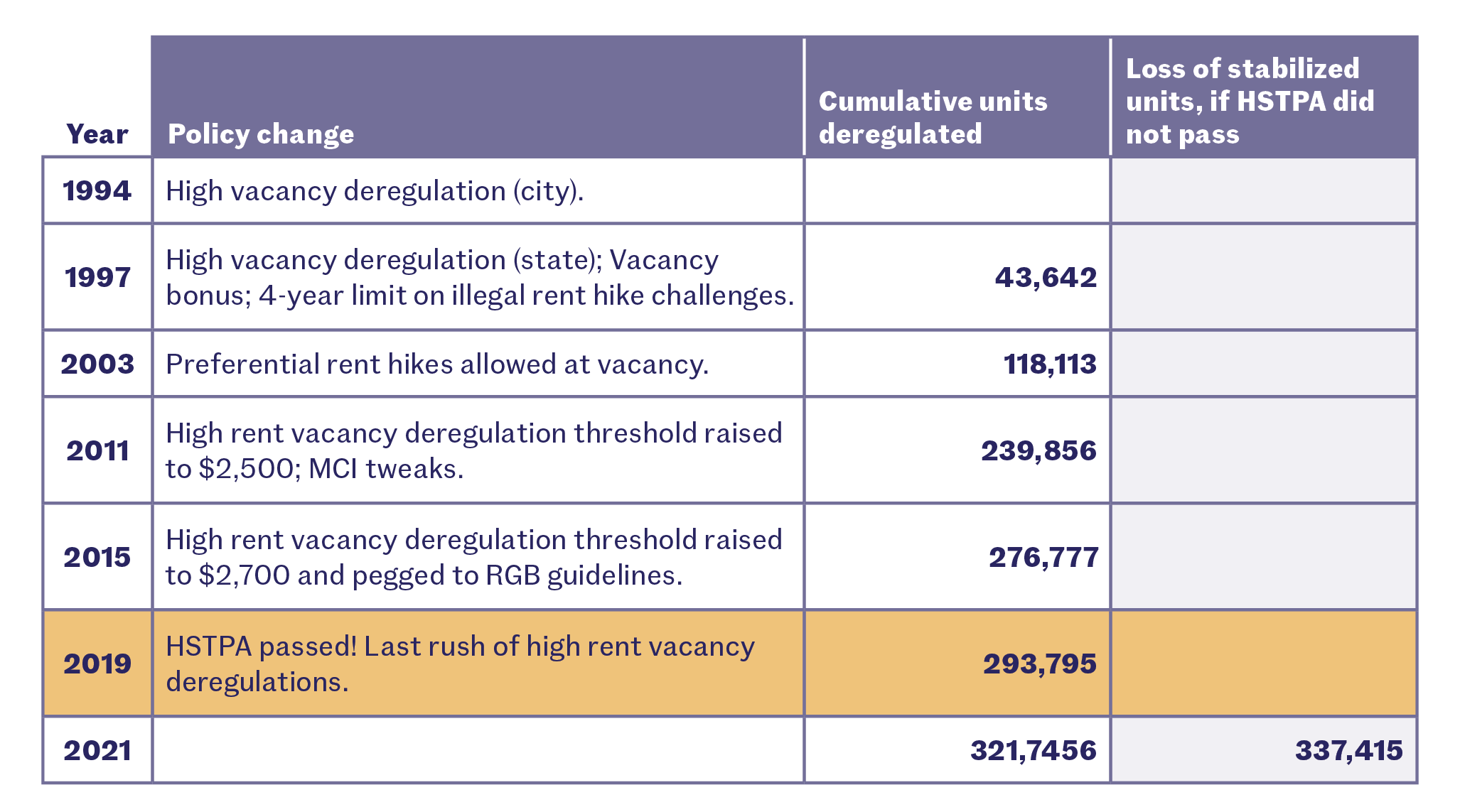
HSTPA also contributed to the preservation of rent-stabilized housing. According to the latest 2021 Housing Vacancy Survey, between 2020 and 2021, HSTPA saved 15,670 apartments from deregulation, reversing a trend started with prolandlord reforms that weakened the State’s rent regulation system over the past few decades.
While this result may seem small, compared to the speed of deregulation that preceded it, it will scale up over time.
Further, the 2019 law kept rents in 37,040 apartments that turned over at the median rent of $1,500. That is $300 lower than it would have been without HSTPA.
Emergency rental assistance was more accessible to regulated than unregulated tenants
At its core, rent regulation is a law that helps balance the relationship between tenants and landlords, not a means-tested housing subsidy program. At the same time, there are more low-income households in rent-regulated units than in public and subsidized housing combined. Rent regulation is central to helping low-income people live in New York City long-term, and effective at bolstering housing affordability initiatives. While not designed with a pandemic in mind, tenants in rent regulated units were much more likely to access private and government rent relief during the pandemic than low-income unregulated tenants.
In our 2021 Unheard Third survey, we asked respondents if they were able to secure rent reductions from their landlords directly or if they received rent relief through the state’s Emergency Rental Assistance Program (ERAP). We found that among low-income renters, regulated tenants were ten times more likely to access ERAP. Low-income regulated tenants had a 42 percent success rate with their ERAP applications, compared to a 6 percent success rate for unregulated low-income tenants.
Similarly, low-income rent regulated tenants were nearly three times as likely to have received a rent reduction from their landlord during the pandemic, compared to low-income unregulated tenants. Lowincome regulated tenants had a 46 percent success rate with rent reduction requests, compared to a 25 percent success rate among low-income unregulated renters.
Why might this be? Low-income regulated renters are likely more successful at receiving public subsidy and rent reductions during the pandemic because they have greater security of tenure under rent stabilization and HSTPA than unregulated tenants.
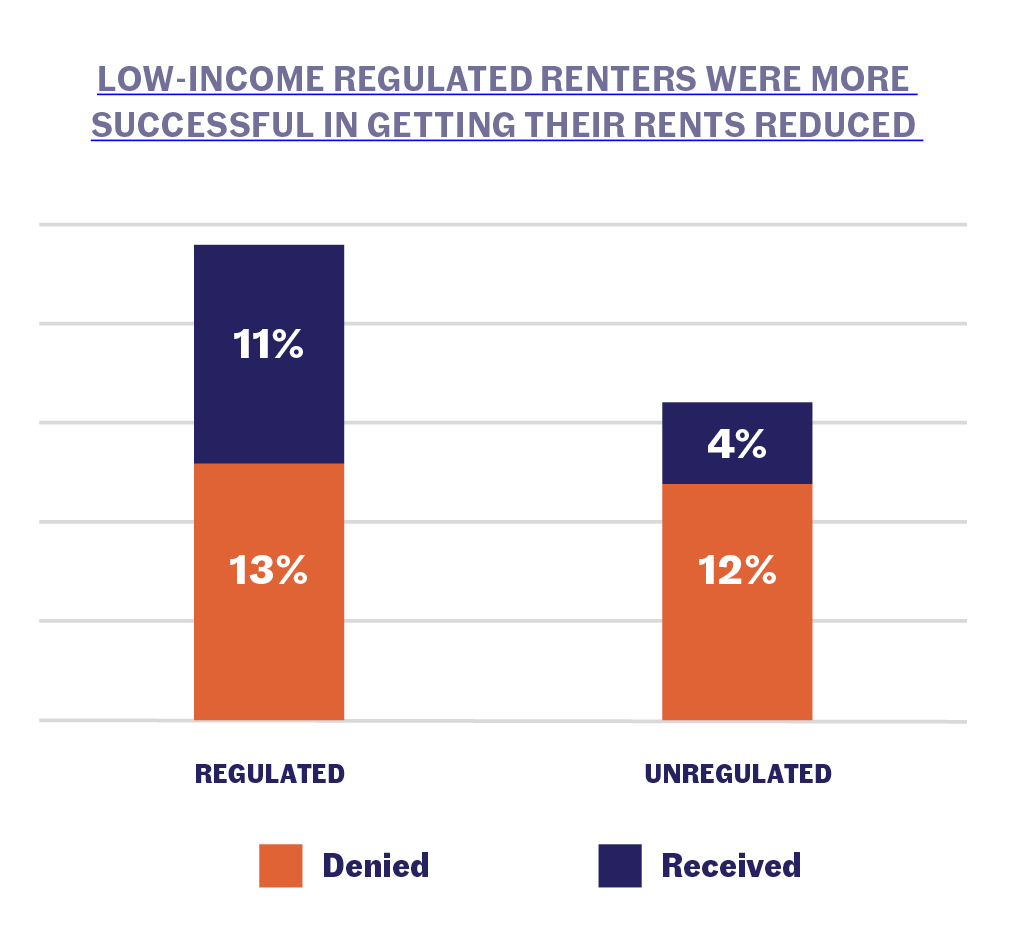
With built-in protection against lease non-renewals and retaliatory rent hikes, rent-regulated tenants may have felt safer to press their landlords to grant them rent reductions or to file the paperwork required for a successful ERAP application. If Good Cause eviction protections were passed statewide, unregulated tenants would have some of the same security and may be more willing to push for rent reductions or rent relief.
Knowledge about rent laws is declining among tenants
For the most part, New York State’s rent regulation system is reactive, relying on tenant complaints, rather than comprehensive government enforcement mechanisms, to ensure tenant protection laws are fully implemented. While there are government mechanisms in place for rent law administration, like the NYS Homes and Community Renewal’s Office of Rent Administration’s Tenant Protection Unit, which conducts audits to detect landlord fraud and harassment, and the Mayor’s Office to Protect Tenants, which has implemented education campaigns around HSTPA, neither office has the resources and capacity to keep track of the 1,006,000 apartments, to enforce HSTPA, or to educate over two million tenants about their rights under the Act.
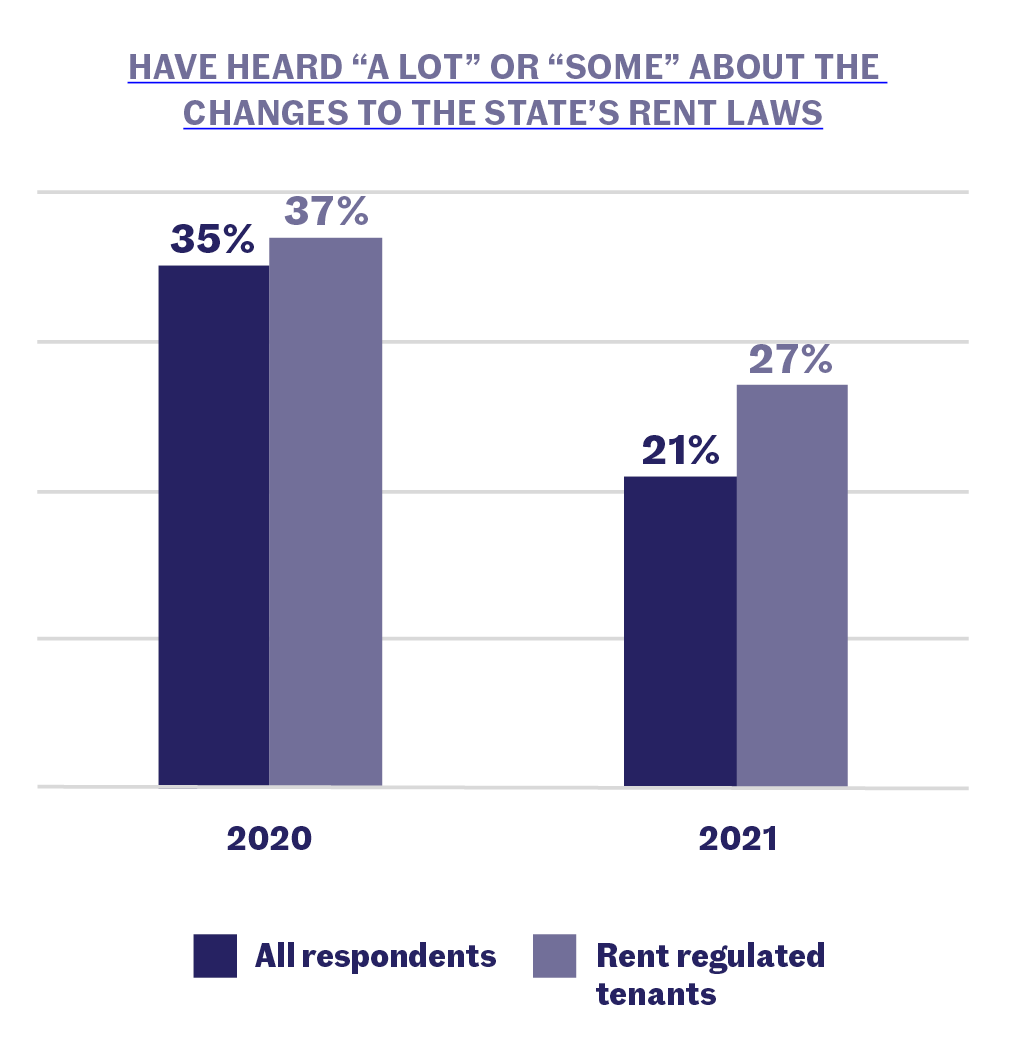
Since 2020, knowledge of the major changes about the state’s rent laws have declined among all respondents by 14 points to 21 percent, and by ten points to 27 percent among regulated tenants. Tenants unaware of their rights under HSTPA are more vulnerable to unlawful rent hikes, harassment, and displacement.
Harassment remains a business strategy in regulated and unregulated housing alike
Landlords of rent stabilized apartments have long used systemic tenant harassment as a business strategy by displacing long-term tenants and retaliating against tenants who organize in order to deregulate units and raise rents on future tenants. The NYC Department of Housing Preservation and Development (HPD) defines tenant harassment “as any act or omission by or on behalf of an owner that causes or is intended to cause a tenant to surrender or waive any rights in relation to the occupancy of their unit.” It can include everything from repeated buyout offers, to prolonged off-hours construction, to illegal eviction threats. While the line between poor building management and willful harassment in the form of heat and hot water interruption or deferred maintenance can sometimes be hard to define, we included both in our survey.
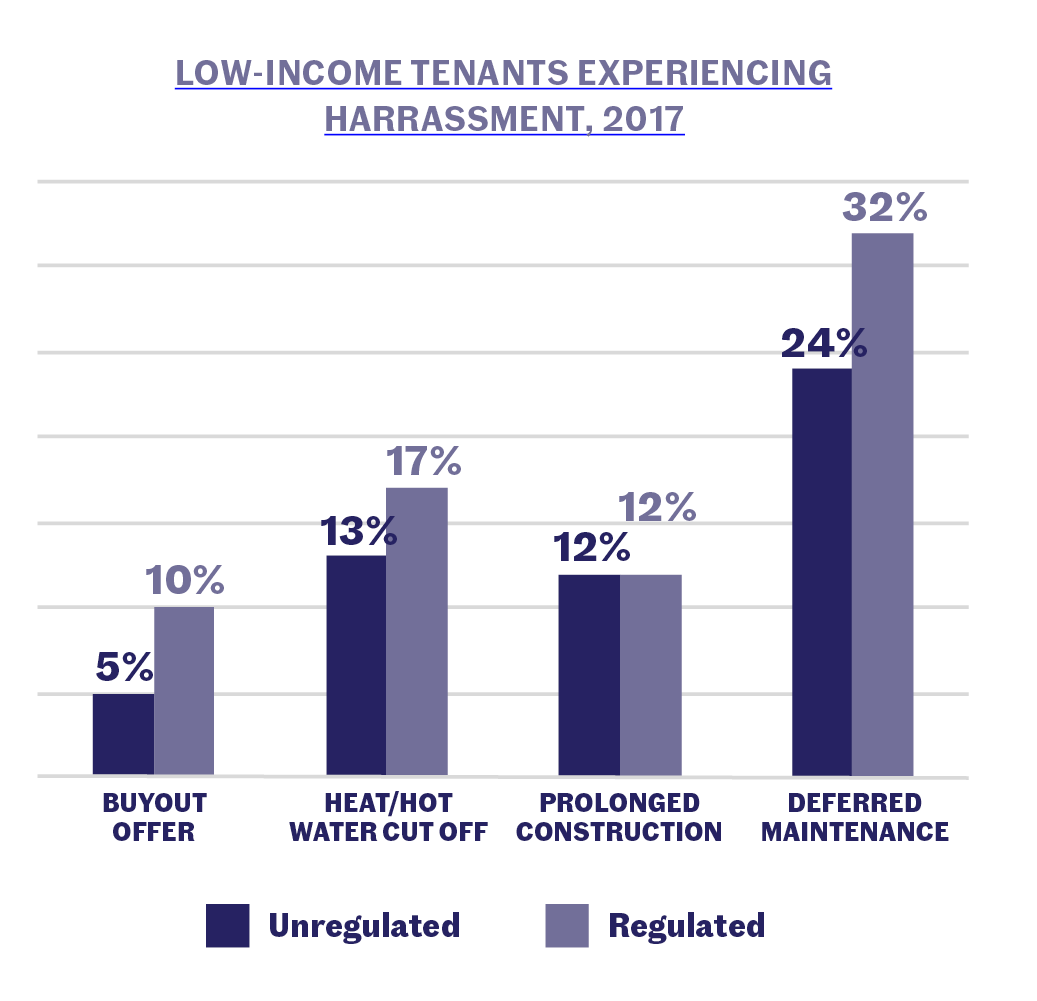
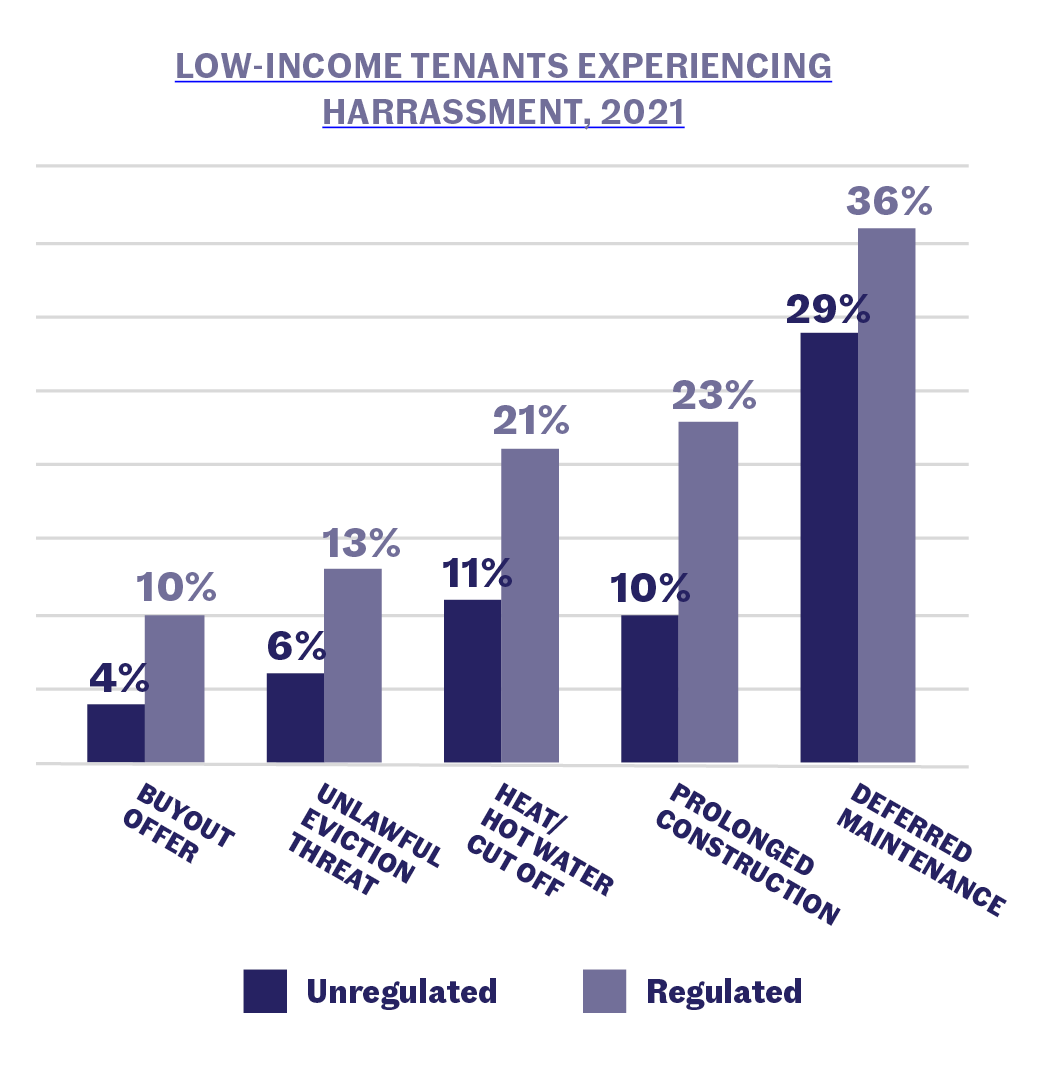
The charts above demonstrate the double-bind presented to low-income renters in New York City’s private housing market. On one hand, lowincome tenants living in rent regulated units are more than twice as likely to have experienced unlawful eviction threats and buyout offers than low-income unregulated tenants, and harassment has seemingly intensified since 2017. About one in five low-income regulated tenants had to live without heat and hot water, and bear with prolonged construction debris or noise. More than one and three lived in an apartment where a landlord put off repairs for a long time.
On the other hand, low-income tenants have limited tenure rights, and are thus subject to greater housing instability structurally. Landlords of unregulated buildings do not need to employ systemic harassment to displace long-term or organized tenants– they can simply not renew their lease.
Low-income single mothers bear the brunt of anti-tenant harassment
Among low-income tenants, single mothers are the most likely to experience harassment from their landlords. Combining all five harassment indicators, we find that 58 percent of single mothers have experienced one form of harassment, with most experiencing more than one type. Low-income single mothers are more likely to experience other housing insecurities as well: as we found in our previous Unheard Third report, limited rainy-day savings and extremely high rent burdens put low-income black and Latina single mothers in an untenable situation where they are neither able bear any rent increases nor find another apartment they can afford. According to the initial findings of the 2021 HVS, rent-burdened tenants, tenants in subsidized housing, and tenants earning less than the median household income all reported great uncertainty that they could afford a $400 emergency bill.
While we might hope that HSTPA enforcement will curb harassment in future years, our findings so far suggest that harassment has not abated in rent stabilized housing since HSTPA’s passage. They do not, however, suggest any correlation or causation between the law and this outcome.
Recommendations: Protect and Enforce HSTPA While Expanding Tenants’ Rights
Our findings suggest that HSTPA has had important impacts on affordability and tenant security, and has not had a significant impact on building conditions. However, given that tenant harassment remains widespread, more action must be taken to produce even better outcomes for rent regulated tenants. This will include a combination of courtroom battles to defend the laws from lawsuits aiming to strike or diminish it (against which CSS has submitted an extensive amicus curiae brief), funding for enforcement and tenants’ rights education, and passing further tenants’ rights legislation to solidify and expand on the gains of HSTPA.
Protect and fully implement the rent laws: More work is needed to ensure HSTPA survives legal challenges and is implemented in full. Real estate industry lawsuits against HSTPA continue to move through the courts. Meanwhile, HCR has still not released the full set of regulations it will use to enforce the new tenant laws, citing the pandemic and understaffing as reason for the delay. As long as the law is under threat and partially enforced, its potential will always be limited.
More funding for HCR’s Tenant Protection Unit and Mayor’s Office to Protect Tenants, and more money for HCR to upgrade technology and hire more enforcement staff: State and City agencies need funding, staff and technological resources to both respond to tenant-initiated complaints and to conduct investigations into larger-scale attempts to undermine tenants’ rights.
Pass crucial expansions tenants’ rights legislation: While the state legislature has discussed and debated bills like Good Cause (which would protect tenants against no-cause evictions and unconscionable rent increases) and Right to Counsel (which would give tenants the right to legal representation in eviction cases), they have not yet passed them. Tenants across New York City and State need stronger protections against harassment, eviction, and displacement.
This is a crucial moment for the future of tenants’ rights in New York. If strong action is not taken, HSTPA could be weakened in the courts or could fail to be enforced in full. Meanwhile, rent regulated tenants are not reporting declining building conditions, but are reporting ongoing landlord harassment. Now is the time for New York to commit to fully enforcing the laws we have and to passing new regulations to expand tenants’ protections across the state.
Survey Methodology
The Community Service Society of New York designed this survey in collaboration with Lake Research Partners, who administered the survey by phone using professional interviewers. The survey was conducted from July 8th through August 10th, 2021. The survey reached a total of 1,763 New York City residents, age 18 or older, divided into two samples. 1,110 low-income residents (up to 200% of federal poverty standards, or FPL) comprise the first sample including 533 poor respondents, from HH earning at or below 100% FPL (69.4% conducted by cell phone) and 577 near-poor respondents, from HH earning 101% - 200% FPL (71.1% conducted by cell phone). 653 moderate- and higherincome residents (above 200% FPL) comprise the second sample, including 389 moderate-income respondents, from HH earning 201% - 400% FPL (70.2% conducted by cell phone) and 264 higher-income respondents, from HH earning above 400% FPL (61.7% conducted by cell phone).
Landline telephone numbers for the low-income sample were drawn using random digit dial (RDD) among exchanges in census tracts with an average annual income of no more than $44,660. Telephone numbers for the higher-income sample were drawn using RDD in exchanges in the remaining census tracts. The data were weighted slightly by income level, gender, region, age, immigrant status, and race in order to ensure that it accurately reflects the demographic configuration of these populations. Interviews were conducted in English (1,662), Spanish (83), and Chinese (18). The low-income sample was weighted down into the total to make an effective sample of 600 New Yorkers.
In interpreting survey results, all sample surveys are subject to possible sampling error; that is, the results of a survey may differ from those which would be obtained if the entire population were interviewed. The size of the sampling error depends on both the total number of respondents in the survey and the percentage distribution of responses to a particular question. The margin of error for the entire survey is +/- 2.3%, for the low-income component is +/- 2.9%, and for the higher-income component is +/- 3.8%, all at the 95% confidence interval.
For questions related to the survey, please reach out to Emerita Torres, Vice President of Policy Research and Advocacy, at etorres@cssny.org.
Notes
1. Marcuse, Peter, 1981. Housing Abandonment: Does Rent Control Make a Difference? Washington, DC, Conference on Alternative State and Local Policies, Policy Report Number 4.
2. Ambrosius, Joshua D., John I. Gilderbloom, William J. Steele, Wesley L. Meares, and Dennis Keating. “Forty years of rent control: Reexamining New Jersey’s moderate local policies after the great recession.” Cities 49 (2015): 121-133. This finding confirmed the results of a similar study, also conducted in New Jersey about a decade prior. Gilderbloom, John I., and Lin Ye. “Thirty years of rent control: A survey of New Jersey cities.” Journal of Urban Affairs 29, no. 2 (2007): 207-220.
3. Importantly, several factors muddle the contemporary New York case, including the newness of HSTPA, its’ incomplete implementation, and its’ near-concurrence with the COVID-19 pandemic.
4. Overall, low-income tenants are much more likely to report issues with conditions. In 2021, for example, low-income tenants were 21 points more likely to report conditions issues, compared to higher-income tenants.
5. In New York City, a landlord who wants move loadbearing walls, combine apartments, or conduct other major renovation in their building has to file an alteration job form with the NYC Department of Buildings.
6. The deregulations that have occurred since 2019 are a result of changes in occupancy that occurred prior to June 2019 (or high-rent vacancy decontrol cases that were already underway when the law changed), demolitions and condemnations, and mergers of pre-existing units.