How Do New Yorkers Feel About the City’s Benefit System?
Debipriya ChatterjeeJennifer HinojosaJennifer PanicaliMichelle Berney
What is the New York City benefits system?
New York City’s benefits system is made up of a range of safety net programs designed to support individuals and families facing economic hardship. These programs cover essentials like housing, food, healthcare, childcare, and cash assistance to help people make ends meet.
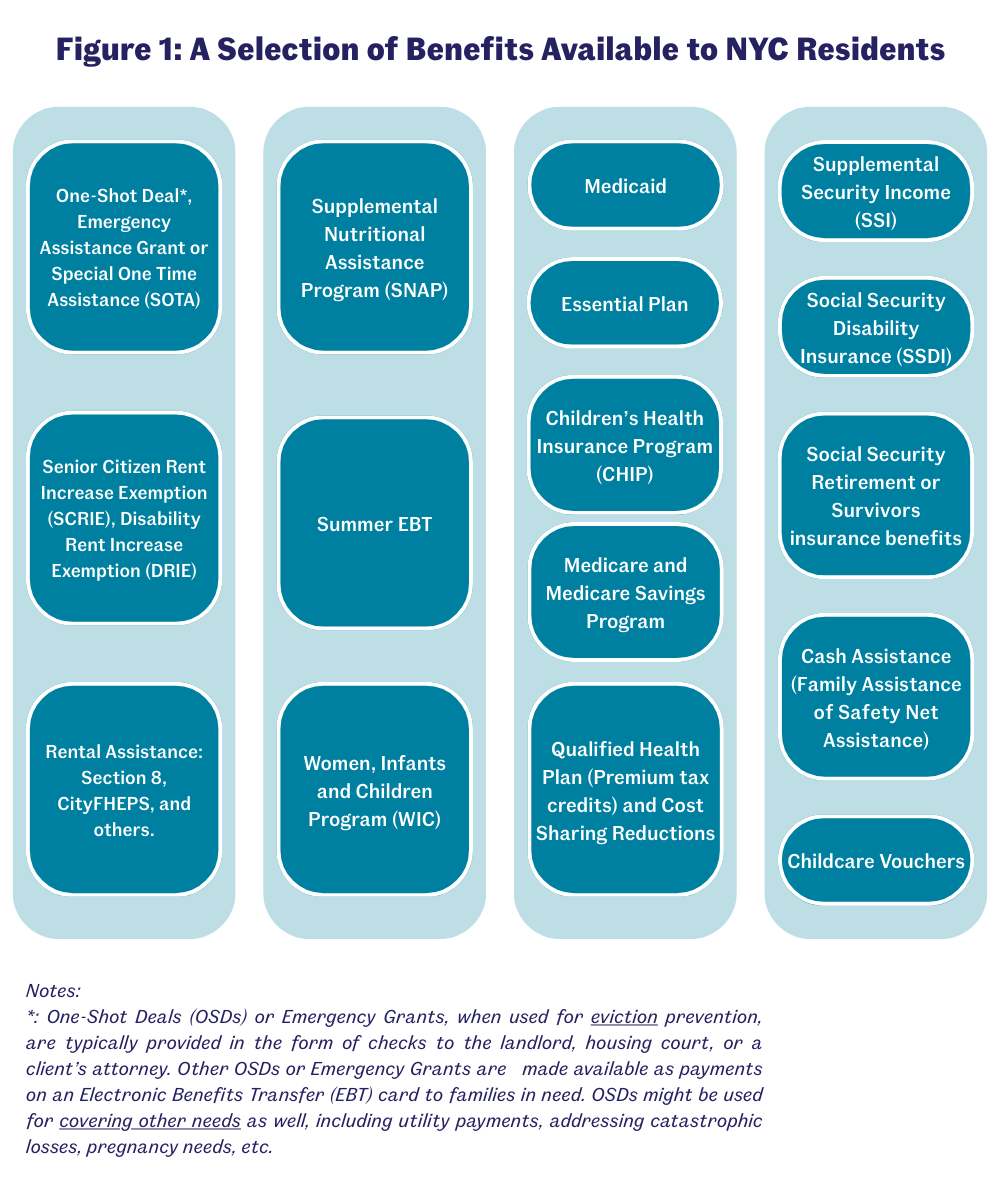
Some benefits provide one-time emergency support (e.g., One-Shot Deal, while others (e.g., Medicare) are ongoing entitlements. A majority are means-tested, meaning they are only available to people who meet strict income and/or resource requirements. Figure 1 highlights benefits available to New York City residents that CSS asked about in our 2024 Annual Survey of Housing and Economic Security. Please visit CSS’s Benefits Plus Learning Center to learn more about any of the programs listed below.
What challenges do New Yorkers face when accessing public benefits?
To learn about people’s experiences interacting with the public benefits system, our survey asked respondents about the difficulties they encountered when applying. More than half of the respondents (57 percent) reported experiencing one or more barriers during the application process.
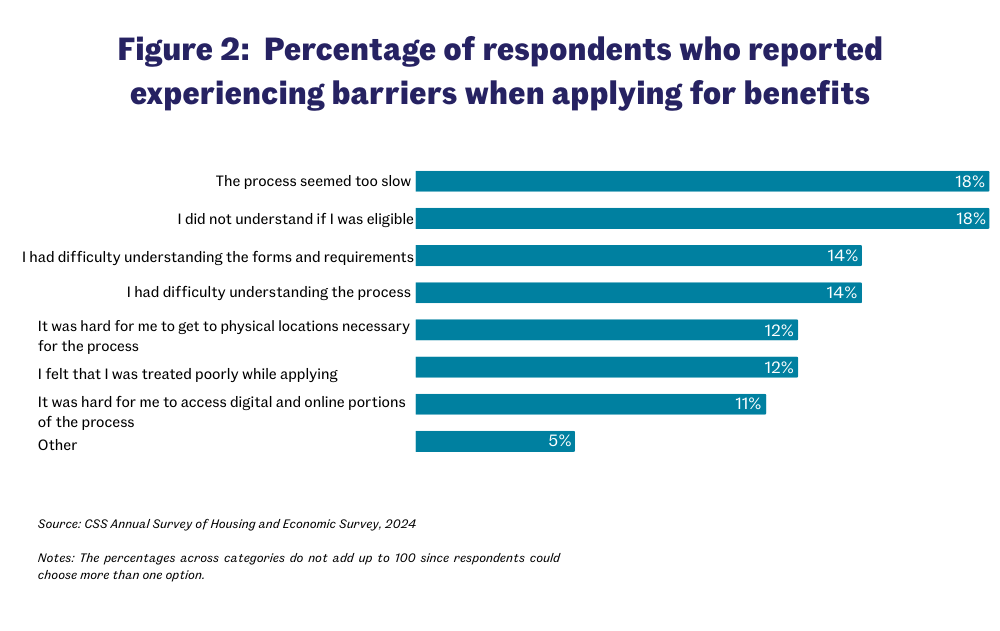
The most common obstacles were confusion about eligibility and the overall slowness of the process. These were followed by confusion around required documentation, the application process itself, and access to Benefits Access Centers. Of those who faced barriers, more than 1 in 10 said they felt they were treated poorly while applying.
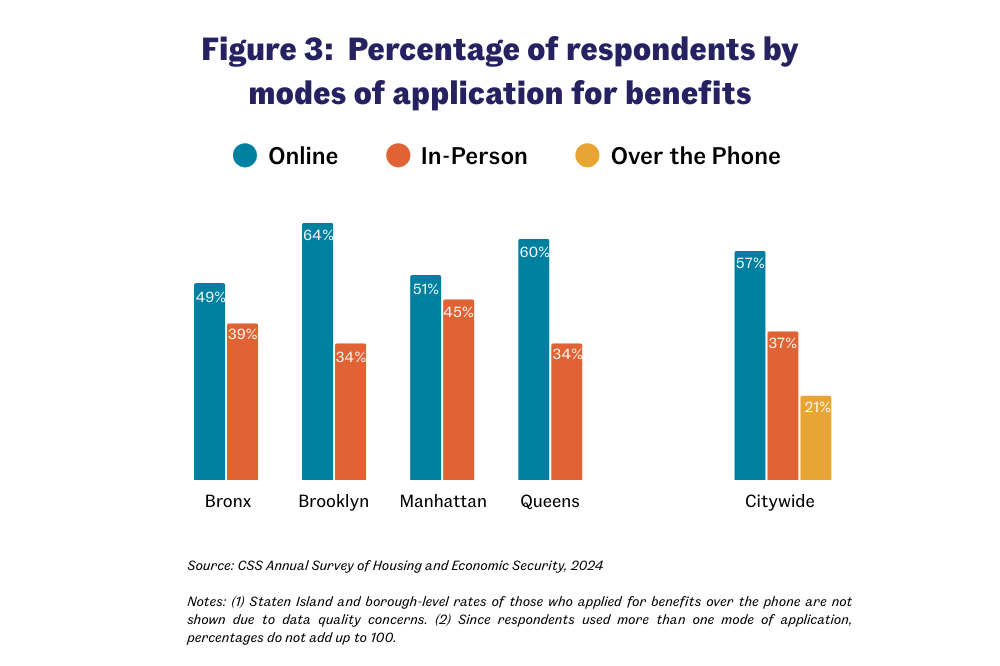
When it comes to how people apply, the majority (57 percent) reported using an online application, such as the ACCESS HRA website. Among those who applied in person (37 percent), a similar share reported that reaching the physical locations of the Benefits Access Centers was challenging. For most benefits, recipients have to go through multiple steps beyond filling out an application form, including being available for interviews.
Application methods varied by borough. In-person applications were most common in Manhattan, likely due to the accessibility of the large intake center in Lower Manhattan. In contrast, residents of the outer boroughs were more likely to apply online rather than in-person or by phone.
Across all benefits included in our survey, about 10 percent of potential recipients reported applying for a benefit but not receiving it. While that figure points to some continued gaps in access, there have been notable improvements in processing times. Over the last year, the share of SNAP applications processed on time rose from 42 percent to over 90 percent. For Cash Assistance, that number increased from 14 percent to over 50 percent. These are significant improvements.
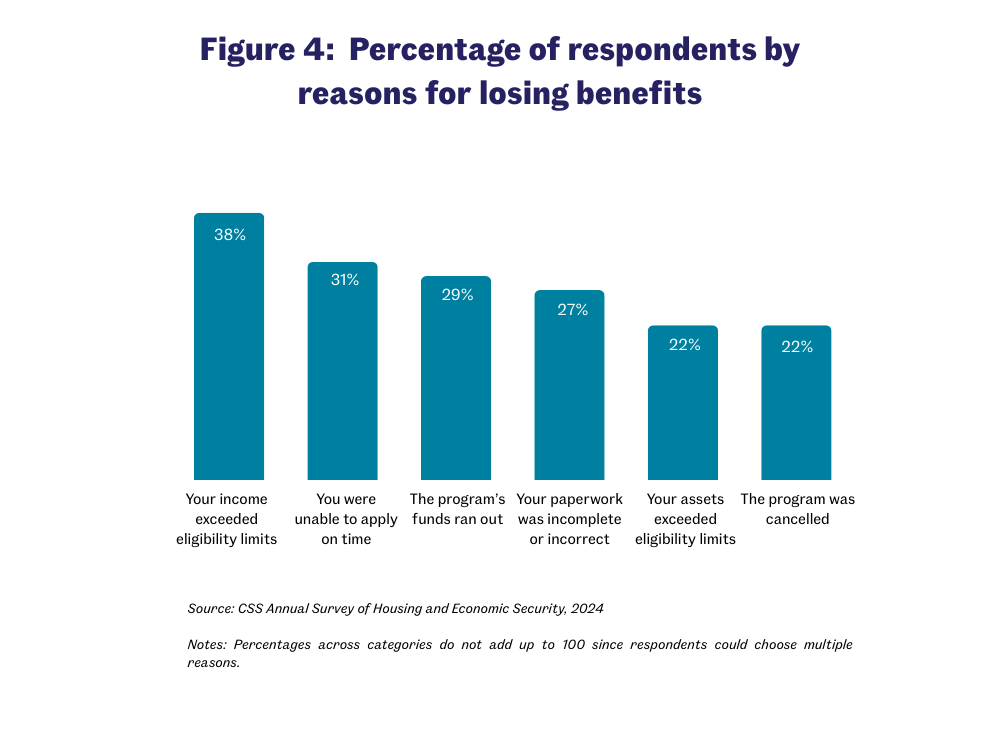
Still, administrative challenges continue to create barriers for some—not only delaying benefits, but sometimes leading to their loss altogether. Our survey shows that 13 percent of all recipients reported losing benefits in the past year. While the most common reason was having income or assets above the eligibility threshold, administrative hurdles played a role. Among those who lost benefits, 31 percent said it was because they were “unable to apply on time,” and 27 percent cited “incomplete or incorrect paperwork.”
What can be done about the Benefits Cliff?
In addition to access issues, our survey sheds light on the harmful effects of the “benefit cliff”—a situation where even a small increase in income triggers a sharp reduction in benefits, often leaving the recipient worse off than before. Unfortunately, few public benefit programs are designed to support a gradual transition toward economic stability. Instead, most have rigid income and asset thresholds, which means benefits can end abruptly, discouraging recipients from earning more.
For example, imagine someone is offered a $2/hour raise—but accepting it would mean losing eligibility for childcare vouchers worth up to $2,250 per month. In that case, it is a rational economic decision to turn down the raise. The problem is further compounded by a fragmented system in which each benefit program has different eligibility criteria, making it difficult for recipients to anticipate the full impact of increased earnings. Even small income increases can have cascading negative effects on multiple programs.
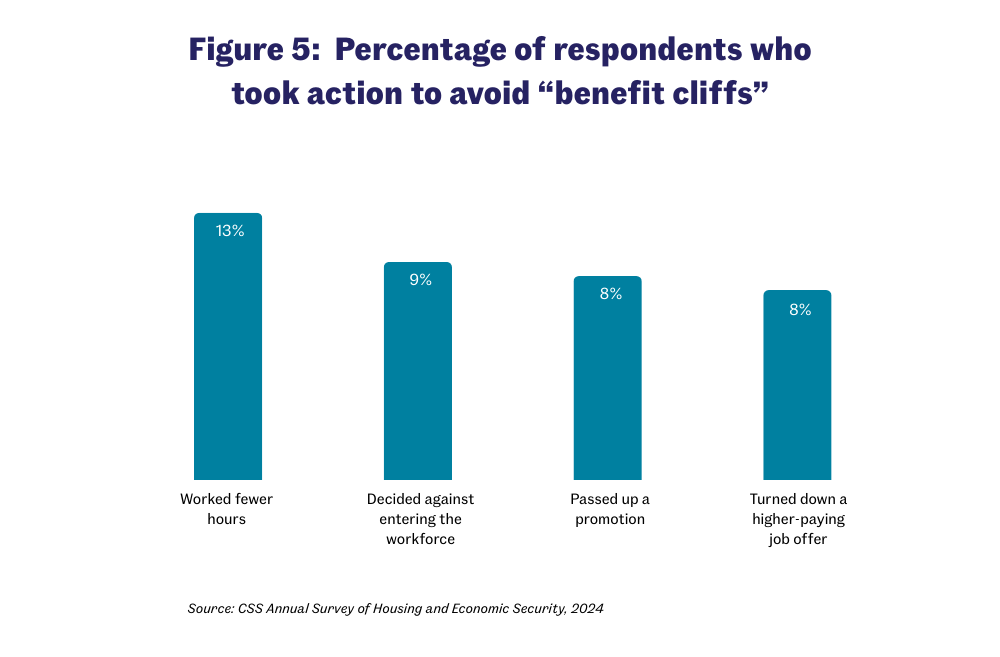
Our survey found that approximately one-third of benefits recipients took steps to avoid losing their benefits. These included working fewer hours (14 percent), passing up a promotion (8 percent), turning down a higher paying job (8 percent), or deciding against entering the workforce at all (9 percent). Among those who took such actions, 38 percent were already working either full- or part-time, highlighting the real constraints the benefits cliff imposes on working families and limits upward mobility.
How will federal cuts impact NYC benefits?
In this post, we’ve outlined challenges within the safety net system that made it difficult for recipients to access benefits, even when the city’s economy was performing well, and revenues were higher than expected. With the Trump administration’s tariffs going into effect and an impending economic slowdown, the need for benefits will only grow—both in scale and urgency. As prices rise, millions of Americans, including New Yorkers, will face increased economic hardship, but the current federal policies threaten to strip away much-needed support. The slashing of the federal workforce and cutting of public spending on benefits programs to fund the extension of regressive tax cuts would leave people with little to no help.
The original House budget proposal includes a $230 billion cut to SNAP funding over the next decade. The current, revised House budget proposal does not require much spending cuts to balance the increase in deficit from tax cuts. However, Republican leaders in Congress have said that they would still cut spending by $1.5 trillion over the next decade. Assuming some of the original proposals continue to hold, the federal administration would reduce SNAP funding for the City by around $870 million per year, cutting $130 from the typical family’s monthly benefit. The proposal aims to achieve this reduction in spending by (i) increasing work requirements, (ii) reversing daily meal allowance costs, (iii) limiting future increases in meal costs, and (iv) imposing stricter asset and income eligibility criteria. There is ample research showing that adding work requirements will not improve employment outcomes, but will instead increase misery and administrative burden. Cutting SNAP funds will not only worsen food insecurity, but also harm the local economy since every dollar spent on SNAP increases GDP by $1.54.
In addition to cuts to SNAP, the proposal seeks to eliminate the Summer EBT program, which provides food assistance to over 2 million children in the City during the summer months when schools are closed. Although some programs like Women, Infants & Children (WIC) have not been directly targeted for cuts, the House budget proposal might adversely affect participation in WIC because of “adjunctive eligibility,”’ which allows families to qualify for WIC by providing proof of participation in other income-tested government programs like Medicaid and SNAP. If Broad-Based Categorical Eligibility (BBCE) is eliminated for SNAP, it would likely throw 3.1 million people—including 360,000 young children (0-4 years old)— off SNAP, which would also impact WIC access.
New York also faces potential cuts to Cash Assistance funded through Temporary Assistance to Needy Families (TANF), with a proposed 10 percent reduction in the annual block grant to states. TANF benefits have already lost almost 50 percent of their purchasing power since its inception in the mid-90s since they have not kept up with inflation. With more rigid work requirements on the horizon, this reduction would further harm families.
This list is not exhaustive, as the proposal is not final yet. Yet, it is clear that the City and the State must rise to meet the moment. Our elected officials must be proactive in safeguarding and improving the New York City benefits system as it faces enormous threats from the current federal administration combined with an increase in need.
About CSS’s Annual Survey of Housing and Economic Security
The 2024 CSS Annual Survey of Housing and Economic Security sampled 2400 New York City adult residents reached through a combination of online panels, cell phones, landlines, text messages, digital targeting, and in-person intercepts from August 16 through October 17, 2024. The survey was designed by CSS in collaboration with Seven Letter Insight and conducted in English, Spanish, Chinese, Haitian Creole, and Russian. We oversampled low-income residents and public housing residents. The margin of error for respondents in New York City is +/- 1.96 percent at the 95 percent confidence interval.