Fair Fares NYC Expansion: Who Qualifies, What’s Changing, and Why It Matters for Low-Income New Yorkers
At a Glance: Key Facts About Fair Fares NYC
- Fair Fares is New York City's discounted transit program, providing half-priced subway, bus, and Access-A-Ride fares to low-income residents
- Eligibility is expanding from 150 percent to 200 percent of the federal poverty level
- Approximately 1.3 million working-age New Yorkers will be eligible when the expansion is implemented later this year
- In a recent survey of Fair Fares recipients, more than 80 percent say that Fair Fares helps them afford essentials like housing, food, and utilities
- Nearly two-thirds of Fair Fares users surveyed say that transit is still difficult to afford even with the discounted fares
- Visit the Fair Fares NYC website to check your eligibility and apply.
In June 2026, New York City announced the expansion of the Fair Fares NYC program, increasing eligibility from 150 percent to 200 percent of the federal poverty level. This expansion will extend eligibility for half-priced subway and bus fares to an estimated 1.3 million working-age New York City residents and will reduce transportation costs for many households struggling to afford the city's rising cost of living.
Research from the Community Service Society of New York (CSS) shows that Fair Fares helps people get to work, school, medical appointments, and essential services. But the research also shows that significant affordability and enrollment challenges remain.
Fair Fares Makes Public Transportation More Affordable
For many New Yorkers, using public transportation is not optional. It's how people get to work, attend school, attend medical appointments, buy groceries, and care for their families. But the cost of getting around the city can put a significant strain on families that are struggling to build economic security.
Fair Fares NYC helps address that challenge by providing low-income New Yorkers with a 50 percent discount on subway and bus fares. Since its inception in 2018, the program has become one of the city's most important tools for making New York more affordable.
CSS research shows that Fair Fares has a meaningful impact on people's daily lives. In early 2026, we conducted a survey of 1,653 New Yorkers who receive benefits like SNAP, Cash Assistance, or CityFHEPS housing vouchers, which closely overlap with Fair Fares eligibility:
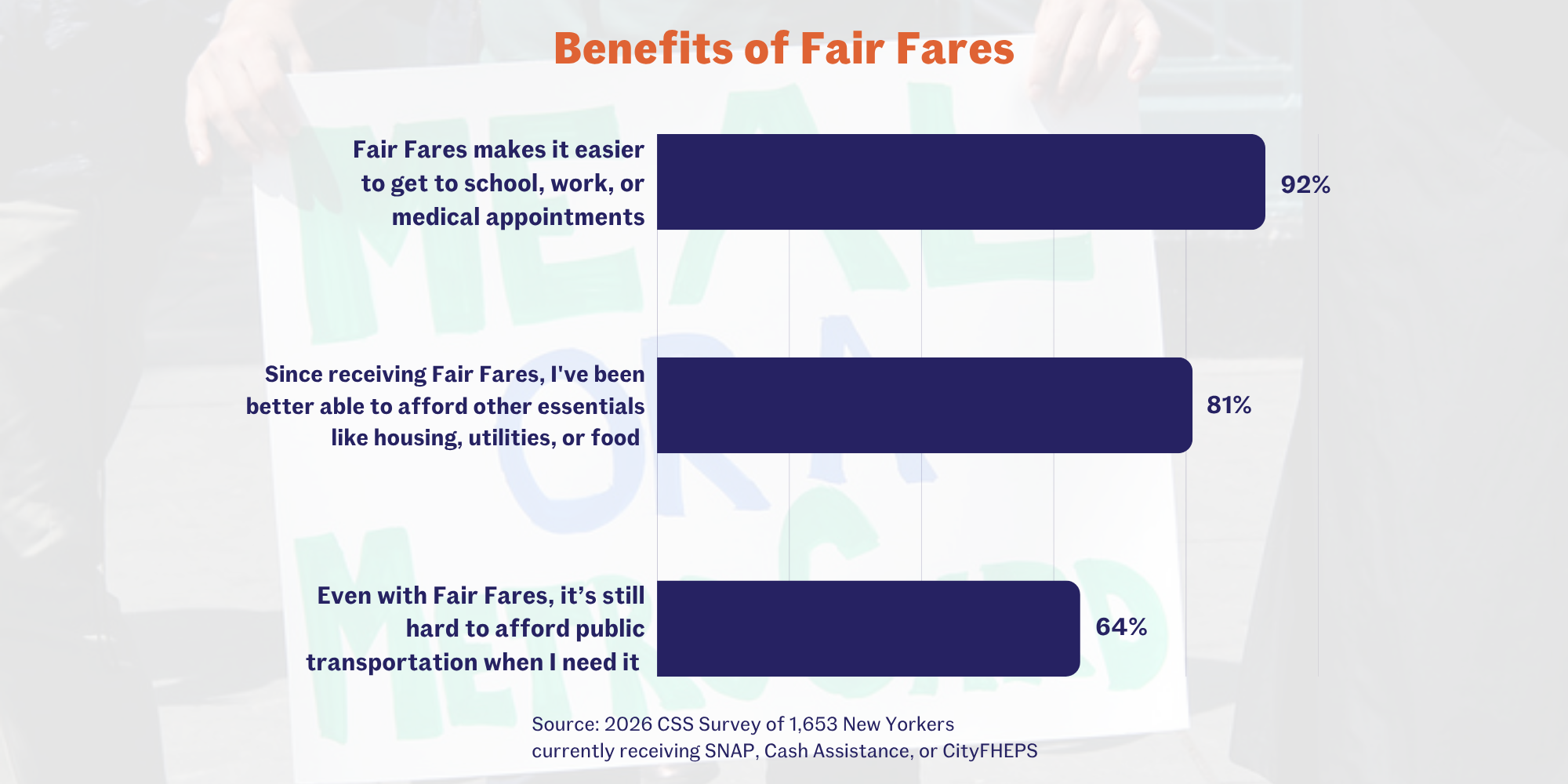
- Nearly all survey respondents (92%) who use the program said it makes getting around New York City easier
- More than four in five (81%) said the savings help them afford other essentials such as housing, food, and utilities
The Expansion Will Help Hundreds of Thousands of Additional New Yorkers
Building on the program's success in making transit more affordable, New York City expanded Fair Fares eligibility from 150 percent to 200 percent of the Federal Poverty Level (FPL) in June 2026, significantly increasing the number of NYC residents who can receive discounted transit fares.
In total, the expansion is expected to make approximately 1.3 million working-age New Yorkers eligible for the program once its implemented later this year. An estimated 45 percent of newly eligible residents are regular commuters, meaning the expansion will reduce transportation costs for upwards of 500,000 people.
The expansion is particularly important at a time when many New Yorkers are struggling with the rising cost of living. Transportation is one of the expenses households cannot avoid. Expanding Fair Fares moves New York in a more equitable and just direction by easing this burden.
Too Many Eligible New Yorkers Still Miss Out on Fair Fares
While the expansion is an important step forward, research from CSS shows that many eligible New Yorkers are still not enrolled in the program.
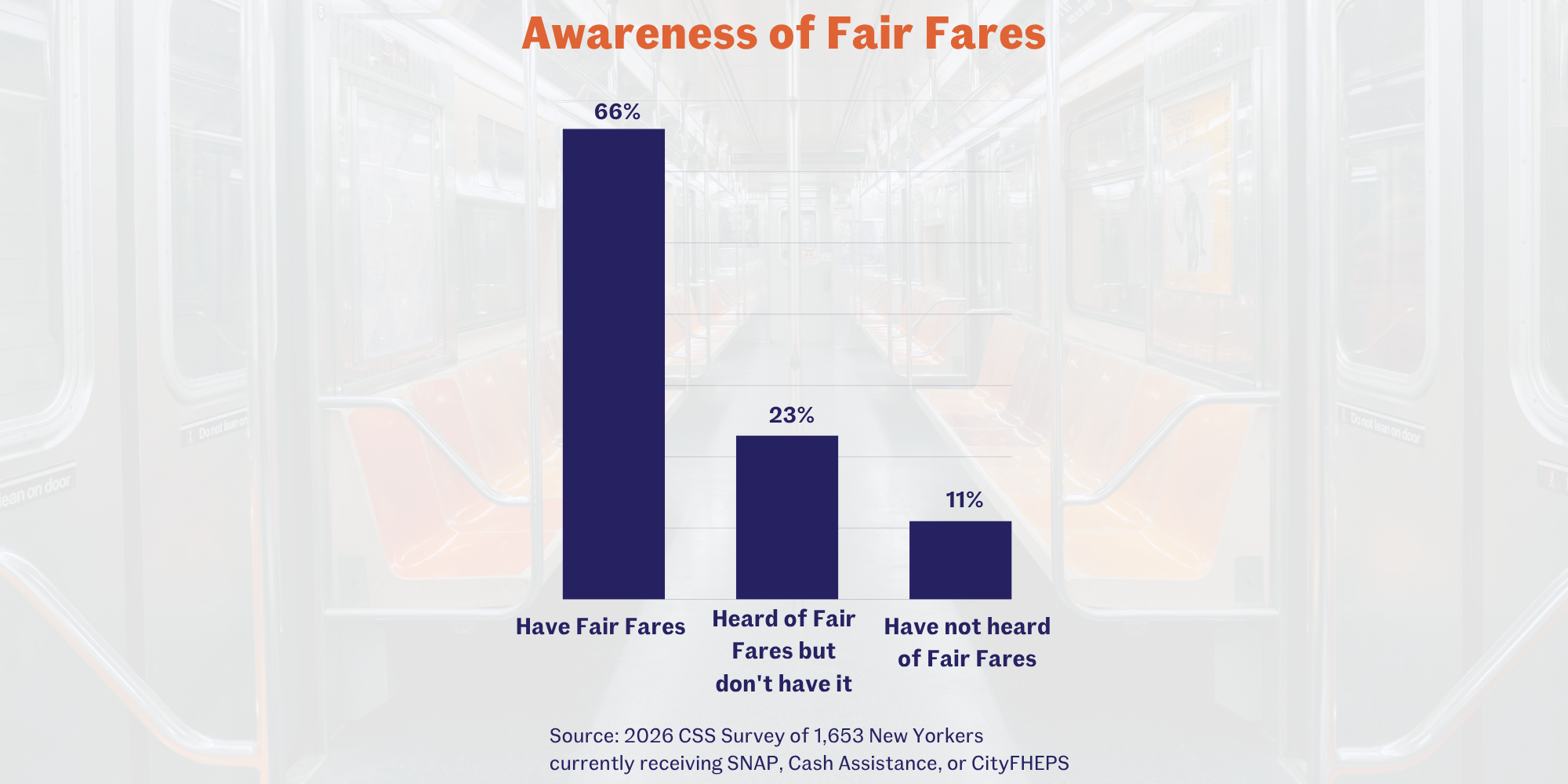
In our 2026 survey of New Yorkers who receive public benefits, more than one in three respondents reported that they were not enrolled in Fair Fares.
If the program is not reaching a significant share of people who are already engaged with government services, then it is likely also missing many additional eligible residents who are not already connected to those services.
Survey respondents also reported barriers to accessing Fair Fares, including lengthy applications, confusing renewal processes, and delays that caused benefits to lapse.
These findings point to a significant opportunity to strengthen Fair Fares by making enrollment simpler and ensuring that everyone who qualifies can access this important benefit.
The Work Is Not Finished: What Comes Next for Fair Fares?
Even for New Yorkers who receive Fair Fares, transportation costs often remain an obstacle to economic security.
In our 2026 survey, 64 percent of Fair Fares users said that public transportation is still difficult to afford even with the program's half-priced discount. As one Queens resident explained, "Even with half off, it's 3 bucks a day for a round trip. That's a lot."
The findings suggest that additional reforms could make the program even more effective. CSS recommends:
- Automatically enrolling New Yorkers who have already been determined eligible through programs such as SNAP, Cash Assistance, or CityFHEPS.
- Make transit free for the lowest-income New Yorkers (under 150 percent of the federal poverty level), recognizing that even reduced fares can remain an economic hardship.
- Expand eligibility for half-priced fares up to 300 percent of the federal poverty level to include workers who earn minimum wage.
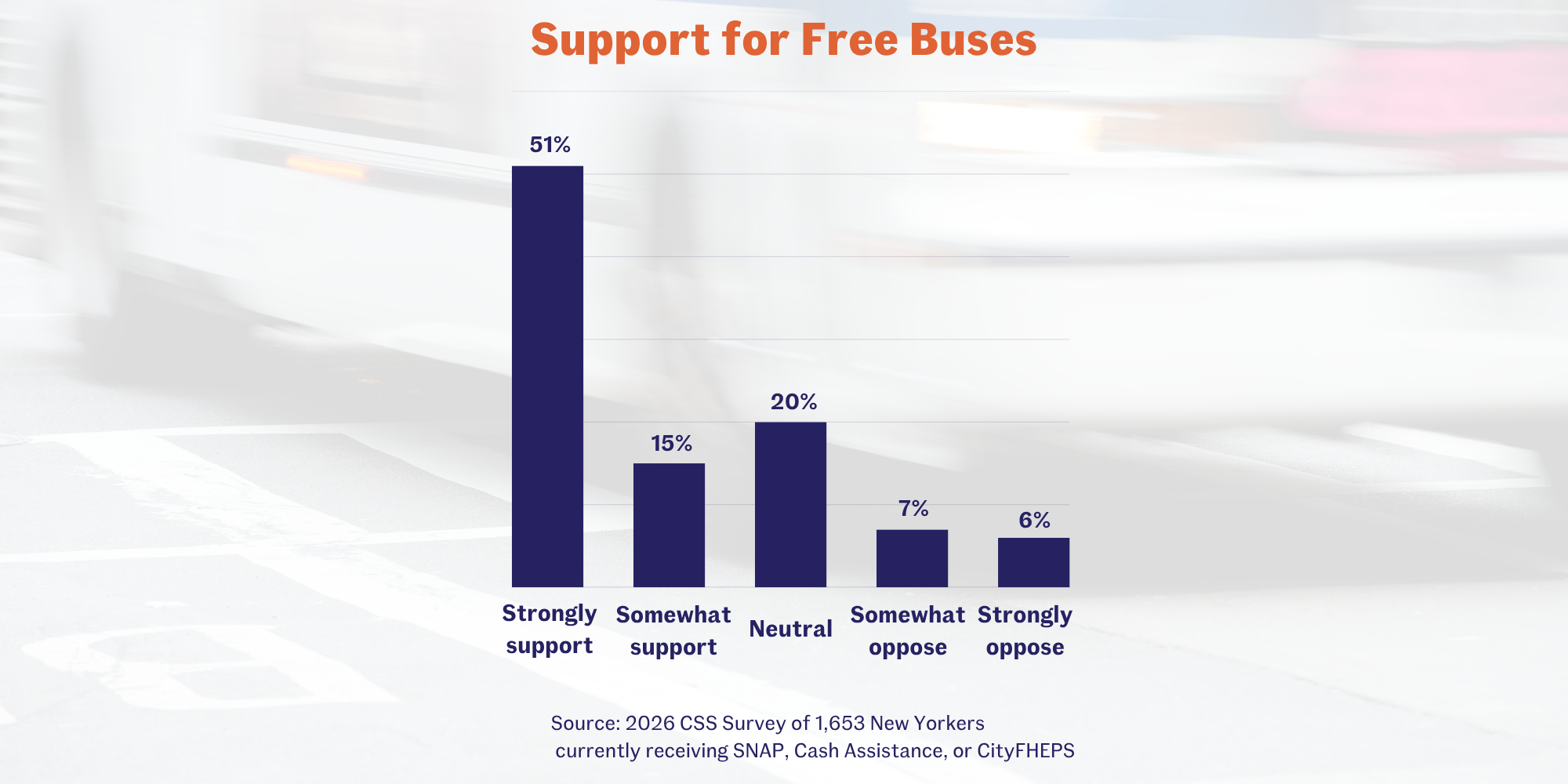
- Adopt free buses for all New Yorkers, improving affordability and bus speed across the city.
- Invest in improvements bus and subway reliability and safety, particularly in communities with limited transportation options.
Together, these reforms would help ensure that Fair Fares reaches everyone who qualifies and that the cost of public transportation is no longer a barrier to economic security.
Frequently Asked Questions
What is Fair Fares NYC?
Fair Fares NYC is a New York City program that provides eligible residents with a 50 percent discount on MTA subway, local bus fares, and Access-A-Ride. The program, which was created in 2018, is designed to make public transit more affordable for low-income New Yorkers.
Who qualifies for Fair Fares?
New York City residents ages 18 to 64 who meet the program's requirements can qualify for Faires. In June 2026, New York City expanded eligibility to households with income up to 200 percent of the federal poverty level (FPL). The exact implementation date when these newly eligible New Yorkers can enroll in Fair Fares remains TBD and is expected before the end of 2026
What is the income limit for Fair Fares?
Households with income up to 200 percent of the federal poverty level (FPL) may be eligible. The table below shows the Fair Fares eligibility annual income limit, as of 2026:
| Household Size | Annual Income (200% FPL) |
|---|---|
| 1 | $31,920 |
| 2 | $43,280 |
| 3 | $54,640 |
| 4 | $66,000 |
| 5 | $77,360 |
| 6 | $88,720 |
| 7 | $100,080 |
| 8 | $111,440 |
| Each person over 8, add | $11,360 |
How can someone apply for Fair Fares?
Eligible New Yorkers can apply through New York City's Fair Fares NYC website. The website provides ways to check your eligibility and submit your application.
What documents do I need to sign up for Fair Fares?
- All applicants need to submit proof of identity, residency, and income.
- Here is a list of suggested documentation.
How many New Yorkers use Fair Fares?
As of July 2026, more than 370,000 New York City residents are enrolled in Fair Fares.
Why aren't some eligible New Yorkers enrolled?
CSS survey respondents report barriers such as lengthy applications, confusing renewal processes, and delays that caused benefits to lapse. These findings suggest there are opportunities to simplify enrollment and increase participation among eligible New York City residents.
Why did New York City expand Fair Fares?
New York City expanded Fair Fares to make public transportation more affordable to a greater number of low-income residents. By increasing the eligibility limit from 150 percent to 200 percent of the federal poverty level (FPL), the expansion makes an estimated 1.3 million working-age New Yorkers eligible for half-priced subway and bus fares. The change is expected to help hundreds of thousands of additional commuters.
Does Fair Fares really make a difference in people's lives?
Yes. CSS research shows that Fair Fares has a meaningful impact on the daily lives of low-income New Yorkers who are enrolled.
In a 2026 survey of 1,653 New York City residents receiving public benefits, nearly all Fair Fares users (92%) said the program makes it easier to get around the city, and more than four in five (81%) said the savings help them afford other essentials such as housing, food, and utilities. By reducing transportation costs, Fair Fares is improving access to work, school, and health care while simultaneously helping recipients pay their bills.
Why are advocates calling for further changes to Fair Fares?
CSS research has shown that many low-income New Yorkers still see public transit costs as a barrier to economic stability, even with a half-priced discount. CSS ultimately envisions a Fair Fares program that offers free transit for New Yorkers at or below 150 percent of the federal poverty level, and discounted fares for those up to 300 percent, which would finally include New Yorkers making minimum wage.
Additionally, when Access-A-Ride users age out of Fair Fares at age 65, they must pay the full fare. While subway and bus riders can transition into the MTA Reduced Fare program for senior citizens, the senior discount is not available for Access-A-Ride. Access-A-Ride users who qualify for Fair Fares should have their half-priced fares extended past the current cutoff at age 64.